


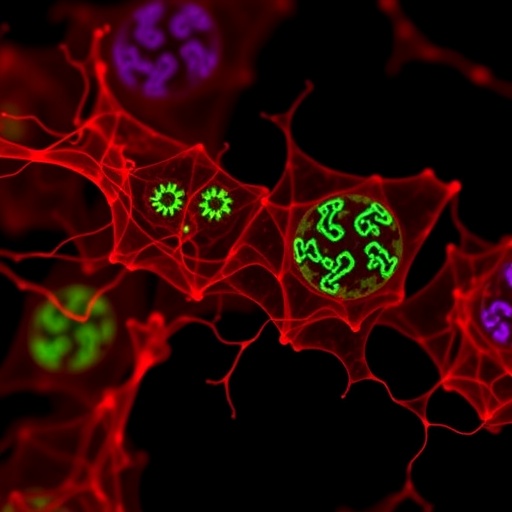
In a groundbreaking study, researchers have unveiled the intricate role of thymine DNA glycosylase (TDG) in the realm of cancer biology, particularly in p53-deficient tumors. The protein TDG, known for its multifaceted functions in base-excision repair, DNA demethylation, and transcriptional regulation, has garnered attention for its unexpected involvement in embryonic development and the complex mechanisms of tumorigenesis. Despite its significance, the underlying mechanisms by which TDG influences cancer progression have remained largely unexplored, especially in the context of therapeutic strategies that target this protein.
This research introduces C-271, an innovative small-molecule inhibitor that selectively binds to TDG, effectively disrupting its capacity to bind to DNA. The implications of this breakthrough are profound. By targeting TDG, the study suggests a pathway towards inducing synthetic lethality in cancers that are deficient in the tumor suppressor p53, a well-known guardian of genomic integrity. The importance of this discovery cannot be overstated; as many cancers exhibit mutations in the p53 gene, finding alternative therapeutic targets is crucial for advancing treatment options.
The structural basis for TDG’s function reveals a dual role it plays alongside p53 in regulating the expression of DHX9, an RNA helicase essential for resolving double-stranded RNA (dsRNA). The intriguing interplay between TDG and p53 suggests a cooperative mechanism that enhances transcriptional output critical for cellular homeostasis and response to DNA damage. In cancer cells lacking functional p53, the inhibition of TDG leads to downregulation of DHX9, resulting in the accumulation of aberrant dsRNA within the cytoplasm.
This accumulation of dsRNA activates an immune sensing pathway involving RIG-I and MDA5, which subsequently triggers the mitochondrial antiviral signaling protein (MAVS) cascade. The activation of this pathway is reminiscent of the innate immune response to viral infections, signifying a remarkable convergence between DNA repair mechanisms and immune surveillance. Such findings elevate the understanding of tumor immunology, suggesting that the very mechanisms meant to repair genomic damage can be repurposed to enhance anti-tumor immunity.
The observed therapeutic efficacy of C-271 in suppressing p53-deficient tumors across different models underscores the potential of targeted therapies that exploit synthetic lethality. By identifying and engaging specific vulnerabilities in cancer cells, researchers can develop treatments that are not only effective but also less toxic compared to traditional therapies. The capacity of C-271 to suppress tumor growth presents a promising avenue for developing novel cancer treatments, particularly for malignancies characterized by p53 deficiency, which are often aggressive and resistant to conventional treatments.
Further studies are essential to elucidate the precise mechanisms underlying the induction of dsRNA accumulation and the subsequent immune response. Scientists are increasingly recognizing the need to marry oncology with immunology, and this work exemplifies that approach by providing a clear mechanism by which targeting TDG can engage the immune system in the fight against cancer. The correlation between TDG inhibition and enhanced dsRNA levels opens new doors for understanding the role of non-coding RNA in tumor biology.
In addition to its immediate implications for therapy, this study raises pivotal questions about the broader role of epigenetic modifiers and their interplay with the immune response. TDG’s known involvement in DNA demethylation and transcription regulation may extend its influence beyond just the repair process, potentially shaping the immune landscape within tumors. This reinforces the notion that therapeutic strategies targeting epigenetic regulators could yield significant benefits in terms of not just efficacy but also safety profiles in the clinic.
As the research community anticipates further exploration of C-271, the spotlight will inevitably fall on the design of clinical trials evaluating its effectiveness and safety in humans. The path from bench to bedside is fraught with challenges, but the promise held by this new class of inhibitors indicates a potential shift in how p53-deficient tumors are treated. Effective patient stratification, based on genetic and epigenetic tumor characteristics, will be essential for harnessing the full benefit of TDG inhibitors.
Moreover, as the implications of targeting TDG become clearer, collaboration between academia and industry will be critical to translate these findings into therapeutics. The landscape of cancer treatment is evolving, with a growing emphasis on precision medicine—a paradigm that this research embodies. By honing in on specific molecular vulnerabilities, there is potential to craft personalized treatment strategies that optimize outcomes for patients with diverse cancer profiles.
In conclusion, the study highlights TDG as a promising therapeutic target in p53-deficient cancers, advocating for a new avenue of research and clinical application. As the scientific community continues to unravel the complexities of cancer biology, strategies that exploit synthetic lethality could redefine treatment paradigms and improve survival rates. The integration of such targeted therapies within existing treatment frameworks could also maximize patient outcomes while minimizing adverse effects, heralding a new era in cancer care where individuals benefit from treatments tailored to their unique tumor biology.
This remarkable advancement in our understanding of TDG opens pathways not only for targeted therapies but also for enriching our overall comprehension of cancer mechanisms and the interplay between genetic factors and therapeutic interventions. The promise of C-271 as a tool for combating p53-deficient tumors underscores the urgent need to continue exploring and expanding the toolkit available to oncologists, ultimately culminating in better patient care and outcomes in historically challenging cancer types.
Subject of Research: Thymine DNA glycosylase (TDG) targeting in p53-deficient cancers
Article Title: Targeting thymine DNA glycosylase induces synthetic lethality in p53-deficient cancers.
Article References:
Zhou, JX., Shao, ZY., Zhang, L. et al. Targeting thymine DNA glycosylase induces synthetic lethality in p53-deficient cancers.
Nat Chem Biol (2026). https://doi.org/10.1038/s41589-025-02100-1
Image Credits: AI Generated
DOI: https://doi.org/10.1038/s41589-025-02100-1
Keywords: Thymine DNA glycosylase, synthetic lethality, p53-deficient cancers, C-271, immune response, tumor suppression, RNA helicase, DHX9.
Tags: cancer biology researchDNA repair mechanisms in oncologyembryonic development and cancerinnovative cancer treatment strategiesp53-deficient cancer therapysmall molecule inhibitors for cancersynthetic lethality in cancertargeting TDG in cancer treatmentTDG and RNA helicase regulationtherapeutic targets in p53 mutationsthymine DNA glycosylasetumor suppressor protein p53



