In an era where the intersection of immunology and cellular biology is yielding transformative insights, a groundbreaking study is reshaping our understanding of Crohn’s disease through the lens of programmed cell death. Published recently in the esteemed journal Cell Death Discovery, the investigation spearheaded by Zhang, Zhou, Gao, and their colleagues unveils intricate molecular mechanisms dictating the fate of immune and epithelial cells in the inflammatory milieu characteristic of Crohn’s disease. This research not only elucidates fundamental pathways of cellular demise but also heralds promising therapeutic avenues that could redefine patient outcomes in this chronic and debilitating gastrointestinal condition.
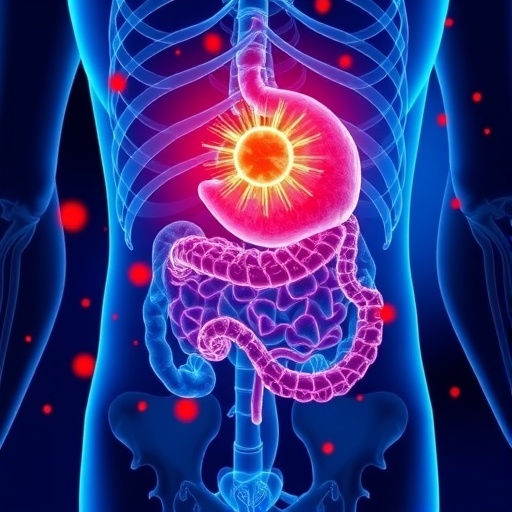
Crohn’s disease, a complex inflammatory bowel disease (IBD), has long been a subject of intense scrutiny due to its multifactorial pathology, encompassing genetic predispositions, dysregulated immune responses, and environmental factors. The pivotal revelation of this study lies in targeting specific modalities of cell death—apoptosis, necroptosis, pyroptosis, and ferroptosis—that collectively orchestrate tissue damage and perpetuate inflammation in the gastrointestinal tract. By dissecting these pathways, the researchers provided an unprecedented view of how aberrant cell destruction exacerbates mucosal injury, offering a strategic vantage point for intervention.
Central to the progression of Crohn’s disease is the imbalance between cell survival and death within the intestinal epithelium and immune compartments. The investigation meticulously characterizes how dysregulated apoptosis furnishes a pathological undercurrent in Crohn’s, often resulting in impaired epithelial barrier integrity. This barrier breakdown fosters bacterial translocation, triggering an exaggerated immune response that culminates in relentless inflammation. Zhang and colleagues emphasize that fine-tuning apoptotic signals could restore mucosal homeostasis, thereby mitigating disease severity.
Moreover, the study delves into the relatively underexplored but increasingly recognized role of necroptosis in Crohn’s disease. Unlike apoptosis, necroptosis is a pro-inflammatory form of programmed necrosis that promotes the release of danger-associated molecular patterns (DAMPs), stimulating immune cell activation and cytokine release. The authors describe how the receptor-interacting protein kinases, RIPK1 and RIPK3, act as pivotal molecular switches in this pathway. Therapeutic strategies aimed at inhibiting these kinases hold immense potential to quell the unrestrained inflammatory responses hallmarking Crohn’s pathology.
Another groundbreaking facet of this research is the elucidation of pyroptosis and ferroptosis and their contributions to the inflammatory landscape in Crohn’s disease. Pyroptosis, a caspase-1-dependent lytic cell death, facilitates the secretion of potent pro-inflammatory cytokines such as interleukin-1β, further amplifying immune responses. Concurrently, ferroptosis—characterized by iron-dependent lipid peroxidation—has emerged as an insidious driver of epithelial cell injury. The authors propose that innovative pharmacological modulators of these pathways could potentially attenuate tissue destruction and inflammatory amplification, representing novel therapeutic frontiers.
Importantly, Zhang et al. advocate for a nuanced understanding of cell death as a dynamic and context-dependent phenomenon in Crohn’s disease. The interplay among various cell death modalities is neither linear nor mutually exclusive; rather, it forms a complex network governing disease initiation and progression. Advanced single-cell and spatial transcriptomics techniques employed in this study bring to light the heterogeneity of cell death mechanisms in distinct cellular populations within inflamed intestinal tissues, underscoring the necessity for precision medicine approaches tailored to individual molecular signatures.
Harnessing mechanistic insights, the authors highlight several promising drug candidates currently in preclinical and clinical pipelines that selectively modulate cell death pathways. Small molecule inhibitors targeting necroptosis regulators, caspase inhibitors attenuating pyroptosis, and ferroptosis antagonists are meticulously reviewed, providing a panoramic view of the therapeutic landscape evolving around cell death modulation. Such interventions promise not just symptomatic relief but potentially disease modification, a long-sought goal in Crohn’s disease management.
Beyond pharmacotherapy, the research also discusses the promise of emerging biotechnologies such as gene editing and nanoparticle-mediated drug delivery systems. These advanced platforms could enable precise manipulation of cell death pathways at the molecular level, minimizing off-target effects and enhancing therapeutic efficacy. The integration of these technologies with conventional treatments may establish a new treatment paradigm that effectively halts or reverses intestinal inflammation.
The authors further contextualize their findings by considering the role of the gut microbiome in influencing programmed cell death mechanisms. Microbial dysbiosis is a recognized hallmark of Crohn’s disease, and the study expounds how altered microbial metabolites and signals can either exacerbate or ameliorate cell death pathways. This bidirectional communication opens up novel avenues for microbiota-targeted therapies in combination with cell death regulators.
From a clinical standpoint, the research underscores the necessity of developing robust biomarkers reflective of cell death activity to guide therapeutic decisions and monitor treatment responses. Circulating indicators such as specific caspase activation fragments or lipid peroxidation products could provide invaluable insights into disease dynamics and patient stratification, facilitating more personalized and adaptive treatment regimens.
The implications of this research extend beyond Crohn’s disease, offering a conceptual framework that can be applied to other chronic inflammatory and autoimmune disorders where aberrant cell death plays a pathogenic role. As such, findings from Zhang and colleagues may catalyze cross-disciplinary innovations, fostering the development of broad-spectrum therapeutics aimed at restoring cellular and tissue homeostasis.
In addition, the study calls for comprehensive longitudinal investigations to map the temporal evolution of cell death dysregulation throughout the disease course. Such data are crucial to understanding whether targeting specific cell death modalities during distinct disease phases optimizes therapeutic outcomes or if combinatory approaches yield superior results.
The dynamic immunological milieu within the intestines necessitates that therapies modulating cell death pathways also account for potential impacts on host defense against pathogens. The researchers caution that indiscriminate inhibition of cell death could compromise mucosal immunity, emphasizing that therapeutic designs must balance immunomodulation with preservation of essential protective mechanisms.
Given the complex nature of Crohn’s disease, the study also advocates for a multidisciplinary approach incorporating gastroenterologists, immunologists, molecular biologists, and pharmacologists. Collaborative efforts are paramount to translate these molecular insights into safe, effective, and accessible treatments that will ultimately enhance patient quality of life.
Zhang et al.’s seminal work marks a paradigm shift by repositioning cell death from a peripheral consequence to a central driver of Crohn’s disease pathogenesis. As the field advances, these revelations will undoubtedly spur innovative clinical trials, inspire next-generation therapeutics, and pave the way toward realizing the ultimate goal of sustained remission and cure in Crohn’s disease.
The exquisite dissection of cell death pathways not only deepens our molecular understanding but also illuminates a promising horizon where precision interventions halt chronic inflammation before irreversible damage ensues. This research unequivocally signals a new dawn in Crohn’s disease management, blending mechanistic clarity with therapeutic innovation on an unprecedented scale.
Subject of Research: The molecular mechanisms of programmed cell death in Crohn’s disease and their therapeutic targeting.
Article Title: Targeting cell death in Crohn’s disease: from mechanisms to medicines.
Article References:
Zhang, Y., Zhou, Y., Gao, J. et al. Targeting cell death in Crohn’s disease: from mechanisms to medicines. Cell Death Discov. (2026). https://doi.org/10.1038/s41420-026-03005-1
Image Credits: AI Generated
DOI: https://doi.org/10.1038/s41420-026-03005-1
Tags: apoptosis mechanisms in inflammatory bowel diseaseepithelial cell apoptosis in IBDferroptosis in gastrointestinal disordersimmune cell death in Crohn’s diseaseinflammation-driven cell death mechanismsinterplay of cell death and immune response in IBDmolecular pathways of cell death in Crohn’snecroptosis role in Crohn’s pathologynovel treatments for Crohn’s diseaseprogrammed cell death in Crohn’s diseasepyroptosis and gut inflammationtherapeutic targets for Crohn’s disease