• HOME
  • NEWS
  • EXPLORE
    • CAREER
      • Companies
      • Jobs
    • EVENTS
    • iGEM
      • News
      • Team
    • PHOTOS
    • VIDEO
    • WIKI
  • BLOG
  • COMMUNITY
    • FACEBOOK
    • INSTAGRAM
    • TWITTER
Saturday, February 7, 2026
BIOENGINEER.ORG
No Result
View All Result
  • Login
  • HOME
  • NEWS
  • EXPLORE
    • CAREER
      • Companies
      • Jobs
        • Lecturer
        • PhD Studentship
        • Postdoc
        • Research Assistant
    • EVENTS
    • iGEM
      • News
      • Team
    • PHOTOS
    • VIDEO
    • WIKI
  • BLOG
  • COMMUNITY
    • FACEBOOK
    • INSTAGRAM
    • TWITTER
  • HOME
  • NEWS
  • EXPLORE
    • CAREER
      • Companies
      • Jobs
        • Lecturer
        • PhD Studentship
        • Postdoc
        • Research Assistant
    • EVENTS
    • iGEM
      • News
      • Team
    • PHOTOS
    • VIDEO
    • WIKI
  • BLOG
  • COMMUNITY
    • FACEBOOK
    • INSTAGRAM
    • TWITTER
No Result
View All Result
Bioengineer.org
No Result
View All Result
Home NEWS Science News

Targeting breast cancer through precision medicine

Bioengineer by Bioengineer
January 9, 2018
in Science News
Reading Time: 2 mins read
0
Share on FacebookShare on TwitterShare on LinkedinShare on RedditShare on Telegram
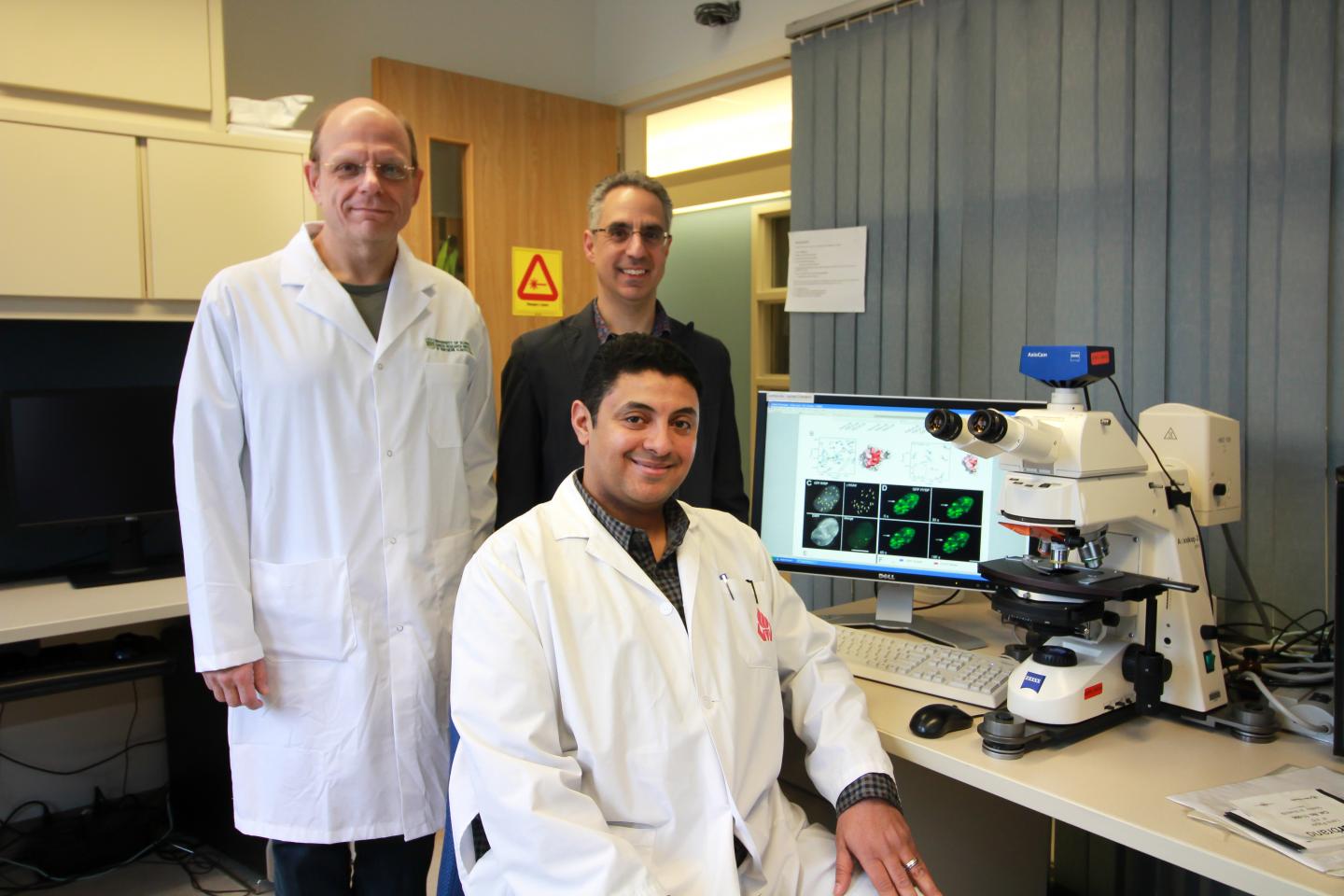
IMAGE

Credit: Melissa Fabrizio

University of Alberta researchers have discovered a mechanism that may make cancer cells more susceptible to treatment. The research team found that the protein RYBP prevents DNA repair in cancer cells, including breast cancer.

"RYBP would make cancer cells more sensitive to DNA damage, which would make chemo or radiation therapy more effective," said Mohammad Ali, a postdoctoral fellow and the lead author of the study.

This discovery could potentially be another avenue for precision medicine, which would allow cancer treatment to be tailored to the patient's DNA. The new RYBP biomarker could predict which patients will benefit from specific types of chemotherapy. There may also be opportunities to develop drugs that treat cancer by activating RYBP in tumours, including breast cancer.

Ali found that breast cancer cells that have high levels of RYBP are more sensitive to DNA damage after radiation or drug treatment, including PARP inhibitors (inhibitors of the enzyme poly ADP ribose polymerase used in cancer treatment). This makes high-RYBP breast cancer cells respond better to some anticancer and radiation therapy.

The protein RYBP is best known to regulate gene expression, being a member of the large epigenetic protein complex PRC1. In previous research, this team of University of Alberta researchers found that PRC1 complex helps to repair DNA damage in cancer cells. To their surprise, Ali discovered that RYBP prevents DNA repair and, more specifically, the error-free repair process.

The research team then identified the mechanism at the molecular level and the exact part of the protein that is responsible for this phenomenon.

"Cancer cells that resist therapy are able to repair themselves despite the DNA damage. By preventing them from repairing, we could more effectively treat cancer," said Ali. "My dream is to take this from bench to bedside and allow physicians to screen patients for better outcomes."

###

The project was a collaboration between two U of A labs, led by Michael Hendzel from the Departments of Oncology and Cell Biology and Leo Spyracopoulos from the Department of Biochemistry. Spyracopoulos helped to identify the structural biology of this phenomenon. Both Hendzel and Spyracopoulos are members of the Cancer Research Institute of Northern Alberta.

The study is published in Cell Reports. Funding for this project was provided by the Alberta Cancer Foundation, Alberta Innovates, the Alberta Cancer Prevention Legacy Fund and the Canadian Institutes of Health Research.

Media Contact

Shelby Soke
[email protected]
403-988-4730
@ualberta_fomd

http://www.med.ualberta.ca
Share12Tweet8Share2ShareShareShare2

Related Posts

Neg-Entropy: The Key Therapeutic Target for Chronic Diseases

February 7, 2026

Multidisciplinary Evidence-Based Guidelines for Therapeutic Drug Monitoring of Biologics in Inflammatory Bowel Disease

February 7, 2026

Early Tuberculosis Treatment Lowers Sepsis Mortality in People with HIV

February 7, 2026

Deep Learning Uncovers Tetrahydrocarbazoles as Potent Broad-Spectrum Antitumor Agents with Click-Activated Targeted Cancer Therapy Approach

February 7, 2026
Please login to join discussion

POPULAR NEWS

  • Robotic Ureteral Reconstruction: A Novel Approach

    Robotic Ureteral Reconstruction: A Novel Approach

    82 shares
    Share 33 Tweet 21
  • Digital Privacy: Health Data Control in Incarceration

    63 shares
    Share 25 Tweet 16
  • Study Reveals Lipid Accumulation in ME/CFS Cells

    57 shares
    Share 23 Tweet 14
  • Breakthrough in RNA Research Accelerates Medical Innovations Timeline

    53 shares
    Share 21 Tweet 13

About

We bring you the latest biotechnology news from best research centers and universities around the world. Check our website.

Follow us

Recent News

Neg-Entropy: The Key Therapeutic Target for Chronic Diseases

Multidisciplinary Evidence-Based Guidelines for Therapeutic Drug Monitoring of Biologics in Inflammatory Bowel Disease

Early Tuberculosis Treatment Lowers Sepsis Mortality in People with HIV

Subscribe to Blog via Email

Enter your email address to subscribe to this blog and receive notifications of new posts by email.

Join 73 other subscribers
  • Contact Us

Bioengineer.org © Copyright 2023 All Rights Reserved.

Welcome Back!

Login to your account below

Forgotten Password?

Retrieve your password

Please enter your username or email address to reset your password.

Log In
No Result
View All Result
  • Homepages
    • Home Page 1
    • Home Page 2
  • News
  • National
  • Business
  • Health
  • Lifestyle
  • Science

Bioengineer.org © Copyright 2023 All Rights Reserved.