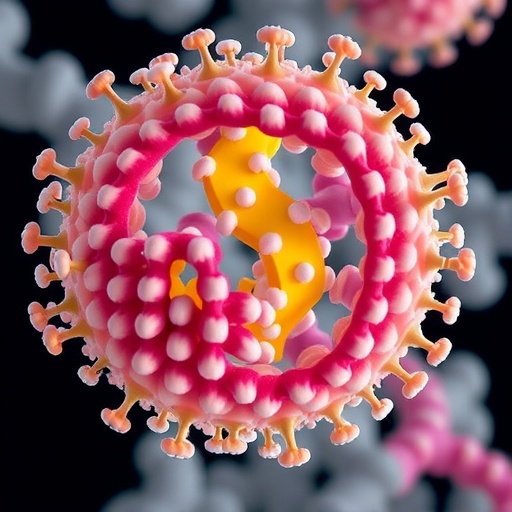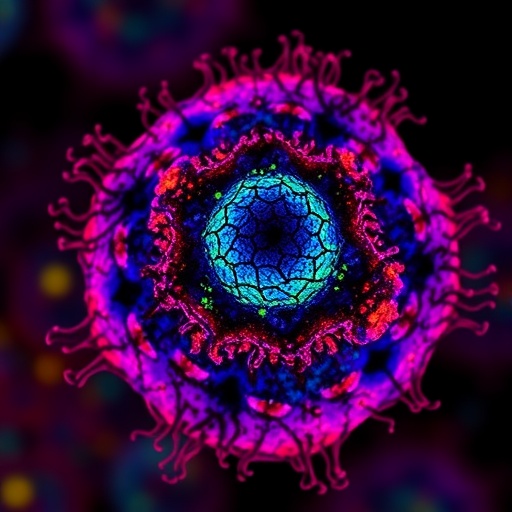
In a groundbreaking study published in Cell Death Discovery, researchers have unveiled a novel therapeutic strategy targeting a major hurdle in melanoma treatment—resistance to BRAF inhibitors (BRAFi). The work presented by Berra, Leclair, Sebillot, and colleagues elucidates the role of the aryl hydrocarbon receptor (AhR) in regulating ferroptosis, a distinct form of programmed cell death, providing a promising avenue to overcome BRAFi resistance in melanoma. This discovery opens new vistas for cancer therapy that leverage cell death pathways previously untapped by conventional treatments.
Melanoma, an aggressive form of skin cancer, frequently harbors activating mutations in the BRAF gene, leading to aberrant MAPK pathway signaling and uncontrolled cellular proliferation. BRAF inhibitors have revolutionized melanoma management, delivering impressive initial clinical responses. However, the unfortunate reality is that many patients eventually develop resistance to these agents, leading to disease progression and limited long-term survival benefits. Understanding and defeating this resistance mechanism remain a priority for oncologic research.
The underlying cause of BRAFi resistance is multifaceted, involving genetic heterogeneity, adaptive signaling rewiring, and changes in tumor microenvironment characteristics. Intriguingly, the study by Berra et al. pivots from the traditional focus on genetic mutations to explore the cellular death mechanisms associated with resistant melanoma cells. Their attention centers on ferroptosis, an iron-dependent cell death modality characterized by lipid peroxidation and membrane damage, distinct from apoptosis or necrosis.
Ferroptosis has garnered increasing interest for its potential as a therapeutic target across numerous cancer types. However, its regulation and relevance in melanoma, especially in the context of treatment resistance, remained poorly defined. The authors make a compelling case that AhR, a ligand-activated transcription factor historically studied for xenobiotic metabolism, functions as a pivotal regulator of ferroptosis sensitivity in BRAF-mutant melanoma cells.
By employing comprehensive molecular biology techniques and sophisticated cellular models of BRAFi-resistant melanoma, the researchers observed an upregulation of AhR signaling pathways correlating strongly with reduced ferroptotic susceptibility. Mechanistic interrogation revealed that AhR activation modulates the expression of key lipid metabolic enzymes and antioxidants, collectively buffering the cells against ferroptotic death. This protective axis, when intact, promotes melanoma cell survival under therapeutic stress.
Crucially, the team demonstrated that pharmacological inhibition or genetic silencing of AhR disabled this defense mechanism, re-sensitizing BRAFi-resistant melanoma cells to ferroptosis induction. They utilized small molecule ferroptosis inducers, which cause lethal lipid peroxidation, showing that the combined intervention effectively caused cancer cell death where BRAFi alone failed. This dual approach not only suppresses tumor proliferation but also limits potential escape pathways that tumors typically exploit.
Their experiments extended beyond in vitro models to in vivo studies using melanoma xenografts in mice. Remarkably, co-administration of AhR inhibitors with ferroptosis inducers led to significant tumor regression without apparent systemic toxicity. These findings underscore the translational potential of this combinatorial strategy, representing a paradigm shift in treating drug-resistant melanoma by turning cell death pathways against the cancer.
The molecular insights gained highlight AhR’s broader role beyond xenobiotic sensing, suggesting it acts as a metabolic gatekeeper balancing oxidative stress responses and ferroptosis vulnerability. This raises intriguing possibilities that AhR functions as a nodal checkpoint integrating environmental cues and intracellular redox states to dictate melanoma cell fates under therapeutic pressure.
Moreover, this research propels forward the concept that ferroptosis is not merely a cell death subtype but a uniquely targetable vulnerability in cancer biology. The ability to manipulate ferroptotic pathways holds immense promise, particularly for tumors like melanoma, which notoriously develop resistance to apoptosis-inducing drugs. Ferroptosis-targeted therapy could complement existing regimens, introducing new therapeutic pressures that prevent tumor adaptation.
While the study focuses on a specific oncogenic mutation and resistance mechanism, the principles outlined around AhR-dependent ferroptosis may be extrapolated to other malignancies with similar resistance profiles. As such, it represents a compelling proof-of-concept for expanding ferroptosis-centric design frameworks in oncology drug development.
Moving forward, challenges remain in optimizing the pharmacodynamics and delivery of AhR inhibitors alongside ferroptosis inducers to maximize clinical efficacy while minimizing off-target effects. Additionally, biomarker development will be essential for identifying patients whose tumor biology predicts responsiveness to this approach, enabling precision medicine applications.
The interplay between the tumor microenvironment, immune surveillance, and ferroptosis also warrants deeper investigation. Given AhR’s involvement in immune regulation, modulating its activity could inadvertently influence anti-tumor immunity, with potential beneficial or detrimental consequences that future studies must clarify.
In summary, the study by Berra and colleagues represents a major advance in the melanoma therapy field. By revealing AhR as a master regulator of ferroptosis evasion in BRAFi-resistant tumors, they provide a mechanistically grounded therapeutic strategy that may reinvigorate long-term responses in melanoma patients who currently face limited options.
This line of inquiry underscores the importance of exploring non-apoptotic cell death pathways as complementary cancer vulnerabilities. The exploitation of ferroptosis, modulated by transcriptional regulators like AhR, introduces a fresh frontier in overcoming drug resistance—a phenomenon that has stymied effective cures for aggressive cancers like melanoma.
As the oncology community seeks new weapons in the battle against resistant tumors, this discovery could catalyze the development of novel drug combinations integrating ferroptosis modulation, immunotherapy, and targeted inhibitors. The promise of restoring drug sensitivity and improving patient outcomes through this mechanistically elegant approach positions AhR-dependent ferroptosis at the forefront of future cancer research and therapeutic innovation.
Subject of Research: AhR-dependent ferroptosis and its role in overcoming BRAFi resistance in melanoma
Article Title: AhR-dependent ferroptosis as a therapeutic opportunity to counteract BRAFi-resistance in melanoma
Article References:
Berra, C., Leclair, H.M., Sebillot, A. et al. AhR-dependent ferroptosis as a therapeutic opportunity to counteract BRAFi-resistance in melanoma. Cell Death Discov. (2026). https://doi.org/10.1038/s41420-026-03057-3
Image Credits: AI Generated
DOI: https://doi.org/10.1038/s41420-026-03057-3
Tags: adaptive signaling in melanomaadaptive signaling in melanoma resistanceAhR regulation of ferroptosis in melanomaAhR-mediated ferroptosis in melanomaaryl hydrocarbon receptor role in cancerBRAF mutation and melanoma progressionBRAF mutation-driven melanoma treatmentcell death mechanisms in drug resistancecell death pathways in oncologyferroptosis and cancer treatmentferroptosis-targeted cancer therapymelanoma MAPK pathway mutationsmelanoma tumor microenvironment and resistancenovel strategies for drug-resistant melanomanovel strategies for melanoma drug resistanceovercoming BRAF inhibitor resistanceovercoming melanoma therapy resistanceprogrammed cell death mechanismsprogrammed cell death pathways in oncologytargeted therapy for melanomatherapeutic targeting of ferroptosis