

• HOME
  • NEWS
  • EXPLORE
    • CAREER
      • Companies
      • Jobs
    • EVENTS
    • iGEM
      • News
      • Team
    • PHOTOS
    • VIDEO
    • WIKI
  • BLOG
  • COMMUNITY
    • FACEBOOK
    • INSTAGRAM
    • TWITTER
Wednesday, December 31, 2025
BIOENGINEER.ORG
No Result
View All Result
  • Login
  • HOME
  • NEWS
  • EXPLORE
    • CAREER
      • Companies
      • Jobs
        • Lecturer
        • PhD Studentship
        • Postdoc
        • Research Assistant
    • EVENTS
    • iGEM
      • News
      • Team
    • PHOTOS
    • VIDEO
    • WIKI
  • BLOG
  • COMMUNITY
    • FACEBOOK
    • INSTAGRAM
    • TWITTER
  • HOME
  • NEWS
  • EXPLORE
    • CAREER
      • Companies
      • Jobs
        • Lecturer
        • PhD Studentship
        • Postdoc
        • Research Assistant
    • EVENTS
    • iGEM
      • News
      • Team
    • PHOTOS
    • VIDEO
    • WIKI
  • BLOG
  • COMMUNITY
    • FACEBOOK
    • INSTAGRAM
    • TWITTER
No Result
View All Result
Bioengineer.org
No Result
View All Result
Home NEWS Science News Science

Tailored, dense-dose chemotherapy for early breast cancer does not result in significant improvement

Bioengineer by Bioengineer
November 8, 2016
in Science
Reading Time: 2 mins read
0
Share on FacebookShare on TwitterShare on LinkedinShare on RedditShare on Telegram

Among women with high-risk early breast cancer, the use of tailored dose-dense chemotherapy compared with standard adjuvant chemotherapy did not result in a statistically significant improvement in breast cancer recurrence-free survival, and nonhematologic toxic effects were more frequent in the tailored dose-dense group, according to a study appearing in the November 8 issue of JAMA.

Dose-dense therapy, defined as delivery of chemotherapy at shorter intervals without increasing the cumulative dose, has been suggested as a means to improve efficacy of chemotherapy for early breast cancer. Dosing of most chemotherapy agents is calculated based on body surface area, which leads to large interpatient variability in toxic effects and efficacy. Whether tailored dosing can improve outcomes is unknown, as is the role of dose-dense adjuvant chemotherapy.

Jonas Bergh, M.D., of the Karolinska Institutet and University Hospital, Stockholm, Sweden, and colleagues randomly assigned 2,017 women who had surgery for nonmetastatic node-positive or high-risk node-negative breast cancer to receive tailored dose-dense adjuvant chemotherapy (n = 1,006) or standard chemotherapy (n = 1,011). The study was conducted at 86 sites in Sweden, Germany, and Austria.

Among the randomized patients, 2,000 received study treatment (at least 1 cycle of chemotherapy). Median follow-up time was 5.3 years. The researchers found that the groups did not differ in 5-year breast cancer recurrence-free survival (89 percent [tailored dose-dense group] vs 85 percent [control group]), 5-year overall survival (92 percent vs 90 percent) or 5-year distant disease-free survival (89 percent vs 87 percent). The tailored dose-dense group had significantly better event-free survival (EFS) than the control group (5-year EFS, 87 percent vs 82 percent). Grade 3 or 4 nonhematologic toxic effects occurred in 527 (53 percent) in the tailored dose-dense group and 366 (37 percent) in the control group.

The authors write that an individual patient data meta-analysis would help to assess whether chemotherapy dose intensification in early breast cancer should be reserved for specific subgroups of patients.

###

(doi:10.1001/jama.2016.15865; the study is available pre-embargo at the For the Media website)

Editor's Note: Please see the article for additional information, including other authors, author contributions and affiliations, financial disclosures, funding and support, etc.

Media Contact

Jonas Bergh
[email protected]
@JAMA_current

http://www.jamamedia.org
Share12Tweet7Share2ShareShareShare1

Related Posts

Five or more hours of smartphone usage per day may increase obesity

July 25, 2019
IMAGE

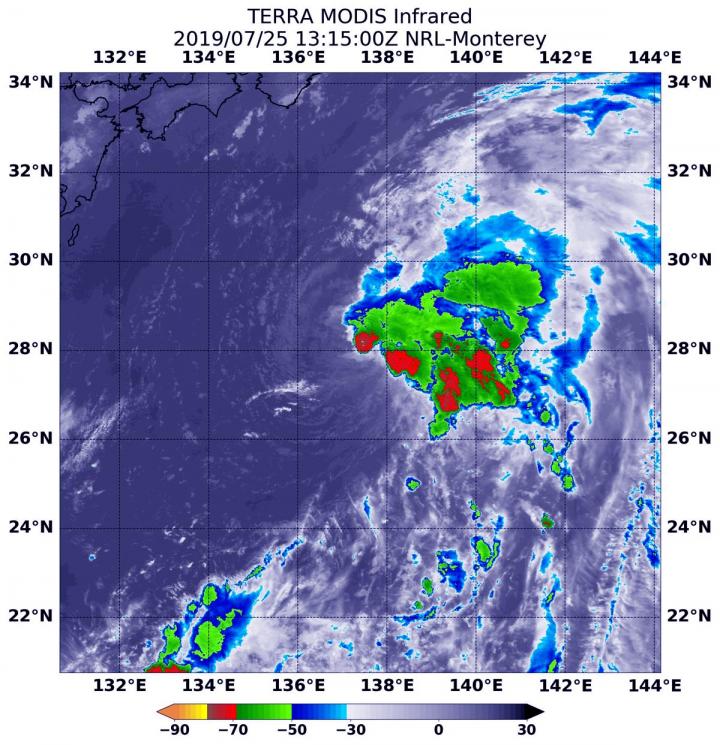
NASA’s terra satellite finds tropical storm 07W’s strength on the side

July 25, 2019

NASA finds one burst of energy in weakening Depression Dalila

July 25, 2019

Researcher’s innovative flood mapping helps water and emergency management officials

July 25, 2019
Please login to join discussion

POPULAR NEWS

  • blank

    PTSD, Depression, Anxiety in Childhood Cancer Survivors, Parents

    104 shares
    Share 42 Tweet 26
  • NSF funds machine-learning research at UNO and UNL to study energy requirements of walking in older adults

    71 shares
    Share 28 Tweet 18
  • Exploring Audiology Accessibility in Johannesburg, South Africa

    52 shares
    Share 21 Tweet 13
  • Nurses’ Views on Online Learning: Effects on Performance

    71 shares
    Share 28 Tweet 18

About

We bring you the latest biotechnology news from best research centers and universities around the world. Check our website.

Follow us

Recent News

Measuring Wearable Healthcare Electronics’ Global Impact

Endoglin Boosts BMP9 Signaling via TGFBRII Recruitment

Enhancing Heart Rhythm: Targeting INa-L and RyR2

Subscribe to Blog via Email

Enter your email address to subscribe to this blog and receive notifications of new posts by email.

Join 71 other subscribers
  • Contact Us

Bioengineer.org © Copyright 2023 All Rights Reserved.

Welcome Back!

Login to your account below

Forgotten Password?

Retrieve your password

Please enter your username or email address to reset your password.

Log In
No Result
View All Result
  • Homepages
    • Home Page 1
    • Home Page 2
  • News
  • National
  • Business
  • Health
  • Lifestyle
  • Science

Bioengineer.org © Copyright 2023 All Rights Reserved.
