A recent study published in BMC Complementary Medicine and Therapies has shed light on the multifaceted benefits associated with Tai Chi, particularly focusing on its role in managing hypertension. This groundbreaking research, spearheaded by Fang, H., Zhang, J., and Zhou, Q., presents compelling evidence that Tai Chi rehabilitation programs significantly enhance blood pressure control in individuals suffering from hypertension. By examining the intricate mechanisms behind this ancient practice, the authors delve into its impact on inflammatory responses and the modulation of Brain-Gut peptides, providing a comprehensive understanding of its therapeutic potential.
In an age where lifestyle diseases are prevalent, this study underscores the importance of integrating holistic approaches into conventional medical treatments. Hypertension, often dubbed the silent killer, impacts millions worldwide and is a significant risk factor for both heart disease and stroke. Conventional pharmacological interventions can be effective but often come with an array of side effects that can diminish patient adherence. Thus, the emergence of complementary therapies, such as Tai Chi, offers a promising avenue for sustainable management of this condition.
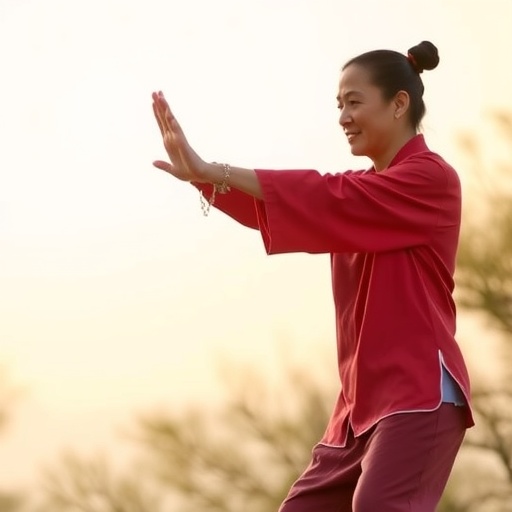
The researchers conducted a rigorous analysis involving a cohort of patients diagnosed with hypertension, who strictly adhered to a structured Tai Chi rehabilitation program. The participants engaged in these sessions multiple times a week, under the guidance of certified instructors trained not only in Tai Chi but also in the nuances of hypertension management. This approach ensured that individuals could maximize the physical and psychological benefits of Tai Chi, leading to notable improvements not only in their blood pressure readings but overall quality of life.
One of the most revealing findings of the study relates to the modulation of inflammatory markers and Brain-Gut peptides, both of which play significant roles in cardiovascular health. The authors meticulously measured levels of specific inflammatory cytokines and peptides before and after the intervention. The results indicated a marked decrease in pro-inflammatory markers among participants, suggesting that Tai Chi does not merely act on the symptoms of hypertension but addresses underlying physiological processes contributing to the condition.
Moreover, the study presents a novel perspective on the interaction between the central nervous system and the gut. Brain-Gut peptides, which are integral to the body’s stress response and metabolic regulation, saw favorable modulation in participants of the Tai Chi program. The implications of this finding are profound, as they highlight the possible interconnectedness of mental state, physical activity, and hypertension management. Tai Chi, often described as a moving meditation, may substantially aid in lowering stress levels, thereby enabling better management of hypertension through this complex interplay.
The mental health benefits associated with Tai Chi cannot be overstated. Stress and anxiety are well-documented contributors to elevated blood pressure. By promoting relaxation, mindfulness, and enhanced body awareness, Tai Chi serves as a natural antidote to the pressures of modern living. During the sessions, participants reported a significant reduction in feelings of anxiety and stress, alongside an increased sense of well-being. These subjective improvements underscore the importance of psychological factors in the overall treatment of hypertension.
Another noteworthy aspect of this research is the demographic diversity within the participant group. The study encompassed individuals of different age ranges and backgrounds, showcasing that Tai Chi is an inclusive exercise regimen that can be adapted to various physical capabilities. This adaptability makes Tai Chi a particularly valuable intervention for elderly populations or those with limited mobility, who may be at increased risk for both hypertension and associated cardiovascular conditions.
In conclusion, the findings from Fang, H., Zhang, J., and Zhou, Q. offer not merely statistical validation of Tai Chi’s effectiveness in managing hypertension but a broader commentary on the revitalization of traditional practices in modern healthcare. With growing recognition of integrative medicine, such approaches can lead to improved patient outcomes, reduced healthcare costs, and a higher quality of life for individuals with chronic conditions.
The landscape of hypertension treatment may be on the cusp of a renaissance, driven by innovative research such as this. As health practitioners and patients alike begin to embrace holistic methods alongside traditional medical interventions, the role of Tai Chi in hypertension management could evolve into a cornerstone of therapy, championing a paradigm shift towards comprehensive care in the realm of cardiovascular health.
This study not only provides hope for numerous individuals dealing with hypertension but also embodies a call to action for further exploration into the depths of complementary therapies. As the dialogue on lifestyle interventions continues to grow, the melding of ancient wisdom and contemporary science may reveal new pathways towards comprehensive health solutions.
Moreover, as this study circulates in various medical and community settings, it could catalyze increased interest in practical workshops and group sessions aimed at teaching Tai Chi to broader audiences. Whether in urban parks, community centers, or even through virtual platforms, the dissemination of Tai Chi practices could significantly enhance public engagement in their health journeys, encouraging proactive approaches to blood pressure management.
Ultimately, this research illuminates more than a method of physical conditioning; it champions a philosophy of well-being that embraces body, mind, and spirit. In a world burdened by the repercussions of chronic diseases, it presents a reminder that sometimes, the most profound solutions can often be found in time-tested practices, inviting us to experience the power of movement, balance, and connection to oneself and the community.
Furthermore, the implications of this study extend beyond the individual level. By integrating such rehabilitation programs within public health frameworks, we could see a potential decrease in the overall incidence of hypertension-related complications on a population scale. This could alleviate pressure on healthcare systems while simultaneously enhancing the life quality of countless individuals through natural, accessible treatment methods.
In summary, the pivotal research conducted by Fang, H., Zhang, J., and Zhou, Q. encapsulates the promise of Tai Chi as an effective strategy for hypertension management. The intersection of mind-body practices with scientific inquiry opens doors to innovative health paradigms that prioritize not just the absence of disease but the cultivation of holistic well-being.
Subject of Research: The effects of Tai Chi rehabilitation on blood pressure control and modulation of inflammatory and Brain-Gut peptides in hypertension.
Article Title: Tai Chi rehabilitation program enhances blood pressure control and modulates inflammatory and Brain-Gut peptides in hypertension.
Article References:
Fang, H., Zhang, J., Zhou, Q. et al. Tai Chi rehabilitation program enhances blood pressure control and modulates inflammatory and Brain-Gut peptides in hypertension.
BMC Complement Med Ther (2026). https://doi.org/10.1186/s12906-026-05265-x
Image Credits: AI Generated
DOI: 10.1186/s12906-026-05265-x
Keywords: Tai Chi, Hypertension, Blood Pressure Control, Inflammatory Peptides, Brain-Gut Peptides, Complementary Medicine
Tags: blood pressure management through Tai Chicomplementary therapies for lifestyle diseasesconventional vs. complementary medicine for hypertensioneffects of Tai Chi on inflammatory responsesholistic approaches for hypertension treatmentinflammation control with Tai Chilifestyle changes for blood pressure controlsustainable management of hypertensionTai Chi and Brain-Gut peptidesTai Chi as a therapeutic practice.Tai Chi benefits for hypertensionTai Chi rehabilitation programs