
Fractional Derivative Model Shows Higher Derivative Orders Reduce Marine Ecosystem Stability
A fractional-order model shows that reducing derivative order suppresses chaos, whereas higher-order derivatives and strong memory effects reduce stability.
A fractional-order model shows that reducing derivative order suppresses chaos, whereas higher-order derivatives and strong memory effects reduce stability.

Researchers have developed the first finite-step probabilistic bounds to predict the stability of iterated Pearson correlation matrices, offering a practical ...

A study investigating computational impact models for precast beam bridges reveals that selecting appropriate pounding formulations is critical for accurately ...

A review of clinical psychotherapy studies indicates that psychological improvements unfold through discontinuous phase transitions preceded by critical instabilities and ...

A review shows contemporary machine learning methods extend classical system identification through a unified predictor-oriented framework for dynamical modeling.

Researchers demonstrated that a deep deterministic policy gradient framework improves trajectory tracking accuracy in simulated five-degree-of-freedom robotic arms over conventional ...

Researchers optimized projection bases through dissipative operator refitting, significantly reducing simulation residuals and trajectory errors in nonlinear port-Hamiltonian systems.
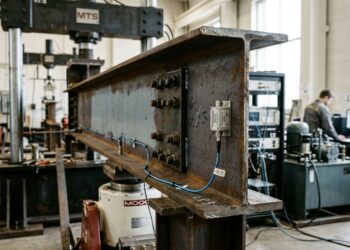
Researchers developed a nonlinear finite element model updating method using acceleration wavelet decomposition and Kriging surrogate modeling, demonstrating robust and ...

A controlled Swedish simulation study found that the recurrence rate of coordinative behaviors significantly predicted first aid performance in ad-hoc ...

Researchers extended the LDM quantum Cournot duopoly framework to two-product competition, finding that high entanglement or fast output adjustment triggers ...

A systematic review of 20 studies finds chaos theory applied across cardiology, neurology and oncology, but with wide heterogeneity and ...

A new numerical study validates that a six-dimensional series-connected memcapacitor system sustains bounded deterministic chaos with a single robust positive ...

A new neural architecture converts the classical Volterra series into learnable coefficient tensors, recovering known chaotic dynamics, matching transformer physics, ...

A nonlinear numerical model shows that internal and external flows can couple the first and second bending modes of a ...

A controlled-breathing study shows that inhale-holds and exhale-holds push cortical activity and heart rate into distinct dynamical regimes, revealing respiration ...

Researchers have built a tri-beam MEMS resonator with ultra-weak substrate-mediated coupling whose nonlinear frequency locking, triggered by gas-induced thermal shifts, ...

A new review argues that memcapacitors and meminductors, the energy-storing cousins of the memristor, could provide fundamentally stronger hardware security ...

A new quantum game-theoretic model of dual-channel pricing shows that consumer reference-price memory and strategic coupling can drive markets into ...

A new GeroScience study shows that motoric cognitive risk syndrome carries a multidimensional gait signature, detectable through machine-learning anomaly scores, ...

Researchers at Guangdong University of Technology have broken a chaos-based image cryptosystem whose dynamic key was designed to resist attack, ...