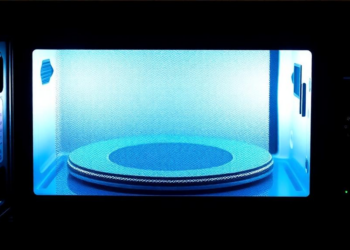
Microwave Timing Holds the Key to Quantum Dot–MXene Electrodes for Zinc Batteries
Researchers at Jilin Normal University show that precisely timed microwave irradiation can generate MXene quantum dots on a vanadium carbide ...
Researchers at Jilin Normal University show that precisely timed microwave irradiation can generate MXene quantum dots on a vanadium carbide ...
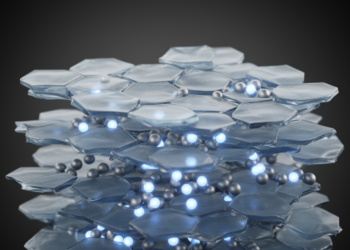
Researchers in India report that lanthanum-doped nickel-cobalt layered double hydroxide nanosheets grown hydrothermally achieve a specific capacity of 390.3 mAh/g ...

Brazilian researchers used guaraná seed extract to synthesize silver nanoparticles that showed diffusion-influenced electrochemical responses to a commercial deltamethrin formulation ...

Researchers synthesized copper ferrite nanoparticles using Pemphis acidula leaf extract via a hydrothermal method, achieving high specific capacitance and strong ...
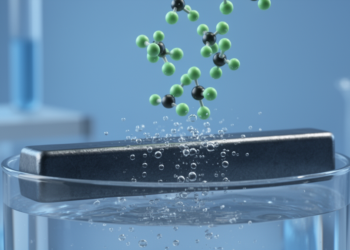
Monash University researchers have developed lithium-alloying gallium-based cathodes that overcome the intrinsic energy-efficiency limit of lithium-mediated electrochemical ammonia synthesis, achieving ...
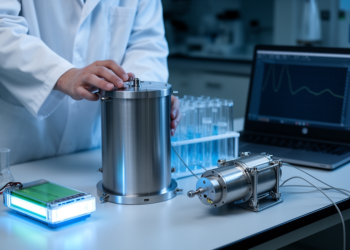
Researchers at Forschungzentrum Jülich have combined finite element simulations with quantum optimal control to turn magnetic field distortions from metal ...

Researchers in China have built an aqueous asymmetric supercapacitor from a CoS2/Nd2O3 composite and sulfur-treated carbon nanotubes that retains about ...

Fluorescent defects in atomically thin hexagonal boron nitride can detect and identify individual ions in liquids through spectral shifts, enabling ...

Researchers at Anna University have developed a hydrothermally synthesized MWCNT/Co3O4 nanocomposite electrode that detects glucose in artificial sweat with high ...
Researchers in China have synthesized orthorhombic Zn3V2O8 by a flux-assisted solid-state method and shown it delivers high initial lithium storage ...
Researchers at Harbin Institute of Technology have created a hydrophobic, nitrogen-doped nanoporous carbon from a ZIF-8 template that delivers Super-Nernstian ...

Northwestern University chemists have developed an electrochemical strategy that directly couples two fleeting carbon-centred radicals from abundant carboxylic acids and ...

Researchers have shown that carbon dioxide can be electrochemically converted into solid carbon in molten lithium-potassium carbonate salt and diffused ...
Researchers stabilized microsized tin anodes in sodium-ion batteries by simply limiting discharge capacity, achieving 170 stable cycles at roughly 99 ...
A flow-through coulometric titration method using a porous glassy carbon electrode measures iodide directly in seawater, mineral waters and iodized ...
Researchers in Qinghai used dealloying to create porous silicon wrapped in carbon and blended with graphite, achieving a battery anode ...