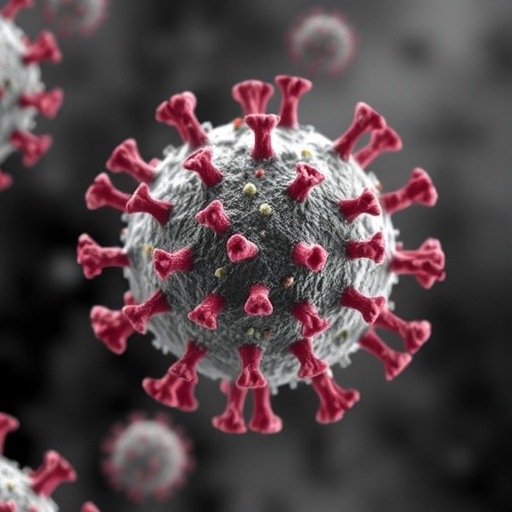
In a groundbreaking study published recently, researchers have meticulously characterized a synthetic infectious cloned DNA of simian foamy virus serotype 1 (SFV-1), specifically derived from the Macaca cyclopis species. SFV-1, a retrovirus isolated initially from the Taiwanese macaque monkey, has now been expanded upon with the development and comprehensive analysis of a viral stock, named SFV-MD, prepared through minimal passage in M. dunni cells. This research highlights cutting-edge methodologies including high-throughput sequencing, viral infectivity assays, and sophisticated bioinformatics to deepen our understanding of this unique viral entity.
The journey began with the acquisition of the SFV-1 isolate from the American Type Culture Collection, which provided a detailed passage history across various cell lines including rabbit kidney, human cervical carcinoma (HeLa), rhesus monkey kidney, rat kidney, and canine fibroblasts. This complex passage history underscores the viral adaptability and evolutionary nuance before the researchers proceeded to generate their virus stock, SFV-MD, via limited passages in M. dunni cells, a murine fibroblast line. Cultured in a nutritive Dulbecco’s Modified Eagle Medium enriched with fetal bovine serum and antibiotics, the researchers monitored cytopathic effects to capture the viral replication peak, aligning the virus’s growth cycle with maximum reverse transcriptase activity.
To quantitatively assess the virus’s infectivity, a 50% tissue culture infectious dose (TCID50) assay was performed using MRC-5 cells, demonstrating a high infectious titer of 10^5.5 TCID50 per milliliter. This assay employed serial dilution and cytopathic effect readouts over 13 days, applying the rigor of the Kärber calculation method for precision. Alongside infectivity, the team concentrated viral particles for high-throughput sequencing (HTS) to unravel the genomic landscape with sharp fidelity, employing both Illumina MiSeq and NextSeq platforms for paired-end sequencing to ensure depth and breadth of coverage.
The post-sequencing bioinformatics analysis included mapping millions of adapter-trimmed reads against the reference SFV-1 genome, revealing a consensus genomic sequence with an average coverage depth of 38 reads per nucleotide base. Interestingly, long terminal repeats (LTRs) were separately mapped, and open reading frames (ORFs) were identified using specialized tools to confirm genomic architecture. Splice sites within critical regulatory genes, such as tas/bel2 encoding Bet protein, transpired through detailed mapping of high-throughput sequencing reads with verification via RT-PCR. This molecular precision enabled confirmation of viral RNA splicing nuances crucial for viral protein expression.
Delving deeper into viral variant landscapes, NextSeq sequencing of the viral stock employed stringent quality control measures, trimming reads by Phred quality scores and length cutoffs to eliminate sequencing artefacts. Subsequent variant analysis identified single nucleotide variants (SNVs) and insertions/deletions (indels) exceeding a 20% frequency threshold, highlighting existent viral quasispecies diversity. This comprehensive variant catalog served as a basis for tracking known mutations across sample sets using specialized software pipelines, thereby informing viral evolutionary dynamics during stock preparation.
Expanding their toolkit, the researchers integrated Oxford Nanopore long-read sequencing, enhancing their ability to capture larger genomic rearrangements and complex structural variants often missed by short-read technologies. They generated double-stranded cDNA from viral RNA extracted with Trizol LS, employing custom protocol modifications including optimized bead cleanup steps and high-accuracy base-calling algorithms. Analysis of these long reads revealed variant frequencies and confirmed read integrity, boasting an N50 length surpassing 1,500 base pairs and high-quality average read scores, reinforcing the robustness of their data.
Concurrently, the team engaged in synthetic biology to overcome previous hurdles in viral infectivity. Initial attempts with synthesized SFV DNA based on historical genome sequences failed to yield infectious virus. Overcoming this limitation, they synthesized viral DNA matching their own HTS-derived SFV-MD consensus sequence and inserted it into a pUC57-Brick cloning vector, dubbing this construct pSFV DNA. Transfection of M. dunni cells with this construct, assisted by polyethylenimine-mediated delivery, successfully generated infectious viral stocks. These stocks exhibited titers exceeding 10^4.8 TCID50 per milliliter, confirming the utility of synthetic genome cloning in generating functional virus for further studies.
The infectivity of both the original SFV-MD and the synthetic pSFV-MD stocks was tested across cell lines of diverse origin including murine fibroblasts (M. dunni), simian kidney cells (FRhK-4), and African green monkey kidney epithelial cells (Vero). Cells were challenged with precisely calculated infectious doses, cultured under tailored media conditions, and monitored for cytopathic effects over multiple passages. Throughout these passages, supernatants were collected to quantify reverse transcriptase activity, mapping viral replication kinetics in real-time. Post-infection titration assays corroborated the infectivity spectrum and cell tropism of the viral stocks.
Addressing viral evolution under in vitro replication pressure, the authors sequenced viral genomes from terminal culture supernatants derived from both SFV-MD and pSFV-MD infections in Vero cells. This comparative variant analysis illuminated adaptive mutations and quasispecies shifts, potentially influencing viral fitness and pathogenesis. Utilization of cutting-edge Illumina sequencing and variant calling tools forged a path for deeper insights into mutation rates and selection landscapes during viral propagation.
Underpinning this comprehensive study is a symphony of molecular biology techniques, from classical cell culture methodologies and RT-PCR validations to modern next-generation sequencing approaches. The intricate orchestration of experimental design, encompassing viral cultivation, nucleic acid extraction, library preparation, and multi-platform sequencing, manifests an unprecedented resolution in SFV-1 genomic characterization. The integration of bioinformatics pipelines for variant detection, read mapping, and structural annotation offers a robust framework applicable broadly in retroviral research.
Importantly, the researchers’ ability to generate a synthetic infectious clone of SFV paves the way for precise manipulation of viral genomes, facilitating functional studies dissecting viral gene roles, host interactions, and replication pathways. This lays fertile ground for developing innovative viral vectors or exploring therapeutic interventions targeting foamy viruses, which have received increasing attention due to their unique biology and interaction with non-human primate hosts.
Furthermore, the extended passage history and characterization of SFV-1 underscore the complexities involved in viral stock preparation, highlighting the need for minimal passages to preserve viral integrity and infectivity. This is especially critical when establishing reference strains for comparative analyses or for use as tools in gene delivery systems and viral pathogenesis models. The meticulous documentation of cell lines, culture conditions, viral titers, and sequencing statistics embodies scientific rigor that will undoubtedly influence standards in virology research.
Overall, this elucidation of SFV-MD and its synthetic counterpart constitutes a significant advance in the field of retrovirology, blending classical virological techniques with state-of-the-art genomics to unravel the complexities of simian foamy virus biology. As synthetic biology continues to transform infectious disease research, studies such as this illuminate pathways to harness and comprehend viral entities with precision, unlocking doors to future research and innovation.
Subject of Research: Characterization and synthetic cloning of simian foamy virus serotype 1 (SFV-1) genome and viral stock infectivity.
Article Title: Characterization of a synthetic infectious cloned DNA of simian foamy virus serotype 1.
Article References:
Fuentes, S.M., Mattson, N., Bosma, T.J. et al. Characterization of a synthetic infectious cloned DNA of simian foamy virus serotype 1. npj Viruses 3, 81 (2025). https://doi.org/10.1038/s44298-025-00162-5
Image Credits: AI Generated
DOI: https://doi.org/10.1038/s44298-025-00162-5
Tags: bioinformatics in virologycytopathic effects monitoringhigh-throughput sequencing techniquesM. dunni cell line usageMacaca cyclopis researchreverse transcriptase activity assessmentSFV-1 retrovirus studysimian foamy virus characterizationsynthetic infectious cloneviral adaptability and evolutionviral infectivity assaysviral stock development SFV-MD