• HOME
  • NEWS
  • EXPLORE
    • CAREER
      • Companies
      • Jobs
    • EVENTS
    • iGEM
      • News
      • Team
    • PHOTOS
    • VIDEO
    • WIKI
  • BLOG
  • COMMUNITY
    • FACEBOOK
    • INSTAGRAM
    • TWITTER
Saturday, February 7, 2026
BIOENGINEER.ORG
No Result
View All Result
  • Login
  • HOME
  • NEWS
  • EXPLORE
    • CAREER
      • Companies
      • Jobs
        • Lecturer
        • PhD Studentship
        • Postdoc
        • Research Assistant
    • EVENTS
    • iGEM
      • News
      • Team
    • PHOTOS
    • VIDEO
    • WIKI
  • BLOG
  • COMMUNITY
    • FACEBOOK
    • INSTAGRAM
    • TWITTER
  • HOME
  • NEWS
  • EXPLORE
    • CAREER
      • Companies
      • Jobs
        • Lecturer
        • PhD Studentship
        • Postdoc
        • Research Assistant
    • EVENTS
    • iGEM
      • News
      • Team
    • PHOTOS
    • VIDEO
    • WIKI
  • BLOG
  • COMMUNITY
    • FACEBOOK
    • INSTAGRAM
    • TWITTER
No Result
View All Result
Bioengineer.org
No Result
View All Result
Home NEWS Science News Biology

Synthetic heart valves could help surgeons improve surgical skills

Bioengineer by Bioengineer
February 11, 2018
in Biology
Reading Time: 2 mins read
0
Share on FacebookShare on TwitterShare on LinkedinShare on RedditShare on Telegram
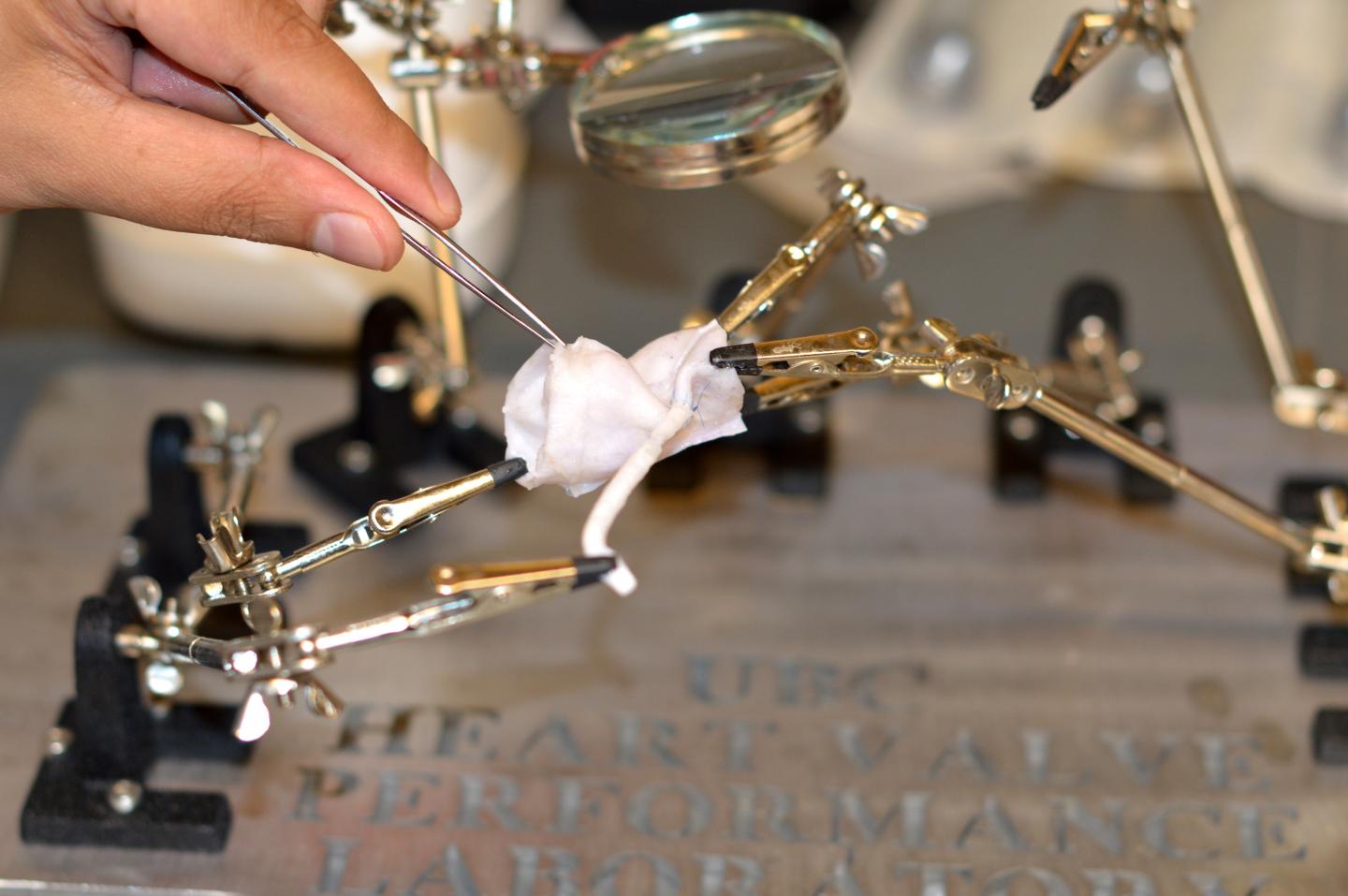
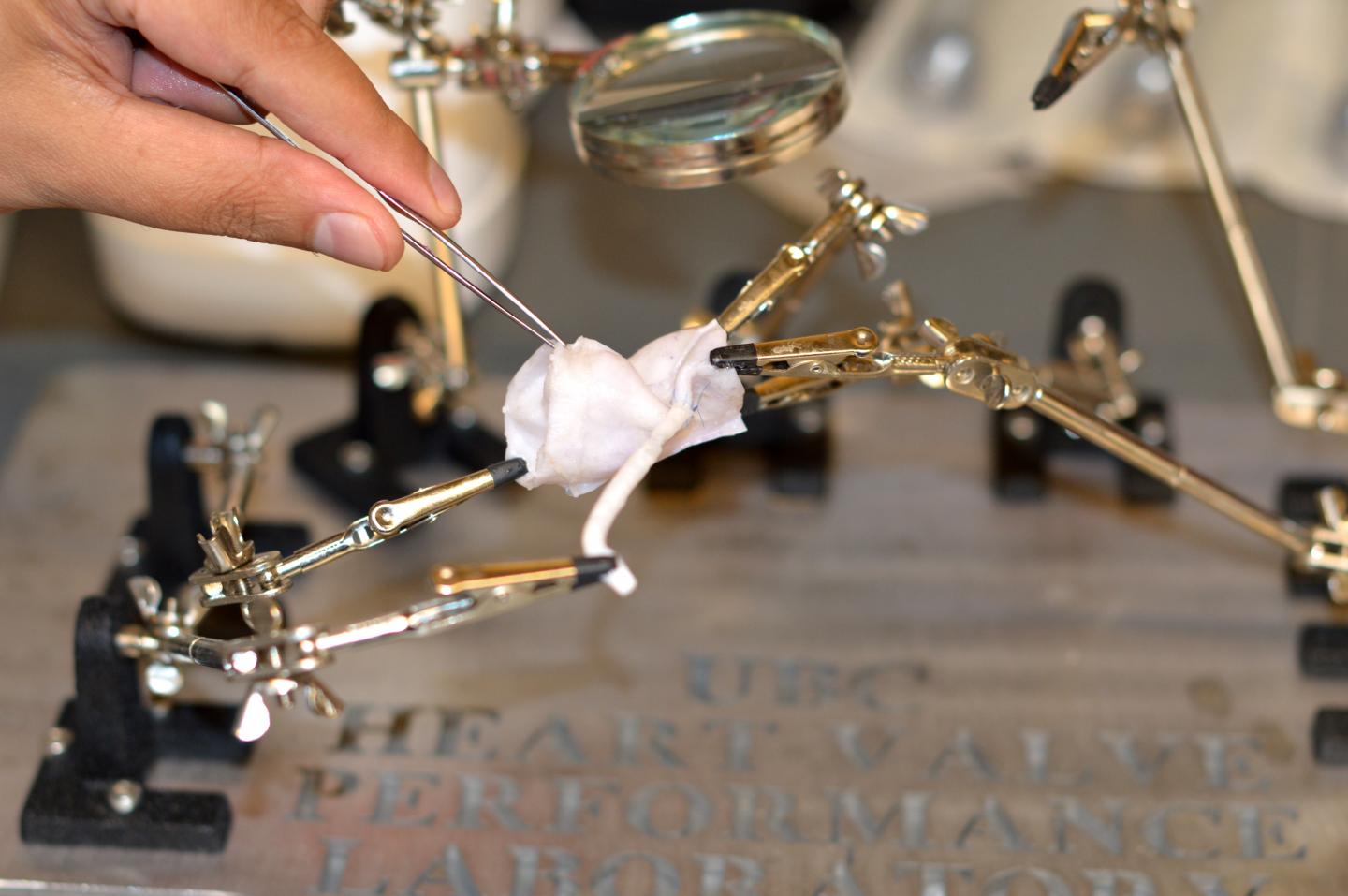
IMAGE

Credit: UBC

A UBC invention has made it possible for doctors to vastly improve their bypass surgery techniques without relying on animals.

The invention–synthetic heart valves, arteries and veins made of polyvinyl alcohol hydrogel–was created by researchers at UBC's Okanagan campus

The polyvinyl "tissue" makes it possible for surgeons and medical residents to practise bypass surgery using the synthetic material as opposed to the current practice of using the arteries and veins of dead pigs or human cadavers.

"One of the major issues with using arteries from human or animal cadavers is that they break down very quickly if they are not treated with preservatives," says inventor and Assist. Prof. of Engineering Hadi Mohammadi. "This synthetic material doesn't decompose and can't be contaminated, meaning doctors can practise their technique almost anywhere.

"An added benefit is that this material can be created safely and cheaply, which could solve any issues surgeons currently have in accessing practice materials."

The invention, currently only used for teaching purposes, is already being used by a number of surgeons and medical residents at the Kelowna General Hospital (KGH) in British Columbia's interior.

The new synthetic material is designed to feel like living human tissue and provides a number of benefits over what is currently being done, says co-inventor Dr. Guy Fradet, head of cardiovascular surgery at KGH and an associate professor in UBC's Faculty of Medicine.

"A problem with using arteries from animals or human cadavers for practising bypass surgery is that they feel different than living human tissue," says Fradet. "The more realistic we can make surgical practice, the easier it will be to prepare surgeons for the operating room, which can only benefit patients."

The synthetic heart valves, veins and arteries are currently being used to practise bypass surgery on actual hearts harvested from pigs.

The two inventors are currently working towards creating a synthetic heart using the new material, which could then be used to largely eliminate the need to use any animal or human cadaver tissues and organs when practising heart surgery.

Mohammadi and Fradet's research was recently published in the journal Cardiovascular Engineering and Technology.

###

Media Contact

Matthew Grant
[email protected]
778-628-3093

http://ok.ubc.ca/welcome.html

Share12Tweet7Share2ShareShareShare1

Related Posts

New Study Uncovers Mechanism Behind Burn Pit Particulate Matter–Induced Lung Inflammation

New Study Uncovers Mechanism Behind Burn Pit Particulate Matter–Induced Lung Inflammation

February 6, 2026

DeepBlastoid: Advancing Automated and Efficient Evaluation of Human Blastoids with Deep Learning

February 6, 2026

Navigating the Gut: The Role of Formic Acid in the Microbiome

February 6, 2026

AI-Enhanced Optical Coherence Photoacoustic Microscopy Revolutionizes 3D Cancer Model Imaging

February 6, 2026
Please login to join discussion

POPULAR NEWS

  • Robotic Ureteral Reconstruction: A Novel Approach

    Robotic Ureteral Reconstruction: A Novel Approach

    82 shares
    Share 33 Tweet 21
  • Digital Privacy: Health Data Control in Incarceration

    63 shares
    Share 25 Tweet 16
  • Study Reveals Lipid Accumulation in ME/CFS Cells

    57 shares
    Share 23 Tweet 14
  • Breakthrough in RNA Research Accelerates Medical Innovations Timeline

    53 shares
    Share 21 Tweet 13

About

We bring you the latest biotechnology news from best research centers and universities around the world. Check our website.

Follow us

Recent News

Succinate Receptor 1 Limits Blood Cell Formation, Leukemia

Palmitoylation of Tfr1 Drives Platelet Ferroptosis and Exacerbates Liver Damage in Heat Stroke

Oxygen-Enhanced Dual-Section Microneedle Patch Improves Drug Delivery and Boosts Photodynamic and Anti-Inflammatory Treatment for Psoriasis

Subscribe to Blog via Email

Enter your email address to subscribe to this blog and receive notifications of new posts by email.

Join 73 other subscribers
  • Contact Us

Bioengineer.org © Copyright 2023 All Rights Reserved.

Welcome Back!

Login to your account below

Forgotten Password?

Retrieve your password

Please enter your username or email address to reset your password.

Log In
No Result
View All Result
  • Homepages
    • Home Page 1
    • Home Page 2
  • News
  • National
  • Business
  • Health
  • Lifestyle
  • Science

Bioengineer.org © Copyright 2023 All Rights Reserved.