Patients with difficult-to-treat rheumatoid arthritis often cycle through one biologic drug after another in a trial-and-error process that can stretch over years. A new observational study suggests that a feature visible only under the microscope — the severity of inflammation in the synovial tissue lining the joint — may help predict which of two common second-line strategies will work better: Janus kinase inhibitors (JAKi) or biologics with other mechanisms of action (OMA), meaning non-TNF-targeted biological drugs.
The study, called MATRIX, is a prospective, observational, multicenter cohort of rheumatoid arthritis patients undergoing ultrasound-guided synovial tissue biopsy. The work was published as an open-access article in Arthritis Research & Therapy on 26 October 2026.
Synovial tissue samples were graded for inflammation using the Krenn Synovitis Score (KSS), with scores of 2 to 4 classified as low-grade synovitis and scores of 5 to 9 as high-grade synovitis. The tissue was also classified into three pathotypes — lympho-myeloid, diffuse-myeloid, or pauci-immune — reflecting the underlying cellular composition of the inflamed lining. The primary outcome was disease activity measured by the Clinical Disease Activity Index (CDAI) at six months, analysed with ANCOVA adjusting for baseline CDAI and synovitis grade. A secondary outcome was achievement of low disease activity, defined as a CDAI of 10 or less.
Thirty-one patients were included: 68 percent were female, with a median age of 63 years and a median disease duration of 14 years. Consistent with the inclusion criteria, all patients had moderate-to-high disease activity at baseline, with a median CDAI of 23.9. Eleven patients received a JAK inhibitor and twenty received an OMA biologic. Baseline characteristics were broadly comparable between the groups, although the pauci-immune pathotype was numerically more frequent among those given OMA drugs — 31.6 percent versus 10 percent — a difference that did not reach statistical significance (p = 0.367).
At six months, disease activity was markedly lower in the JAK inhibitor group. The median CDAI was 12.2 in patients treated with JAKi compared with 24.5 in those treated with OMA, a difference the authors report as statistically significant (p = 0.018). Low disease activity was achieved by 45.5 percent of JAKi-treated patients versus 20 percent of OMA-treated patients, though this secondary comparison did not reach statistical significance (p = 0.218).
The most striking finding emerged when the researchers stratified patients by synovitis grade. Among patients with high-grade synovitis, JAK inhibitor treatment was associated with a substantially lower CDAI at follow-up compared with OMA treatment, with an adjusted coefficient of −14.5 (p = 0.005). In contrast, among patients with low-grade synovitis, no difference between the two treatment strategies was observed. The formal treatment-by-synovitis-grade interaction term was β = 9.80 with a 95 percent confidence interval of −4.8 to 24.4 and a p-value of 0.18 — a point estimate suggesting a possible modifying effect of synovitis severity that did not itself reach conventional statistical significance.
Synovial pathotype, by contrast, was not associated with CDAI at follow-up. In other words, whether a patient’s synovium showed a lympho-myeloid, diffuse-myeloid, or pauci-immune pattern did not appear to track with how much their disease activity improved, whereas the intensity of inflammation — the Krenn score — did appear to differentiate the treatment groups.
The authors are careful about interpretation. In their conclusions, they state that in difficult-to-treat rheumatoid arthritis, synovitis severity may be associated with differential response to JAK inhibitors versus OMA, and they emphasize that given the observational study design and the small sample size, these exploratory findings warrant confirmation in larger cohorts. Observational designs of this kind cannot establish that the drugs themselves caused the difference in outcomes; patients were not randomized, and unmeasured differences between the treatment groups could contribute to the observed associations.
The MATRIX results hint that the histological intensity of synovial inflammation, rather than the tissue’s pathotype, might be the more informative feature when choosing between a JAK inhibitor and a non-TNF biologic in patients whose disease has resisted TNF inhibitor therapy.
For now, the message is one of cautious promise. Thirty-one patients is a small foundation, and the interaction analysis did not reach significance in its own right. But the pattern — a lower CDAI with JAKi among patients with high-grade synovitis, and no difference among those with low-grade disease, in an analysis whose interaction term did not reach statistical significance — is the kind of hypothesis that larger, ideally randomized, biopsy-stratified studies are well positioned to test. Until then, synovitis severity remains a candidate biomarker, not a validated one, for tailoring second-line therapy in difficult-to-treat rheumatoid arthritis.
Subject of Research: Synovial histopathology and differential response to JAK inhibitors versus other biologics in difficult-to-treat rheumatoid arthritis
Article Title: Synovitis severity may influence response to JAK inhibitors versus non-TNFi-targeted biologicals in patients with difficult-to-treat rheumatoid arthritis
Article References: Salvato, M., Fedrigo, M., Khalid, K., Di Luozzo, L., Capita, M., Tamussin, M., Lanza, G., Angelini, A., Silvagni, E., Doria, A., Ramonda, R., & Giollo, A. (2026). Synovitis severity may influence response to JAK inhibitors versus non-TNFi-targeted biologicals in patients with difficult-to-treat rheumatoid arthritis. Arthritis Research & Therapy. https://doi.org/10.1186/s13075-026-03931-6
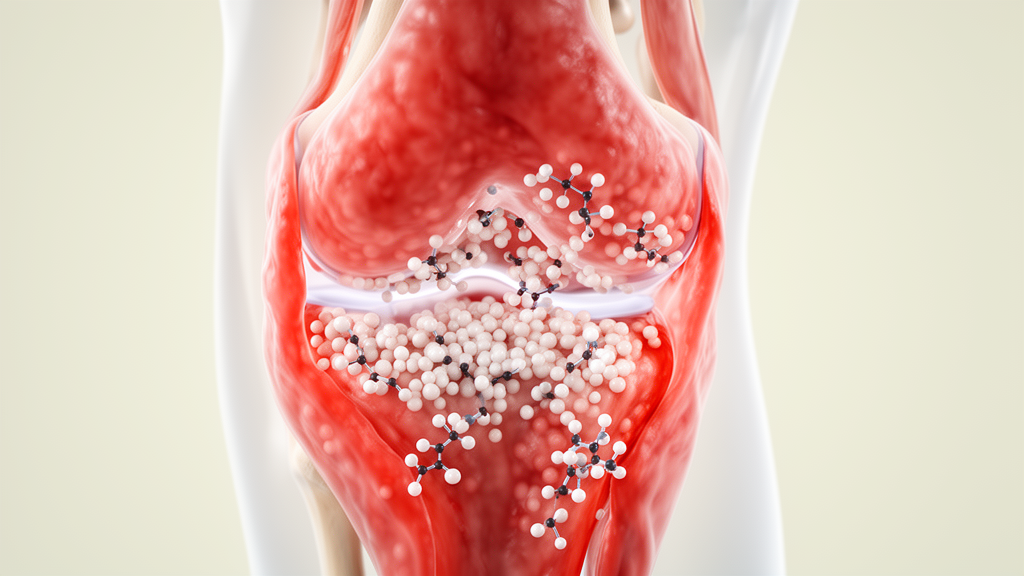
Image Credits: AI Generated
DOI: 10.1186/s13075-026-03931-6
Keywords: rheumatoid arthritis, difficult-to-treat RA, JAK inhibitors, synovitis, synovial biopsy, Krenn Synovitis Score, biologic therapy, CDAI, pathotype, observational study, precision medicine, rheumatology
News Source: Ophelia Keating. (October 28, 2026). Synovitis severity may steer JAK inhibitor response in difficult-to-treat rheumatoid arthritis. Scienmag.