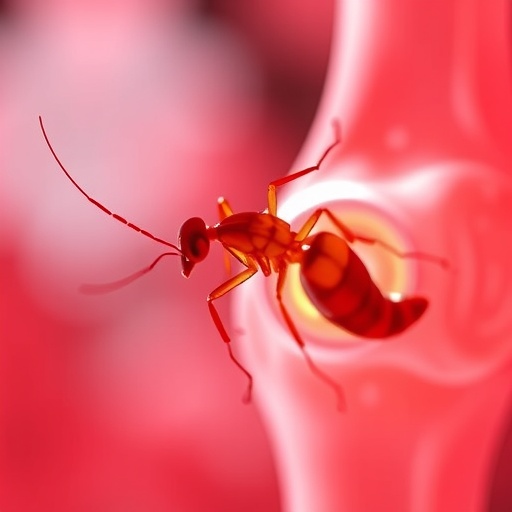
In a groundbreaking study that challenges long-held perceptions about osteoarthritis, researchers have unveiled compelling evidence linking synovial parasitosis—parasitic infections within the joint synovium—to inflammatory biomarker profiles traditionally associated with this degenerative joint disease. The investigation, spearheaded by Hassanein, Shehata, Aldawoudy, and colleagues, opens a provocative new chapter in understanding the intricate interplay between host factors, therapeutic interventions, and parasitic presence within joint environments. This novel revelation not only reshapes our pathophysiological comprehension of osteoarthritis but also suggests provocative directions for diagnostics and treatment strategies.
Osteoarthritis has long been conceptualized as a disease primarily driven by mechanical wear and tear, culminating in the degradation of cartilage and consequent joint inflammation. However, the current research broadens this paradigm by identifying parasites residing in the synovial fluid and synovium as potential contributors to inflammatory processes. Employing sophisticated molecular and immunological assays, the study meticulously quantified inflammatory biomarkers, including cytokines and chemokines, revealing distinct profiles modulated by the presence of parasitic agents. These findings suggest that synovial parasitosis may act as an inflammatory catalyst, exacerbating or possibly initiating the pathological processes underlying osteoarthritis.
The methodology implemented in this research underscores its robustness and innovation. Researchers utilized synovial fluid aspirates from osteoarthritis patients, subjecting these samples to parasitological examination and advanced biomarker profiling. Molecular diagnostic techniques, such as PCR amplification targeting parasite-specific DNA sequences, supplemented microscopic parasitology to confirm infection. Concurrently, multiplex immunoassays quantified levels of pro-inflammatory mediators, enabling the team to map the interrelationship between parasitic infection and immune system activation. The integrative approach ensured that correlations drawn were not only statistically significant but also mechanistically plausible.
Significant variation emerged in the inflammatory biomarker profiles contingent on the presence or absence of synovial parasitosis. Patients harboring parasitic infections exhibited elevated concentrations of tumor necrosis factor-alpha (TNF-α), interleukin-6 (IL-6), and other inflammatory cytokines known to mediate cartilage degradation and synovitis. Conversely, patients without such infections showed comparatively subdued inflammatory states. This dichotomy not only reinforces the conjecture that parasites intensify inflammatory responses but also positions synovial parasitosis as an underrecognized driver of disease heterogeneity in osteoarthritis.
Intriguingly, the research also explored host factors influencing susceptibility to synovial parasitosis. Variables such as patient age, immune status, and comorbidities appeared to modulate parasitic colonization and resultant inflammatory patterns. Notably, immunosenescence in elderly individuals might predispose to persistent parasitic infections within the joint microenvironment, culminating in heightened inflammatory sequelae. These discoveries highlight the multifaceted nature of osteoarthritis pathogenesis and underscore the necessity of individualized therapeutic approaches that consider infectious etiologies.
Further compounding the clinical significance, the study evaluated the impact of therapeutic regimens on inflammatory biomarker profiles in the context of parasitic presence. Patients undergoing anti-inflammatory or immunomodulatory treatments demonstrated variable responses; in some cases, conventional therapies inadequately mitigated parasite-driven inflammation. This finding signals a critical gap in current osteoarthritis management, emphasizing the need for diagnostic awareness of synovial parasitosis to tailor more effective, possibly antiparasitic-inclusive, treatment strategies.
The implications of this research transcend osteoarthritis alone, challenging the broader orthopedic and rheumatologic communities to reassess the role of neglected infectious agents in chronic joint disorders. Parasitic synovitis may constitute an unappreciated etiology for other arthropathies, suggesting that parasitological screening could become an integral component of comprehensive joint disease evaluation. Moreover, the study advocates for the integration of parasitological diagnostics in routine clinical workflows, especially in regions endemic for parasitic diseases.
From an immunopathological standpoint, the elucidated biomarker profiles provide a window into the molecular mechanisms underpinning parasite-induced inflammation. Elevated TNF-α and IL-6 levels orchestrate cascades that promote chondrocyte apoptosis, extracellular matrix degradation, and synovial hyperplasia—all hallmark features of osteoarthritis progression. Understanding these pathways not only aids in refining biomarkers for early disease detection but also identifies potential molecular targets for novel therapeutics aimed at disrupting parasite-mediated inflammatory circuits.
Additionally, the research contributes valuable insights into the dynamic interactions between parasites and the host immune milieu within the joint space. Parasites may evade immune clearance through sophisticated mechanisms, such as modulating cytokine production or inducing regulatory T cell responses, thereby sustaining chronic inflammation. These immune evasion strategies could underpin the persistent joint dysfunction observed in parasitosis-associated osteoarthritis, spotlighting the need for immunologically informed treatment designs.
The study’s innovative approach extends to the potential role of synovial fluid analysis as a minimally invasive diagnostic tool. By profiling inflammatory biomarkers alongside parasitic DNA detection, clinicians may soon employ synovial fluid assays to differentiate osteoarthritis phenotypes, predict disease trajectory, and evaluate treatment efficacy. Such precision medicine tools promise to revolutionize patient outcomes by enabling early intervention tailored to underlying pathogenic contributors, including parasitic infections.
Critically, the study calls attention to global health contexts where parasitic infections remain prevalent, underscoring the potential public health impact of these findings. In regions where parasitosis burden is substantial, osteoarthritis patients might unknowingly contend with parasite-augmented inflammatory damage, complicating disease management and healthcare resource allocation. Consequently, integrated parasitological and rheumatological health strategies are imperative to address this dual challenge effectively.
Looking forward, the research team suggests multiple avenues for further investigation, including longitudinal studies to elucidate causality, broader epidemiological surveys examining parasitosis prevalence in osteoarthritis populations, and clinical trials assessing antiparasitic therapies’ efficacy as adjuncts in osteoarthritis treatment regimens. Such endeavors could validate the translational significance of synovial parasitosis, ultimately altering clinical guidelines and improving patient quality of life.
Beyond the clinical ramifications, this study deepens scientific appreciation for the complex interdependencies within the human joint microenvironment. It reveals a heretofore underexplored biological axis—the parasite-host inflammatory interaction—that may shift paradigms in musculoskeletal research. By integrating parasitology into osteoarthritic frameworks, scientists can uncover novel pathomechanistic insights with far-reaching consequences.
In sum, the revelation of synovial parasitosis as a modulator of inflammatory biomarker profiles in osteoarthritis patients represents a watershed moment. This discovery not only challenges classical etiological models but also propels the field toward integrative diagnostics and therapeutics that recognize the multifactorial nature of joint degeneration. As this knowledge permeates clinical practice and research, it holds tremendous promise for transforming osteoarthritis care worldwide, heralding an era where parasite-informed strategies enhance disease understanding and patient outcomes alike.
Subject of Research: Synovial parasitosis and its association with inflammatory biomarker profiles in osteoarthritis, including correlations with host and therapeutic factors.
Article Title: Synovial Parasitosis and Inflammatory Biomarker Profiles in Osteoarthritis: Associations with Host and Therapeutic Factors.
Article References:
Hassanein, F., Shehata, A.I., Aldawoudy, A.M. et al. Synovial Parasitosis and Inflammatory Biomarker Profiles in Osteoarthritis: Associations with Host and Therapeutic Factors. Acta Parasit. 71, 11 (2026). https://doi.org/10.1007/s11686-025-01180-2
Image Credits: AI Generated
DOI: https://doi.org/10.1007/s11686-025-01180-2
Tags: cytokines and chemokines in osteoarthritishost factors in parasitic infectionsinflammatory biomarkers in joint diseasesinnovative research in osteoarthritis treatmentmechanical wear and tear in joint diseasesmolecular assays in arthritis researchnovel diagnostics for osteoarthritisparasitic infections and joint inflammationpathophysiology of osteoarthritissynovial fluid analysis for arthritissynovial parasitosis and osteoarthritistherapeutic interventions for arthritis