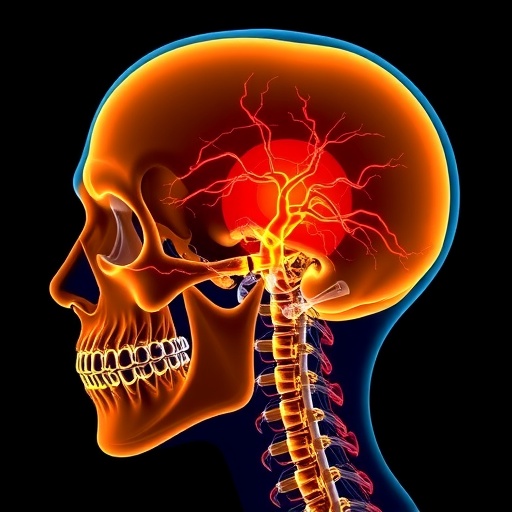
A groundbreaking study published in the prestigious journal Cell Death Discovery has unveiled an unexpected and fascinating connection between the sympathetic nervous system and bone regeneration. This research illuminates how inhibiting sympathetic nerve activity can significantly accelerate calvarial bone repair, predominantly through mechanisms involving senescent macrophages that stimulate both osteogenesis and angiogenesis. The findings could catalyze revolutionary approaches in therapeutic strategies for bone injuries, especially those affecting the skull.
The sympathetic nervous system, known primarily for its role in the body’s “fight or flight” response, also intricately regulates various physiological processes across different tissues. However, its potential contribution to bone repair had remained largely unexplored until now. Zhao and colleagues expertly dissected this interaction by targeting the sympathetic nerves during the bone healing process, which revealed an unexpected enhancement in tissue regeneration at calvarial injury sites.
The researchers established that when sympathetic nerve function is inhibited, there is a notable surge in the recruitment and activity of senescent macrophages at the site of bone injury. Senescent macrophages, previously thought to merely hinder regeneration due to their senescence-associated secretory phenotype (SASP), in this context unexpectedly unleash a powerful cascade of paracrine signals. These signals foster an environment conducive to new bone formation (osteogenesis) and concurrent blood vessel growth (angiogenesis), both critical to efficient bone repair.
Delving deeper into the cellular and molecular underpinnings, Zhao et al. demonstrated that the inhibition of sympathetic nerves leads to a modulation in macrophage behavior. Rather than promoting inflammation or fibrosis, these senescent macrophages adaptively facilitate the transition of progenitor cells into osteoblasts — the primary bone-forming cells. This phenotypic switch paves the way for an enhanced deposition of bone matrix and replenishment of the damaged calvarial bone.
Simultaneously, the study revealed that sympathetic nerve suppression markedly promotes angiogenesis within the injury milieu. Blood vessel formation is vital not only for delivering nutrients and oxygen but also for orchestrating cellular crosstalk necessary for bone remodeling. The senescent macrophages enhance vascular endothelial growth factor (VEGF) signaling pathways, thereby encouraging the sprouting of new capillaries in synchrony with osteogenic activity.
Interestingly, the interplay between sympathetic nerve inhibition and senescent macrophage behavior challenges the conventional paradigm that inflammation and cellular senescence are solely detrimental to tissue regeneration. Instead, the research posits that under tightly regulated conditions, senescent cells can assume a reparative role, acting as biological conductors that integrate and potentiate healing mechanisms.
This insight into the dual role of senescent macrophages could open new therapeutic avenues that harness or mimic their reparative secretome. By fine-tuning the neuroimmune axis, clinicians might unlock enhanced regenerative capacities without inducing systemic side effects often associated with general nerve modulation.
The experimental approach utilized advanced genetic tools and pharmacological agents to precisely inhibit sympathetic nerve activity within murine calvarial bone injury models. These sophisticated methodologies enabled a nuanced assessment of cellular dynamics during different bone healing phases, from initial inflammation and progenitor recruitment to matrix deposition and remodeling.
Moreover, the team employed cutting-edge imaging and histological analyses to visualize vascular changes and bone regeneration at high resolution. The integration of transcriptomic profiling shed light on the gene expression shifts within macrophages and osteoprogenitor populations under nerve-inhibited conditions, providing a rich dataset to unravel the molecular crosstalk at play.
The significance of these findings extends beyond fundamental biology. Traumatic brain injuries, cranial surgeries, and congenital defects all necessitate effective calvarial bone repair strategies. Current clinical interventions often fall short, grappling with slow healing rates and incomplete bone restoration. The discovery that sympathetic nerve suppression can naturally accelerate this process holds promise for novel, less invasive treatments.
Critically, the study underscores the importance of neurogenic regulation in skeletal biology — a field traditionally dominated by studies on hormonal, mechanical, and local inflammatory factors. By bridging neuroscience and bone regeneration research, this work fosters a more integrated understanding of how systemic nerve activity influences localized tissue repair.
Future clinical applications might involve the development of targeted delivery systems or biomaterials that locally inhibit sympathetic nerve signals in bone wound environments, effectively activating senescent macrophage-mediated repair without systemic nerve disruption. Such approaches could redefine standards for post-surgical recovery and trauma management protocols.
Furthermore, this research prompts a reevaluation of senescence in regenerative medicine. While widespread cellular senescence is implicated in aging and pathology, selective manipulation of senescent macrophage function unveiled here paints a roadmap for harnessing senescence as a regenerative tool, especially in contexts where immune and vascular support is critical.
Although the focus was on calvarial bone, the broader principles uncovered may translate to other skeletal sites, such as long bones and vertebrae, where sympathetic innervation and immune cell interplay regulate healing dynamics. Ongoing and future investigations are poised to explore these translational aspects.
In summary, the study by Zhao and colleagues elucidates a remarkable mechanism whereby sympathetic nerve inhibition ignites senescent macrophage-driven osteogenesis and angiogenesis, dramatically boosting calvarial bone repair. This convergence of neurobiology, immunology, and skeletal tissue engineering heralds an exciting frontier in regenerative medicine, promising innovative therapies for patients suffering from debilitating cranial defects.
As scientific understanding deepens on how nervous and immune systems coalesce to shape tissue repair, the potential to manipulate these processes for clinical benefit becomes increasingly tangible. This research not only fills a critical knowledge gap but also catalyzes a paradigm shift toward integrated, multi-system strategies for bone regeneration.
The implications resonate across biomedical disciplines, from neurophysiology and immunotherapy to biomaterials science and orthopedics. Harnessing the reparative synergy between nerve inhibition and senescent macrophages may redefine healing trajectories for millions worldwide, accelerating recovery and enhancing quality of life after bone injuries.
Subject of Research: Bone regeneration mechanisms focusing on the role of sympathetic nerve inhibition and senescent macrophage-induced osteogenesis and angiogenesis in calvarial bone repair.
Article Title: Sympathetic nerve inhibition enhances calvarial bone repair via senescent macrophage-induced osteogenesis and angiogenesis.
Article References:
Zhao, L., Xu, Z., Zhao, P. et al. Sympathetic nerve inhibition enhances calvarial bone repair via senescent macrophage-induced osteogenesis and angiogenesis. Cell Death Discov. (2025). https://doi.org/10.1038/s41420-025-02886-y
Image Credits: AI Generated
DOI: https://doi.org/10.1038/s41420-025-02886-y
Tags: angiogenesis promotionbone regeneration mechanismscalvarial bone repairinnovative approaches to bone therapyosteogenesis stimulationparacrine signaling in bone healingsenescent macrophages roleskull bone healingsympathetic nerve blocksympathetic nervous system impacttherapeutic strategies for bone injuriestissue regeneration enhancement