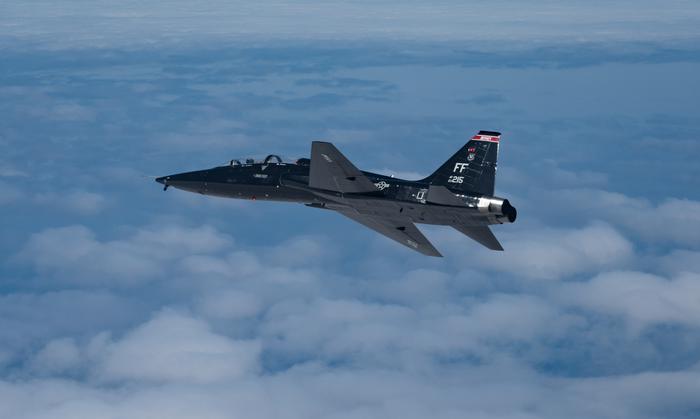

Southwest Research Institute (SwRI) has long been recognized for its engineering prowess, particularly in extending the life of aging aerospace technologies. Recently, however, its collaboration with the U.S. Air Force has transcended the usual realms of aircraft maintenance, thrusting the T-38 Talon into the spotlight after a significant structural defect was uncovered. Precision in engineering has proven vital, as a sizeable crack originating near the aircraft’s cockpit raised alarms about fleet safety. As a consequence of this alarming finding, SwRI employed sophisticated risk and damage tolerance analyses to craft an enhanced inspection protocol, one designed to identify potential cracks before they could escalate into serious threats.
The T-38 Talon, an advanced jet trainer that saw its inaugural flight in 1961, has been an anchor in U.S. Air Force pilot training for decades. Yet, as the operational lifespan of such aircraft spans well over their initial design specifications, the pressing task of ensuring their safety becomes paramount. SwRI has dedicated over four decades to sustaining the T-38, employing a blend of traditional engineering insights with cutting-edge computational modeling to predict crack growth. This integration of knowledge and technology has enabled more effective maintenance schedules that balance operational readiness with safety.
The crisis began in the spring of 2017 when a crew chief’s visual inspection revealed a large crack in a longeron, a crucial structural member running along the fuselage. This unexpected discovery put the entire T-38 fleet on immediate groundings for thorough inspections, which were impressively completed within four days. By responding quickly, SwRI alleviated concerns among military personnel and mitigated the potential for catastrophic failure. Their established relationship with the Air Force allowed for comprehensive analyses to take place in a remarkably short timeframe.
The interplay between finite element modeling and ground truth inspections has been a cornerstone of SwRI’s efforts. By simulating various stress conditions on the T-38’s structure, the team could identify the most likely locations for cracks to appear. Even so, this crack materialized in an area that prior tests had not anticipated, signaling that traditional approaches to fatigue testing may require reevaluation. This incident serves as a critical reminder of the complexities inherent in maintaining aging aircraft and the importance of adaptive strategies in engineering solutions.
A rapid response became just as crucial as predictive modeling. Upon the identification of the crack, SwRI engaged in extensive risk and damage tolerance analyses, which informed subsequent inspections. The team worked diligently to ensure all potential risk areas were thoroughly examined, thereby allowing the Air Force to resume operations while making necessary repairs. This approach underlines a philosophy that emphasizes preparedness and responsiveness in structural analysis.
Senior Research Engineer Mirella Vargas led an in-depth investigative process into the structural failure of the cracking longeron. Her examination process began with high-resolution macro photographs and progressed through various microscopes, unveiling the microstructural aspects that contributed to the crack’s formation. Such rigorous analysis illuminated the underlying mechanisms of structural fatigue, which arises from repetitive mechanical stresses over time.
In the wake of these findings, SwRI updated its modeling systems to heighten the integrity of its risk assessments. With reinforced data and a clearer understanding of the structural threats posed by fatigue, it recalibrated its inspection schedules. The adjustments balanced the necessity for robust safety measures with operational efficiency, ensuring that the T-38 could remain in service without skipping a beat.
This enriched understanding of the aircraft’s structural integrity has immediate implications for not just the T-38, but for older military aircraft broadly. As findings from this analysis are disseminated, the aerospace community must digest and incorporate these insights into ongoing maintenance practices. The imperative for informed, data-driven strategies cannot be overstated as aircraft age and their usage patterns evolve.
The collective experience of the SwRI and Air Force teams managing the T-38 has fortified their capacity for rapid troubleshooting and adjustments in guidelines to maintain aircraft safety and efficiency. The case underscores the never-ending battle between the expectations of mechanical longevity and material degradation, which can catch even seasoned engineers off guard.
The research thereby concluded with a significant lesson: as engineering methodologies must continually evolve, so too must the frameworks for managing aging military assets. The successful navigation of this issue serves as a template for future endeavors and raises the bar for civil and military engineering standards alike. Ultimately, maintaining the operational readiness of fleet aircraft without compromising safety is a complex puzzle that requires interdisciplinary collaboration and innovative thinking.
In conclusion, the evolution of structural integrity analysis in aging aircraft has never been more urgent. The expert responses to the T-38’s crack exhibit the need for a proactive rather than retroactive approach in aviation safety. Lessons learned from this incident can potentially pave the way for enhanced engineering practices and rigorous standards that prioritize the balance between risk management and operational capability.
The paper titled “T-38 failure analysis of an upper cockpit longeron for safety of flight and sustainment” is poised to contribute significantly to the ongoing conversation within the field, advocating for a deeper understanding of structural liabilities in military aviation.
Subject of Research: N/A
Article Title: T-38 failure analysis of an upper cockpit longeron for safety of flight and sustainment
News Publication Date: March 18, 2025
Web References: DOI, SwRI
References: N/A
Image Credits: United States Air Force
Keywords
Military aircraft, Risk assessment, Aviation, Structural engineering.
Tags: advanced jet trainer safety measuresaging aircraft safety challengesaircraft maintenance best practicesengineering solutions for aging technologiesenhanced inspection protocols for aircraftlifespan extension of military aircraftpredictive modeling in aviation maintenancerisk and damage tolerance analysisstructural defect detection in aircraftSwRI aerospace engineeringT-38 Talon aircraft maintenanceU.S. Air Force collaboration