• HOME
  • NEWS
  • EXPLORE
    • CAREER
      • Companies
      • Jobs
    • EVENTS
    • iGEM
      • News
      • Team
    • PHOTOS
    • VIDEO
    • WIKI
  • BLOG
  • COMMUNITY
    • FACEBOOK
    • INSTAGRAM
    • TWITTER
Sunday, February 8, 2026
BIOENGINEER.ORG
No Result
View All Result
  • Login
  • HOME
  • NEWS
  • EXPLORE
    • CAREER
      • Companies
      • Jobs
        • Lecturer
        • PhD Studentship
        • Postdoc
        • Research Assistant
    • EVENTS
    • iGEM
      • News
      • Team
    • PHOTOS
    • VIDEO
    • WIKI
  • BLOG
  • COMMUNITY
    • FACEBOOK
    • INSTAGRAM
    • TWITTER
  • HOME
  • NEWS
  • EXPLORE
    • CAREER
      • Companies
      • Jobs
        • Lecturer
        • PhD Studentship
        • Postdoc
        • Research Assistant
    • EVENTS
    • iGEM
      • News
      • Team
    • PHOTOS
    • VIDEO
    • WIKI
  • BLOG
  • COMMUNITY
    • FACEBOOK
    • INSTAGRAM
    • TWITTER
No Result
View All Result
Bioengineer.org
No Result
View All Result
Home NEWS Science News

SwRI releases major updates to Numerical Propulsion System Simulation (NPSS) software

Bioengineer by Bioengineer
September 29, 2020
in Science News
Reading Time: 2 mins read
0
IMAGE
Share on FacebookShare on TwitterShare on LinkedinShare on RedditShare on Telegram

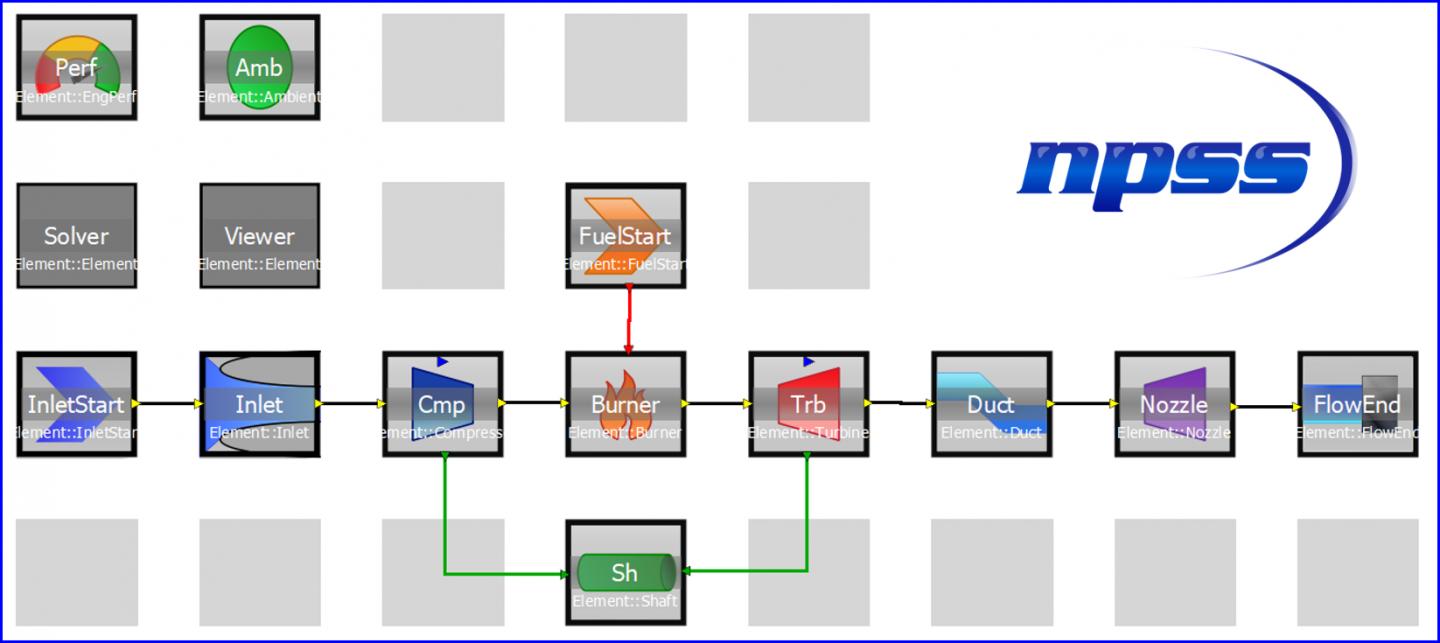
NPSS models rockets, jet engines, turbomachinery, other technologies
IMAGE

Credit: SwRI

SAN ANTONIO — Sept. 29, 2020 — Southwest Research Institute (SwRI) is releasing a new, updated version of the Numerical Propulsion System Simulation (NPSS®) soft-ware. NPSS has a new user-friendly interface that reduces the amount of time needed to learn the software, and new functions streamline the design process.

Engineers use this design and simulation tool to model rocket engines, jet engines, turbomachinery, environmental control systems, advanced power cycles including super-critical carbon dioxide (sCO2) cycles and other technologies beneficial to the aerospace and energy industries. The updated software is licensed through SwRI and available on SwRI’s NPSS webpage.

“NPSS has always been an excellent tool for engineers and developers,” said Charles Krouse, an SwRI research engineer. “This new version is even more intuitive and user-friendly than the previous. It introduces several new features that improve usability, including an integrated development environment, updated user guides and new ex-ample models.”

Developed in the 1990s by the NASA Glenn Research Center, NPSS has become the leading aerospace software package for simulating and designing propulsion systems. Applications range from creating new engine models to integrating experimental engine test data into digital twin models. Beyond aerospace applications, some organizations also use NPSS to simulate solar power systems, industrial gas turbines and hybrid electric systems.

SwRI has managed the NPSS Consortium since 2013, supporting the NPSS user community with new software capabilities, improved usability and technical support. Key features of NPSS include a standard library of thermodynamic databases, standard elements for engine cycle models, example engine models, interfacing examples, completely customizable elements and a robust solver.

“We also updated the NPSS library of element, model and interface examples,” Krouse said. “The library offers several new elements and examples that provide the user with even more flexibility and customization options.”

The new NPSS release also introduces an integrated development environment, NPSS IDE, which provides an intuitive modeling environment without sacrificing the versatility of NPSS. IDE is intended to help users develop, interrogate and run models, as well as view results. This is accomplished via customizable file explorer windows, in-teractive schematics, error-highlighting and NPSS-specific autocompletion.

###

For more information or to purchase an NPSS license, visit SwRI’s NPSS webpage at https://www.swri.org/consortia/numerical-propulsion-system-simulation-npss.

Media Contact
Joanna Carver
[email protected]

Original Source

https://www.swri.org/press-release/npss-numerical-propulsion-system-simulation-updates-rocket-jet-engines-turbomachinery?utm_source=EurekAlert!&utm_medium=Distribution&utm_campaign=NPSS-PR

Tags: Mechanical EngineeringSoftware EngineeringTechnology/Engineering/Computer ScienceVehicles
Share12Tweet8Share2ShareShareShare2

Related Posts

Group Therapy Boosts Recovery in Elderly Depression

February 8, 2026

Evaluating Biosimilar Trastuzumab for Breast Cancer in Thailand

February 8, 2026

Decoding Phantom Limb Movements via Intraneural Signals

February 8, 2026

Attitudes Toward Aging Impact Early Nursing Home Quality

February 8, 2026
Please login to join discussion

POPULAR NEWS

  • Robotic Ureteral Reconstruction: A Novel Approach

    Robotic Ureteral Reconstruction: A Novel Approach

    82 shares
    Share 33 Tweet 21
  • Digital Privacy: Health Data Control in Incarceration

    63 shares
    Share 25 Tweet 16
  • Breakthrough in RNA Research Accelerates Medical Innovations Timeline

    53 shares
    Share 21 Tweet 13
  • Mapping Tertiary Lymphoid Structures for Kidney Cancer Biomarkers

    50 shares
    Share 20 Tweet 13

About

We bring you the latest biotechnology news from best research centers and universities around the world. Check our website.

Follow us

Recent News

Group Therapy Boosts Recovery in Elderly Depression

Evaluating Biosimilar Trastuzumab for Breast Cancer in Thailand

Decoding Phantom Limb Movements via Intraneural Signals

Subscribe to Blog via Email

Success! An email was just sent to confirm your subscription. Please find the email now and click 'Confirm' to start subscribing.

Join 74 other subscribers
  • Contact Us

Bioengineer.org © Copyright 2023 All Rights Reserved.

Welcome Back!

Login to your account below

Forgotten Password?

Retrieve your password

Please enter your username or email address to reset your password.

Log In
No Result
View All Result
  • Homepages
    • Home Page 1
    • Home Page 2
  • News
  • National
  • Business
  • Health
  • Lifestyle
  • Science

Bioengineer.org © Copyright 2023 All Rights Reserved.