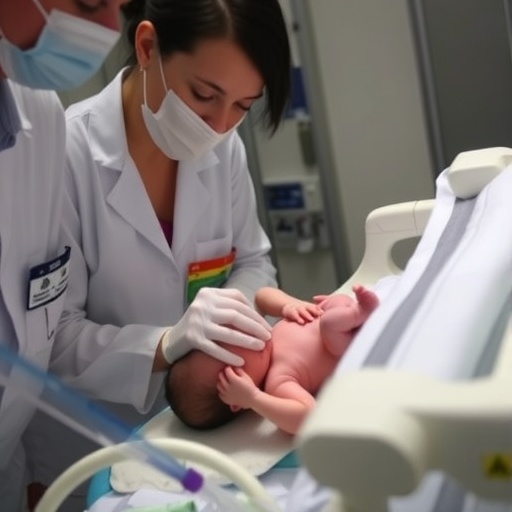
In the intricate landscape of neonatal care, the recognition and management of acute kidney injury (AKI) have emerged as critical challenges, demanding urgent attention from clinicians and researchers alike. A groundbreaking survey recently published in the Journal of Perinatology by Hussein, Ding, Lee, and colleagues sheds new light on the current practices surrounding neonatal acute kidney injury in Canadian neonatal intensive care units (NICUs). This pivotal study, published in March 2026, not only elucidates prevailing clinical approaches but also sparks a call for standardized protocols to enhance outcomes for some of the most vulnerable patients—newborns in distress.
Acute kidney injury in neonates represents a multifaceted clinical syndrome characterized by an abrupt decline in renal function. In neonates, this condition is particularly insidious, often intertwined with multifactorial etiologies ranging from perinatal asphyxia and sepsis to exposure to nephrotoxic medications. The neonate’s delicate physiology, including immature renal clearance mechanisms and limited tubular reabsorption capability, further complicates early detection and management. Given the subtle and varied presentation of AKI in this population, the necessity for meticulous monitoring and precise diagnostic criteria becomes paramount.
The Canadian NICU landscape, as revealed by this comprehensive survey, displays a patchwork of clinical practices with considerable variability in the identification and treatment of neonatal AKI. This heterogeneity underscores a significant gap in consensus guidelines, suggesting that many units rely heavily on individual clinician judgment and institutional protocols that may not align with emerging evidence-based recommendations. The study highlights how differences in diagnostic thresholds, timing, and intervention strategies can profoundly influence neonatal morbidity and mortality associated with kidney injury.
One of the salient technical insights from this study is the challenging task of defining AKI in neonates owing to the dynamic and evolving nature of neonatal renal physiology. Conventional biomarkers such as serum creatinine are fraught with limitations in this cohort. Neonatal serum creatinine levels initially reflect maternal concentrations and only gradually stabilize postnatally, rendering early measurements ambiguous. Emerging biomarkers like neutrophil gelatinase-associated lipocalin (NGAL) and cystatin C are also discussed, hinting at their potential to revolutionize early diagnostic precision but remain underutilized in practice due to cost and availability constraints.
The survey also exposes disparities in the application of renal replacement therapies (RRT) across Canadian NICUs. While RRT modalities like peritoneal dialysis and continuous renal replacement therapy have been shown to mitigate fluid overload and toxin accumulation in critically ill neonates, accessibility and clinician expertise vary significantly. Some units are well-equipped and proactive in initiating RRT, whereas others face logistical challenges, underscoring an urgent need for resource optimization and training to standardize care delivery for neonatal AKI.
Intriguingly, the research illuminates the degree of reliance on nephrotoxic medications, such as aminoglycosides and nonsteroidal anti-inflammatory drugs, even in settings where their contribution to AKI risk is well documented. This finding calls for renewed vigilance and development of stringent stewardship programs to mitigate iatrogenic kidney damage. Furthermore, the study advocates for integration of multidisciplinary approaches involving nephrologists, neonatologists, pharmacologists, and nursing teams to holistically address drug-related kidney injury risks.
Throughout the survey, the authors emphasize the critical role of continuous education and training for NICU staff regarding AKI recognition and management. This educational imperative extends beyond mere clinical knowledge to encompass proficiency in interpreting kidney-specific biomarkers, understanding fluid balance intricacies in neonates, and mastery of evolving therapeutic options. Establishing structured frameworks for training could bridge the current practice gap and enable NICUs to adopt a more proactive, evidence-informed stance against neonatal AKI.
Data collection methodologies incorporated in the survey reflect a robust attempt to capture real-world practices, yet the authors cautiously acknowledge potential limitations. The variability in self-reporting and institutional documentation might skew representation, while the rapidly evolving clinical landscape means that adaptation to new guidelines may lag behind. Nonetheless, the study’s comprehensive scope provides an invaluable snapshot of the status quo, serving as a clarion call for national and international collaborative efforts aimed at harmonizing neonatal kidney care.
An underlying theme in this discourse is the pressing need for innovation in neonatal AKI diagnostics. The research indirectly advocates for investment in point-of-care technologies that could facilitate timely bedside assessments of renal function, thereby enabling dynamic, individualized treatment plans. Future research agendas may focus on validating emerging biomarkers and incorporating artificial intelligence algorithms to predict AKI risk before overt clinical deterioration, thereby transforming neonatal nephrology from reactive to preventive disciplines.
The intersection of neonatal AKI with long-term renal outcomes also colors the discussion, as early kidney injury may predispose survivors to chronic kidney disease (CKD) later in life. This link adds a dimension of urgency to improving early detection and intervention strategies, reinforcing the importance of longitudinal follow-up protocols post-discharge. The surveyed NICUs are encouraged to integrate nephrological assessments into standard follow-up care, fostering a continuum of vigilance that spans beyond the immediate neonatal period.
In terms of clinical workflow, the study delineates how the timing and frequency of kidney function monitoring are inconsistent across units, with some employing daily assessments while others rely on intermittent checks. The authors propose the development of risk stratification algorithms to identify neonates at highest risk for AKI, enabling targeted surveillance and resource allocation. Such algorithms could incorporate clinical variables, perinatal insults, and laboratory trends, optimizing precision medicine approaches within NICUs.
Perhaps most compelling is the study’s call to action for the establishment of a unified national registry for neonatal AKI, intended to facilitate large-scale data collection, outcome tracking, and research collaboration. This registry would empower stakeholders to dissect epidemiological patterns, evaluate intervention efficacies, and inform policy development. It would also address existing knowledge gaps by enabling robust multicenter trials designed to refine diagnostic criteria and therapeutic algorithms.
In summary, the seminal survey on neonatal acute kidney injury across Canadian NICUs spearheaded by Hussein and colleagues represents a watershed moment in pediatric nephrology and neonatology. By meticulously documenting current practices, this work exposes critical disparities and underscores the dire need for standardized protocols enriched by cutting-edge diagnostics and therapies. As neonatal care advances into an era of precision medicine, such transformative insights pave the way for healthier beginnings for countless infants who confront the peril of renal injury at life’s dawn.
The study’s impact will reverberate beyond Canada, influencing global neonatal intensive care frameworks and inspiring a generation of clinicians committed to eradicating preventable kidney injury in the most fragile members of society. Through collaborative endeavors, continuous education, and innovation, the neonatal care community stands poised to turn the tide against AKI, translating painstaking research into vibrant clinical realities.
Subject of Research: Neonatal acute kidney injury and clinical management practices in neonatal intensive care units.
Article Title: Neonatal acute kidney injury: a survey of practices in Canadian neonatal intensive care units.
Article References:
Hussein, A., Ding, L., Lee, KS. et al. Neonatal acute kidney injury: a survey of practices in Canadian neonatal intensive care units. J Perinatol (2026). https://doi.org/10.1038/s41372-026-02635-8
Image Credits: AI Generated
DOI: 30 March 2026
Tags: acute kidney injury diagnosis in newbornsCanadian NICU kidney injury protocolsclinical challenges in neonatal nephrologyearly detection of neonatal kidney injurymultifactorial causes of neonatal AKIneonatal acute kidney injury managementneonatal intensive care unit practicesneonatal renal function monitoringnephrotoxic medication effects on neonatesoutcomes in neonatal acute kidney injuryperinatal asphyxia and kidney injurystandardized neonatal AKI guidelines