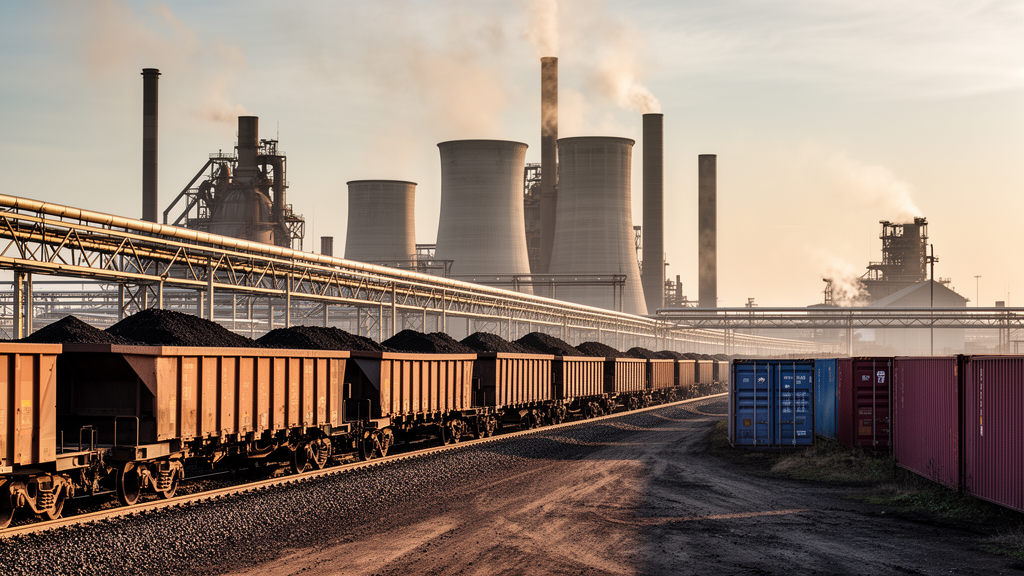
Supply chain carbon emissions generated by air pollution abatement activities in Hebei Province offset 82.2% of the direct carbon savings achieved from pollution control, according to an economic modeling study. The findings demonstrate that while air quality improvement and carbon emission reductions are theoretically expected to work synergistically, the embodied emissions across industrial supply chains can substantially constrain actual climate co-benefits in heavy-industry regions.
To investigate these hidden carbon burdens, researchers developed an integrated modeling framework that couples an augmented input–output model with an abatement portfolio optimization. The framework extends conventional environmentally extended input–output analysis by incorporating five major pollution abatement strategies as independent sectors within the economic system, allowing researchers to track the embodied carbon emissions generated along supply chains for each distinct strategy.
The five abatement strategies evaluated within the model comprise Energy Mix Restructuring, Industrial Structure Adjustment, Key-sector Emission Retrofitting, Transport Structure Adjustment, and Fugitive Dust Control.
The authors applied this framework to empirical data from the 2021 abatement portfolio of Hebei Province in China.
The empirical assessment showed that the power sector alone accounts for the majority of the supply chain carbon emissions tied to pollution abatement operations.
Model simulations further demonstrated that short-term reallocation of the existing abatement budget across strategies could significantly improve net climate outcomes.
Over the medium to long term, the authors concluded that prioritizing power sector decarbonization is critical to mitigating the supply chain carbon emissions associated with ongoing pollution abatement activities. The researchers noted that this integrated analytical framework provides methodological support for developing countries seeking to identify hidden climate costs in environmental control programs and optimize abatement portfolios for dual carbon and pollution synergy.
Subject of Research: Supply chain carbon emissions and optimization of regional air pollution abatement strategies
Article Title: The hidden carbon burden of air pollution control in Hebei, China: an augmented input–output framework with endogenous abatement strategies
Article References: Ding, D., Wang, K., Zhang, Y., & Liu, J. (2026). The hidden carbon burden of air pollution control in Hebei, China: an augmented input–output framework with endogenous abatement strategies. Journal of Industrial Ecology. https://doi.org/10.1007/s44498-026-00224-8
Image Credits: AI Generated
DOI: 10.1007/s44498-026-00224-8
Keywords: air pollution abatement, carbon emission reduction, Hebei Province, input–output analysis, abatement portfolio optimization, supply chain emissions, embodied carbon, Energy Mix Restructuring, Industrial Structure Adjustment, Key-sector Emission Retrofitting, Transport Structure Adjustment, Fugitive Dust Control, power sector decarbonization, heavy industry, steel industry, environmental economics
News Source: Denise Maddox. (November 21, 2026). Supply Chain Emissions Offset Most Carbon Gains From Hebei Pollution Control. Scienmag.