


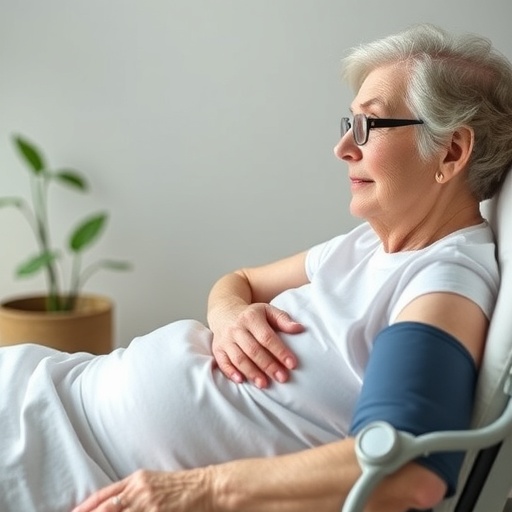
Recent research has shed new light on the complex relationship between body position and cardiovascular health in older adults, particularly focusing on the prevalence of hypertension. The increasing incidence of hypertensive conditions among the aging population necessitates a deeper understanding of the factors influencing blood pressure regulation. An intriguing study by Hou, Shi, and Zhao et al. published in European Geriatric Medicine explores the differences between supine (lying down) and seated hypertension and their implications for cardiovascular events. These findings not only contribute to the body of knowledge surrounding hypertension but also propose practical considerations for clinical practices involving older patients.
Hypertension, often referred to as the “silent killer,” is a condition that may go unnoticed until it manifests as a serious health complication. The aging population is particularly vulnerable to this phenomenon, as age-related changes in vascular structure and function can exacerbate the condition. As a result, it is essential to assess blood pressure in various positions—sitting versus lying down—especially among older adults who may experience fluctuations in blood pressure depending on their body posture. The research undertaken by the team aims to determine whether supine hypertension is more predictive of cardiovascular events compared to seated hypertension.
The scientists meticulously designed their study to include a diverse sample of older adults, enabling a comprehensive examination of the relationship between blood pressure readings in different positions and subsequent cardiovascular outcomes. Participants underwent rigorous screening to ensure their health status was accurately recorded, allowing investigators to draw relevant conclusions about the effects of body position on blood pressure and cardiovascular health directly. This attention to participant ascertainment and detail underpins the validity of the study’s findings, enhancing the significance of their contribution to geriatric medicine.
Throughout the study, participants’ blood pressure was measured in both supine and seated positions, creating an opportunity to evaluate the potential discrepancies that could arise from changing posture. The researchers aimed to identify whether these variations were linked to the occurrence of cardiovascular events after a designated follow-up period. By implementing such a thorough investigational approach, the researchers wanted not only to highlight which position may serve as a more accurate indicator of hypertension but also to underscore the crucial need for tailored approaches in monitoring and managing hypertensive patients.
One of the notable outcomes from this research indicates that supine hypertension may elevate the risk of experiencing cardiovascular events more than seated hypertension. These findings could revolutionize the way healthcare professionals approach blood pressure assessment in older individuals, particularly those already diagnosed with hypertension or those at risk of developing the condition. The implications of these results could lead to re-evaluating best practices in clinical settings, prioritizing the need for patients to be assessed in multiple positions to provide a clearer picture of their cardiovascular health.
Furthermore, the findings bring to the fore the issue of intervention strategies tailored to individual conditions rather than a one-size-fits-all approach. For older adults, lifestyle modifications, medication adjustments, and routine follow-ups should take into account how individual patient responses might vary based not only on their medical history but also on their physiological response to different body positions. With the increasing emphasis on personalized medicine, understanding these nuances can significantly enhance patient outcomes and overall quality of care.
Another important aspect highlighted by the study is the necessity of measuring blood pressure accurately in older adults, as traditional methodologies may overlook critical variations tied to body positioning. This is particularly relevant for those with cardiovascular diseases, where the risk factor profile becomes increasingly complex due to the interplay of multiple health conditions alongside age-related physiological changes. By prioritizing the assessment of blood pressure in supine versus seated positions, clinicians can take a more proactive approach in managing these patients.
Although the study addresses a highly relevant topic, it also opens new avenues for future research. Questions about the underlying mechanisms leading to differences in blood pressure regulation in various positions warrant further investigation. Delving deeper into the pathways involving neurotransmitters, hormonal responses, and vascular changes could provide comprehensive insight into the physiological underpinnings of hypertension among older adults.
Moreover, larger-scale studies across diverse populations will be necessary to validate these findings and explore potential cultural or regional differences in the presentation of hypertension. As the global population ages, these insights will be crucial in shaping public health strategies focused on reducing cardiovascular risk among seniors.
In conclusion, the recent findings regarding the association of supine versus seated hypertension with cardiovascular events present an opportunity to reassess how hypertension is managed in older adults. The implications extend beyond individual practices; they could inform public health strategies that aim to mitigate the burden of cardiovascular disease in aging populations. Greater attention to nuanced factors, including body position, paves the way for enhancing health outcomes for elderly patients. The research indeed emphasizes the importance of continual adaptation of clinical practices in response to evolving understandings of hypertension and its diverse presentations.
With a wealth of knowledge emerging from studies like this, the hope is that healthcare professionals will adopt innovative practices that not only address hypertension more effectively but also improve the quality of life for older patients. Moving forward, it will be vital to ensure that these insights translate into actionable strategies within health systems globally.
Subject of Research: The association of supine versus seated hypertension with cardiovascular events in older adults.
Article Title: Association of supine versus seated hypertension with cardiovascular events in older adults.
Article References:
Hou, J., Shi, J., Zhao, S. et al. Association of supine versus seated hypertension with cardiovascular events in older adults.
Eur Geriatr Med (2026). https://doi.org/10.1007/s41999-025-01323-8
Image Credits: AI Generated
DOI: 10.1007/s41999-025-01323-8
Keywords: hypertension, cardiovascular events, older adults, supine position, seated position, blood pressure assessment, clinical practice, personalized medicine.
Tags: blood pressure fluctuations in elderlybody position blood pressure regulationcardiovascular health in older adultsclinical practices for elderly patientselderly hypertension researchEuropean Geriatric Medicine studyhypertension in aging populationhypertension predictive factorsimplications of supine hypertensionsilent killer hypertensionsupine vs seated blood pressurevascular health and aging



