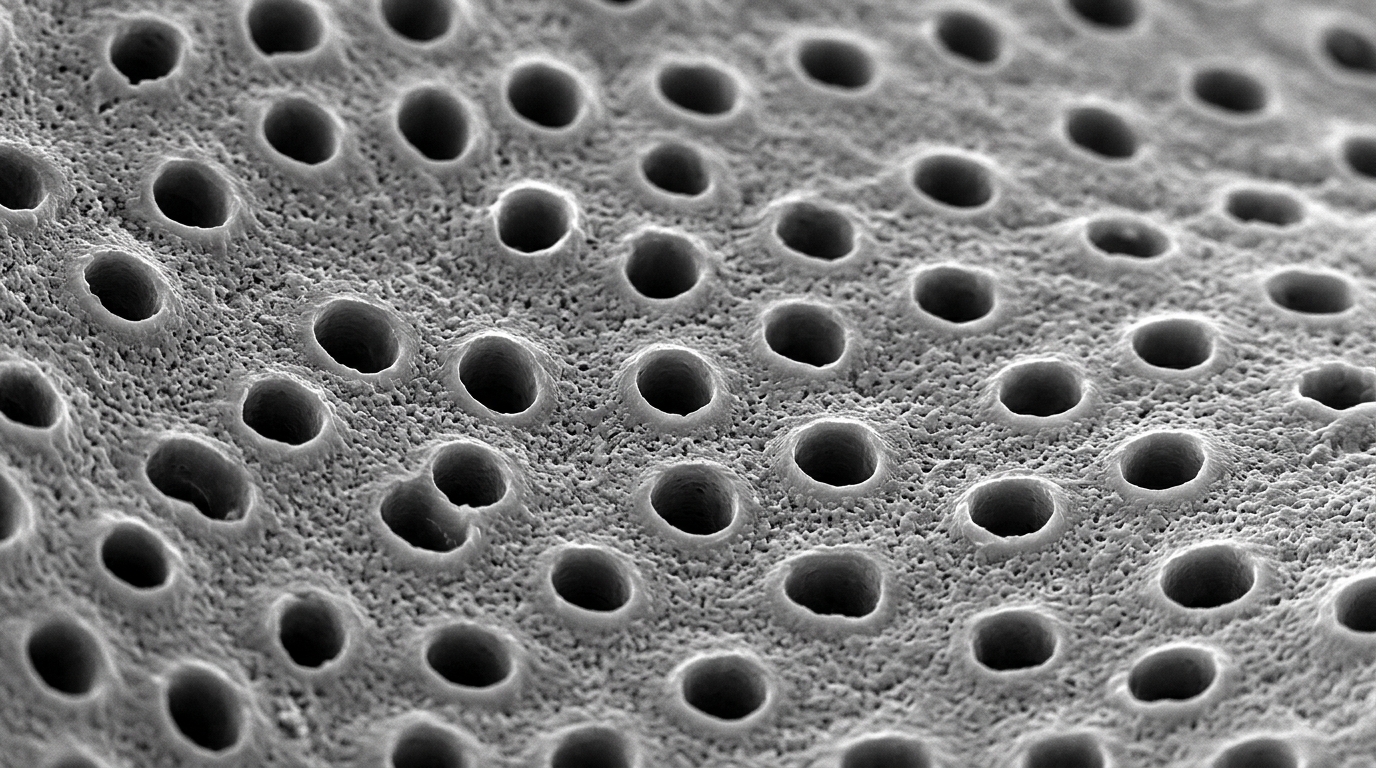
In an in vitro investigation evaluating root canal irrigants, researchers discovered that a superalkaline reductive solution demonstrated superior smear layer removal and dentinal tubule permeability compared to a standard 3% sodium hypochlorite solution, while exhibiting no cellular toxicity. The laboratory study assessed the experimental solution across multiple parameters to determine whether it could serve as an effective alternative in endodontic procedures.
The primary objective of the research team was to comprehensively evaluate the performance of the superalkaline reductive solution, specifically focusing on its capacity to eliminate the smear layer, its antibacterial activity, its cytotoxic profile, and its impact on dentinal tubule permeability.
To assess smear layer debridement, investigators instrumented forty-five single-rooted teeth and divided them into groups receiving 3% sodium hypochlorite, the superalkaline reductive solution, or a 0.9% sodium chloride control. All treatment protocols incorporated ethylenediaminetetraacetic acid gel alongside passive ultrasonic irrigation activation of the assigned irrigant during final irrigation. Smear layer clearance was evaluated under scanning electron microscopy using both standard scoring criteria and ImageJ digital image analysis.
Based on scoring system evaluations across all root canal thirds, the superalkaline reductive solution group achieved significantly greater smear layer removal than both the 3% sodium hypochlorite and 0.9% sodium chloride groups. In the middle and apical thirds of the roots, teeth irrigated with the superalkaline reductive solution exhibited the highest percentage of open dentinal tubules among the three tested groups, with sodium hypochlorite ranking second.
Analysis of dentinal tubule area percentages further highlighted significant differences within the root canal anatomy. The superalkaline reductive solution demonstrated clear statistical superiority in the apical third compared to the other irrigation protocols. When evaluating dentinal tubule permeability at a distance of 3 mm using confocal laser scanning microscopy across thirty-six single-rooted teeth, the superalkaline reductive solution group again exhibited superior performance.
The study also examined biological safety and antimicrobial characteristics using distinct experimental assays.
Antimicrobial efficacy against Enterococcus faecalis was evaluated across sixty-two infected single-rooted teeth using both colony-forming units analysis and scanning electron microscopy. In these microbiological assessments, the superalkaline reductive solution exhibited slightly lower antibacterial effectiveness against Enterococcus faecalis than 3% sodium hypochlorite.
The authors concluded that while the superalkaline reductive solution surpassed 3% sodium hypochlorite in smear layer elimination and dentinal tubule permeability without causing cellular toxicity, its antibacterial capacity remained inferior under the tested in vitro conditions.
Statistical evaluations confirmed that the advantages recorded for the superalkaline reductive solution reached significance, with probability values remaining below 0.05.
In discussing clinical significance, the authors emphasized that evaluating smear layer removal, antibacterial activity, cytotoxicity, and dentinal tubule permeability is essential to ensure the efficacy and safety of the superalkaline reductive solution for clinical application.
Subject of Research: Comparative in vitro evaluation of superalkaline reductive solution and sodium hypochlorite for endodontic irrigation
Article Title: Superalkaline reductive solution versus sodium hypochlorite for root canal irrigation: a comparative in vitro study
Article References: Wang, R., Shi, Y., Lyu, Q., Huang, Z., Zhang, J., Zheng, H., Wu, G., Peng, B., & Lin, H. (2026). Superalkaline reductive solution versus sodium hypochlorite for root canal irrigation: a comparative in vitro study. BMC Oral Health. https://doi.org/10.1186/s12903-026-10438-8
Image Credits: AI Generated
DOI: 10.1186/s12903-026-10438-8
Keywords: superalkaline reductive solution, sodium hypochlorite, root canal irrigation, endodontics, smear layer removal, dentinal tubules, permeability, cytotoxicity, L929 cells, Enterococcus faecalis, passive ultrasonic irrigation, EDTA gel, scanning electron microscopy, confocal laser scanning microscopy, ImageJ analysis, single-rooted teeth, antimicrobial efficacy
News Source: Ophelia Keating. (November 20, 2026). Superalkaline Reductive Solution Outperforms Sodium Hypochlorite in Smear Layer Removal. Scienmag.