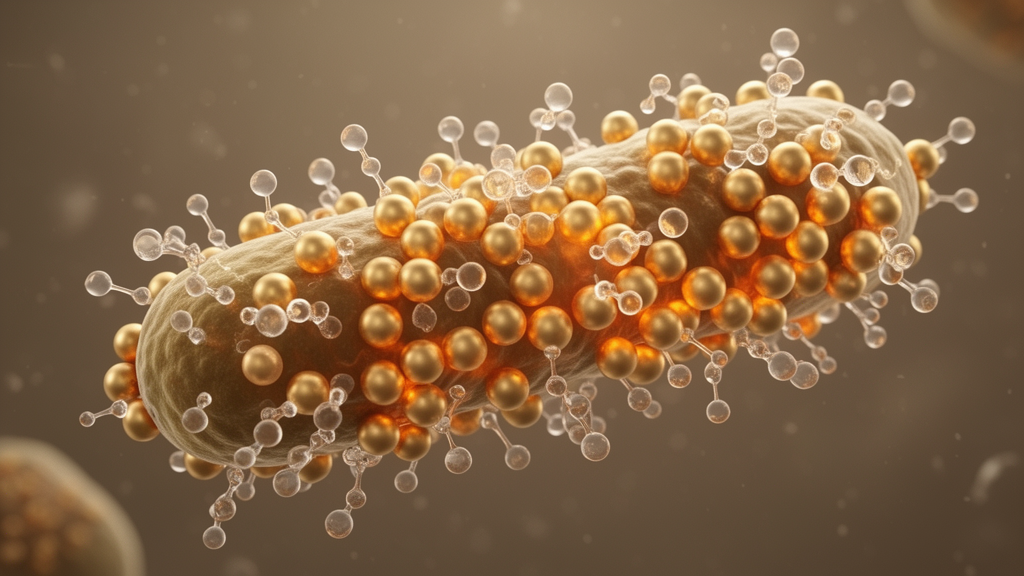
Carbohydrate-functionalized gold nanoparticles, commonly designated as glyco-AuNPs, provide a versatile nanotechnology platform that integrates the physicochemical attributes of metallic cores with the biological reactivity of natural sugars to combat antimicrobial resistance. In a review published in Discover Chemistry, researchers led by Sumana Pal and Satyabrata Si systematically evaluated how functionalizing colloidal gold with monosaccharides, oligosaccharides, and polysaccharides yields biocompatible nanostructures with broad-spectrum activity against pathogenic microorganisms. Traditional syntheses of gold nanoparticles typically depend on reducing chloroauric acid using chemical reducing agents such as sodium borohydride or sodium citrate, which can generate toxic by-products or require harsh operating conditions. In contrast, carbohydrate-directed green synthesis employs renewable sugars in aqueous environments, where abundant hydroxyl, aldehyde, or amino functional groups execute dual functions by simultaneously reducing auric ions to elemental gold and stabilizing the growing nanoclusters against aggregation. This biochemical strategy bypasses hazardous chemicals while yielding stable colloidal dispersions with tunable surface properties and characteristic localized surface plasmon resonance.
The synthetic efficiency and final morphology of glyco-AuNPs depend strongly on the structural class and molecular weight of the chosen carbohydrate precursor. Monosaccharides such as glucose and fructose exhibit the highest reduction rates, particularly in alkaline environments where base-catalyzed ring opening promotes the oxidation of aldehyde groups to carboxylates, converting auric ions to metallic gold while generating gluconic acid. However, because monosaccharides are small molecules, they offer limited steric hindrance, often requiring higher sugar concentrations or secondary stabilizers to prevent progressive particle coalescence and broad size distributions. Conversely, high-molecular-weight polysaccharides, including starch, dextran, alginate, and chitosan, primarily function as steric stabilizing agents that encapsulate nascent gold nuclei within hydrated polymeric matrices. When soluble starch is combined with glucose, as demonstrated in investigations by Engelbrekt and colleagues, rapid glucose-mediated reduction coupled with starch capping produces uniform spherical particles with average diameters between four and thirteen nanometers that remain stable in aqueous suspension for over seventeen months.
Distinct macromolecular configurations among polysaccharides introduce unique chemical functionalities that govern both nucleation kinetics and crystal growth directionality. Chitosan, a partly deacetylated derivative of chitin containing free amino groups, binds auric chloride complexes through protonated amine centers along its polymeric backbone before unprotonated amines and hydroxyls reduce the gold ions to elemental clusters. Research by Hashem and associates demonstrated that simply mixing chloroauric acid with chitosan yields monodisperse spherical nanoparticles measuring twenty to one hundred and twenty nanometers, with higher chitosan concentrations occasionally prompting the formation of anisotropic gold nanoflowers. Similarly, dextran reduces gold salts when its hydroxyl groups undergo partial oxidation to carbonyls under elevated thermal or alkaline conditions, while its branched polymer chains envelop the metallic cores. As reported by Sadiq and coworkers, increasing dextran concentrations generally reduces average nanoparticle diameter by elevating polymer chain density, which immediately passivates emerging gold nuclei and prevents them from merging into larger clusters.
The stability of glyco-AuNPs across fluctuating physiological conditions stems from a dense carbohydrate corona that establishes a dual steric and hydration barrier against particle agglomeration. Unlike citrate-capped nanoparticles that rely entirely on electrostatic repulsion and rapidly aggregate when biological salts screen their surface charges, polysaccharide-coated gold nanoparticles maintain colloidal stability in solutions with high ionic strength and across broad pH gradients. The extensive networks of hydroxyl groups coordinate tightly with gold surface atoms, resisting displacement by competing biomolecules and suppressing non-specific protein corona adsorption in biological fluids. Neutral polysaccharides such as dextran and starch yield near-neutral zeta potentials while maintaining dispersion through entropic repulsion, whereas charged polysaccharides such as alginate provide negative carboxylate charges and chitosan imparts positive charges at pH levels below six through protonated amine groups. Furthermore, these carbohydrate coatings demonstrate structural robustness during lyophilization and freeze-drying processes, resisting mechanical collapse and enabling long-term storage without significant sedimentation or particle size expansion.
The review critically delineates the antimicrobial mechanisms of glyco-AuNPs, distinguishing direct membrane disruption and oxidative stress generation from proposed intracellular pathways. Electrostatic interactions between positively charged nanoparticles, such as chitosan-functionalized systems, and negatively charged components of microbial envelopes, including the lipopolysaccharide layer of Gram-negative bacteria, induce local membrane permeabilization. Microscopic analyses show that exposure to glyco-AuNPs causes surface wrinkling, wall thinning, and nanoscale pore formation, precipitating the leakage of cytoplasmic contents, loss of membrane potential, and rapid collapse of electrochemical gradients. These surface interactions operate synergistically with the intrinsic membrane-destabilizing properties of chitosan. Furthermore, carbohydrate moieties mimic natural glycans, facilitating multivalent binding to microbial lectins and surface glycoproteins. This targeted attachment weakens structural cell wall assemblies in both Gram-positive and Gram-negative pathogens, including Pseudomonas aeruginosa and Staphylococcus aureus, though thick peptidoglycan layers in Gram-positive species can moderate direct nanoparticle access to the underlying cellular lipid bilayers.
In addition to physical envelope damage, glyco-AuNPs trigger pronounced oxidative stress by stimulating the cellular generation of reactive oxygen species, including hydrogen peroxide, superoxide anions, and hydroxyl radicals. Although bulk gold is chemically inert, nanoscale gold cores facilitate electron transfer processes in biological milieus through localized surface plasmon resonance and interactions with membrane-bound respiratory chain enzymes. Electron leakage and mitochondrial or metabolic disruptions induce intracellular accumulation of reactive oxygen species, which subsequently attack membrane lipids, structural proteins, and nucleic acids. Timoszyk and colleagues verified this oxidative cascade by measuring elevated concentrations of malondialdehyde in bacteria exposed to gold nanoparticles, confirming extensive lipid peroxidation as a major driver of bacterial mortality. Carbohydrate surface coatings modulate this oxidative mechanism by promoting intimate contact with microbial surfaces or facilitating receptor-mediated cellular internalization. Once inside the microbial cytoplasm, reactive oxygen species induce DNA fragmentation and enzyme inactivation, driving cellular death through pathways that operate independently of conventional antibiotic resistance mechanisms.
Beyond surface interactions and oxidative damage, smaller glyco-AuNPs can penetrate microbial cells and release trace quantities of bioactive gold ions, generating non-oxidative intracellular disturbances. Nanoparticles measuring five to twenty nanometers exhibit significantly higher bactericidal potency than particles exceeding fifty nanometers, as smaller dimensions facilitate trans-envelope penetration via passive diffusion, endocytosis, or membrane defects. Once inside the cytoplasm or nucleoid region, gold nanoparticles interact electrostatically with DNA, promoting nucleic acid condensation and suppressing transcription and replication processes. Although strong coordination from carbohydrate shells generally limits core dissolution, nanoscale gold particles smaller than five nanometers, or particles exposed to acidic microenvironments, can release gold cations. These released auric ions bind to thiol groups within essential metabolic enzymes, inhibiting catalytic activity in a manner analogous to gold-based pharmaceuticals such as auranofin. Together, intracellular macromolecular binding and controlled ion release complement membrane disruption and oxidative stress, creating a multi-targeted bactericidal assault that impedes the evolution of bacterial resistance.
The therapeutic utility of glyco-AuNPs extends across broad antifungal, antiviral, and medical device coating applications where biofilm prevention and targeted recognition are essential. In antifungal evaluations, chitosan-coated and carboxymethylcellulose-stabilized gold nanoparticles significantly suppress pathogenic fungi such as Candida albicans, Candida glabrata, and Fusarium oxysporum by disrupting fungal cell walls and degrading membrane ergosterol content. For antiviral strategies, multivalent carbohydrate presentation on gold nanoparticle cores mimics host cell surface glycans, allowing the particles to competitively bind viral glycoproteins such as influenza hemagglutinin or the HIV-1 envelope glycoprotein gp120, thereby effectively blocking initial viral attachment and cellular entry. Furthermore, integrating glyco-AuNPs into catheters, implants, and surgical instruments establishes anti-fouling surfaces that inhibit bacterial adhesion and eradicate established biofilms. By combining steric repulsion with local antimicrobial release or photothermal activation upon light irradiation, these carbohydrate-modified surfaces reduce device-associated contamination while preserving the viability and attachment of healthy surrounding mammalian host tissues.
In regenerative medicine and targeted drug delivery, carbohydrate-functionalized gold nanoplatforms accelerate cutaneous repair while enabling stimulus-responsive therapeutic transport. Ultrasmall gold nanoparticles incorporated into carboxymethyl chitosan hydrogels and crosslinked with polyacrylic acid demonstrate robust tissue adhesion, broad-spectrum antibacterial activity, and accelerated wound closure in preclinical models. These multifunctional wound dressings suppress bacterial colonization, scavenge excess reactive oxygen species, downregulate pro-inflammatory signaling, and stimulate fibroblast proliferation, angiogenesis, and collagen deposition. Simultaneously, the abundant functional groups on carbohydrate coronas facilitate the conjugation of therapeutic payloads, including antibiotics and antineoplastic agents such as doxorubicin. Dextran-coated gold nanoparticles measuring thirty to one hundred and seventy nanometers facilitate intracellular drug delivery and enzymatic shell degradation, releasing payloads directly into targeted subcellular compartments without requiring auxiliary peptide tags. Additionally, specific sugar motifs exploit lectin and scavenger receptors that are frequently overexpressed on immune cells, hepatocytes, and tumor-associated macrophages, mediating receptor-dependent uptake while minimizing off-target toxicity.
Despite promising preclinical efficacy, the clinical translation of glyco-AuNPs requires overcoming formidable challenges in manufacturing standardization, long-term biosafety profiling, and pharmacokinetic predictability. Natural carbohydrate polymers exhibit inherent structural heterogeneity and batch-dependent variability, necessitating rigorous purification protocols to achieve Good Manufacturing Practice compliance for particle size distribution, ligand density, and sterility. Toxicological assessments reveal divergent findings; while biologically synthesized nanoparticles generally exhibit low cytotoxicity toward mammalian cells at therapeutic doses, particles below five nanometers can cross biological membranes and accumulate within intracellular organelles. Following intravenous administration, gold nanoparticles frequently undergo sequestration by the mononuclear phagocyte system, accumulating in the liver, spleen, kidneys, and lymph nodes. Because metallic gold is not readily biodegradable, persistent tissue retention raises unresolved questions regarding chronic inflammatory and immunogenic responses. Accelerating clinical implementation will demand harmonized testing protocols, standardized quantitative life-cycle assessments, comprehensive in vivo pharmacokinetic models, and close interdisciplinary collaboration across materials science, microbiology, toxicology, and regulatory domains.
Subject of Research: Antimicrobial efficacy, synthesis mechanisms, and biomedical translation of carbohydrate-functionalized gold nanoparticles
Article Title: Glyco functionalized gold nanoparticles for mechanistic understanding antimicrobial efficacy and translational applications
Article References: Pal, S., Barat, A., Saha, R., Panigrahi, S., Mandal, D., Mohanty, P. S., & Si, S. (2026). Glyco functionalized gold nanoparticles for mechanistic understanding antimicrobial efficacy and translational applications. Discover Chemistry, 3(1), Article 433. https://doi.org/10.1007/s44371-026-00896-y
Image Credits: AI Generated
DOI: 10.1007/s44371-026-00896-y
Keywords: glyco-AuNPs, gold nanoparticles, green synthesis, antimicrobial resistance, membrane disruption, reactive oxygen species, chitosan, dextran, biofilm inhibition, multidrug-resistant pathogens, localized surface plasmon resonance, steric stabilization, wound healing, antiviral therapy, antifungal activity, medical device coatings, drug delivery systems, nanotoxicology
News Source: Bethany Barker. (November 18, 2026). Sugar-Coated Gold Nanoparticles Inhibit Drug-Resistant Pathogens Through Multiple Complementary Mechanisms. Scienmag.