• HOME
  • NEWS
  • EXPLORE
    • CAREER
      • Companies
      • Jobs
    • EVENTS
    • iGEM
      • News
      • Team
    • PHOTOS
    • VIDEO
    • WIKI
  • BLOG
  • COMMUNITY
    • FACEBOOK
    • INSTAGRAM
    • TWITTER
Thursday, April 2, 2026
BIOENGINEER.ORG
No Result
View All Result
  • Login
  • HOME
  • NEWS
  • EXPLORE
    • CAREER
      • Companies
      • Jobs
        • Lecturer
        • PhD Studentship
        • Postdoc
        • Research Assistant
    • EVENTS
    • iGEM
      • News
      • Team
    • PHOTOS
    • VIDEO
    • WIKI
  • BLOG
  • COMMUNITY
    • FACEBOOK
    • INSTAGRAM
    • TWITTER
  • HOME
  • NEWS
  • EXPLORE
    • CAREER
      • Companies
      • Jobs
        • Lecturer
        • PhD Studentship
        • Postdoc
        • Research Assistant
    • EVENTS
    • iGEM
      • News
      • Team
    • PHOTOS
    • VIDEO
    • WIKI
  • BLOG
  • COMMUNITY
    • FACEBOOK
    • INSTAGRAM
    • TWITTER
No Result
View All Result
Bioengineer.org
No Result
View All Result
Home NEWS Science News Biology

Suffering warthogs seek out nit-picking mongooses for relief

Bioengineer by Bioengineer
February 13, 2018
in Biology
Reading Time: 2 mins read
0
Share on FacebookShare on TwitterShare on LinkedinShare on RedditShare on Telegram
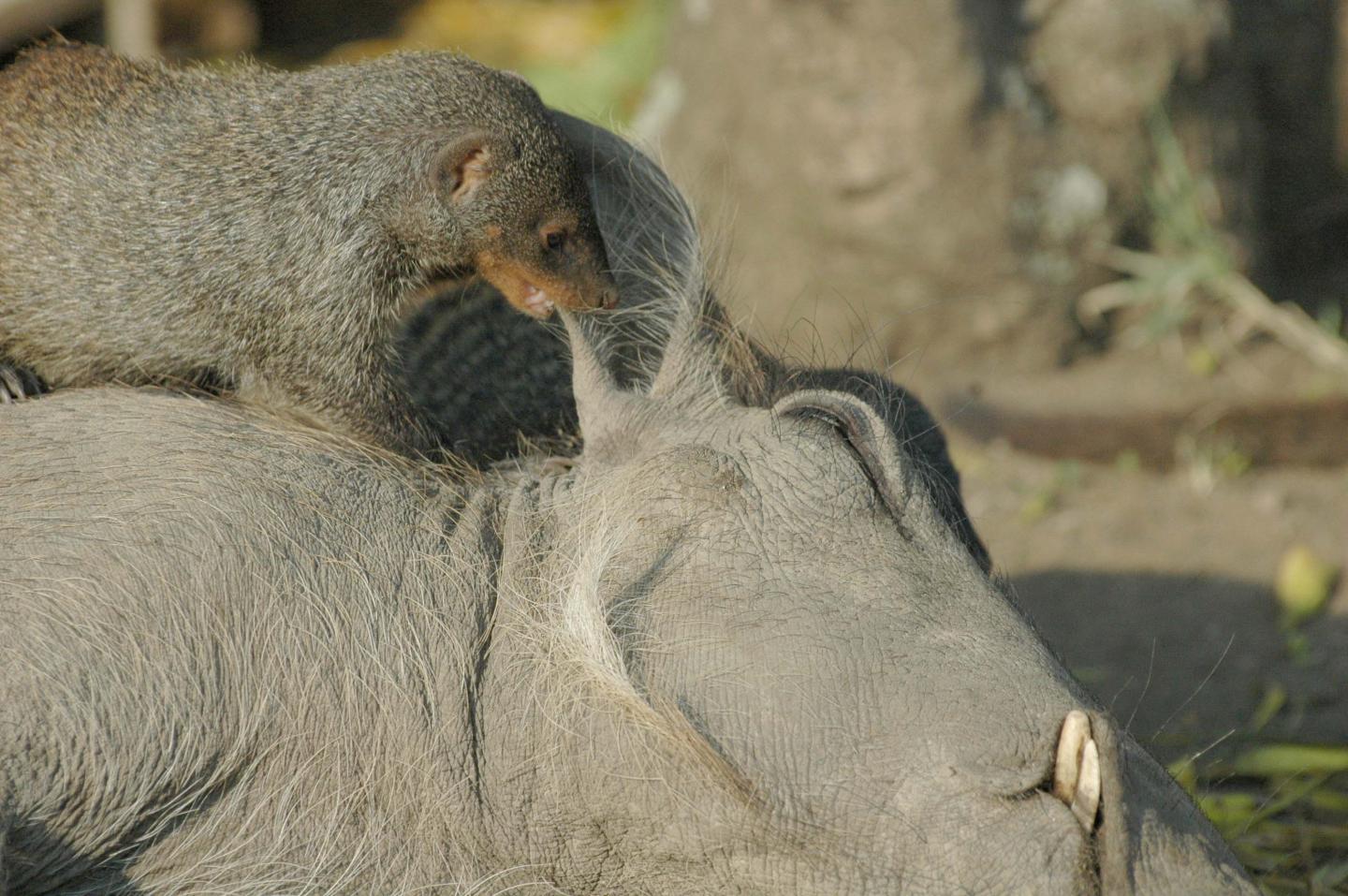
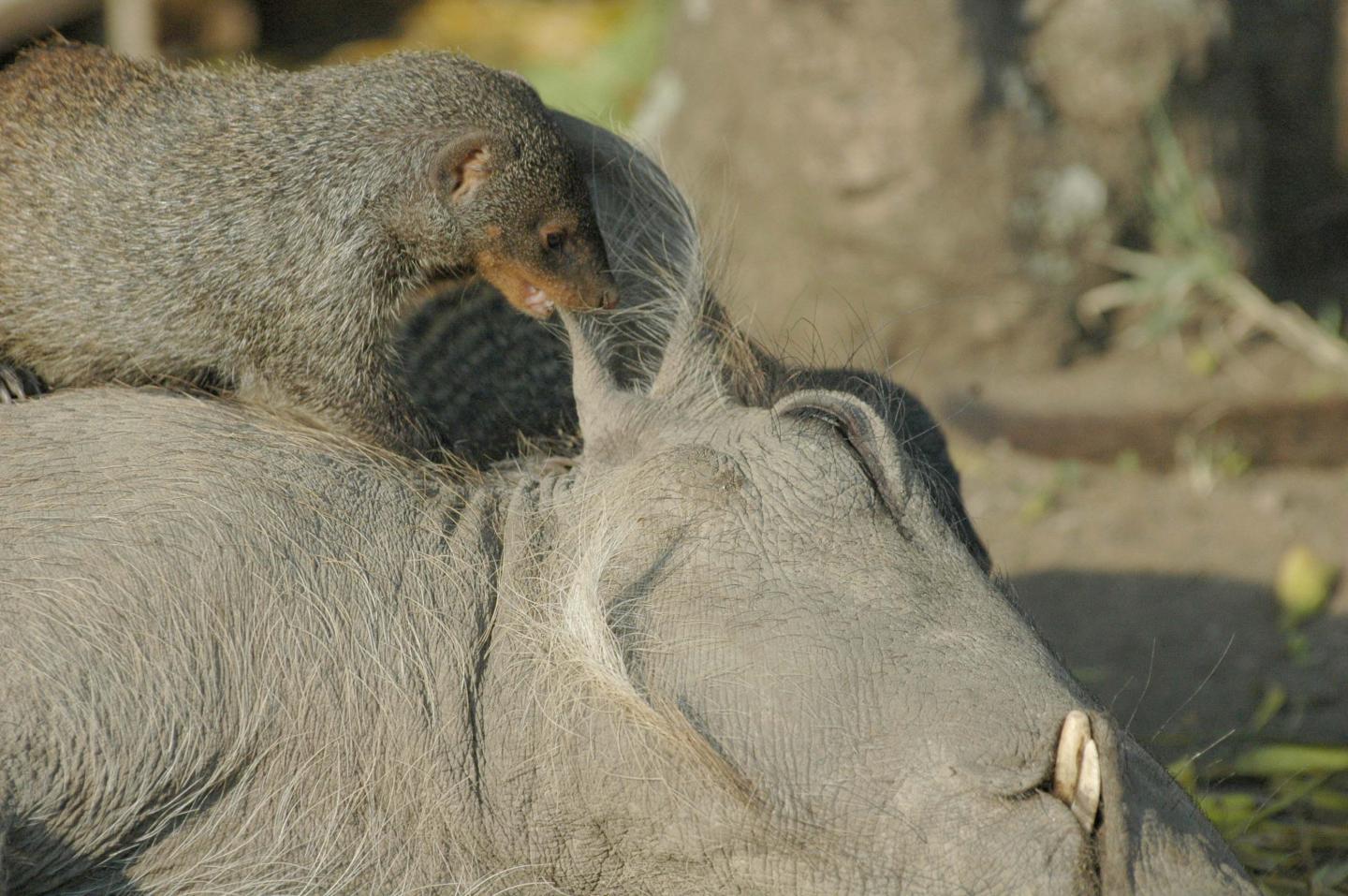
IMAGE

Credit: A. Plumptre

Warthogs living in Uganda have learned to rid themselves of annoying ticks by seeking out the grooming services of some accommodating neighbors: a group of mongooses looking for snacks.

Specifically, the warthogs of Queen Elizabeth National Park have learned to lie down in the presence of banded mongooses. In response, the mongoose cleaning crew have learned to inspect the wild pigs for ticks, going so far as to climb on top of their customers to gain access to more parasites.

A short article in the most recent edition of the journal Suiform Soundings describes the behavior, which has been observed by tourists to the park and was featured in a BBC video, and encourages further research on it.

"Such partnerships between different mammal species are rare, and this particular interaction illustrates a great deal of trust between participants," said Dr. Andy Plumptre, Director for WCS Albertine Rift Program and author of the published description of the behavior. "It makes you wonder what else may be happening between species that we don't see because, in order to see it, both species need to be unafraid of people."

The common warthog is widespread throughout sub-Saharan Africa and inhabits grasslands, savannas, and woodlands. The species can grow up to five feet in length and is characterized by a pair of tusks, which the warthog uses for both digging and defense. The banded mongoose is a small cat-like carnivore that, as its common name suggests, possesses a series of bands across its back. The species grows up to 1 ½ feet in length and travels in family groups numbering up to 40 individuals.

The warthog-mongoose encounter is a rare example of mammals exhibiting a symbiotic relationship called mutualism, where two animal species form a partnership with benefits for both groups. The warthogs get a cleaning and the mongooses get a meal. Other examples of mutualism include rhinos, zebras, and other animals that receive visits from parasite-eating birds called oxpeckers, and bees that feed on the nectar of flowers and deliver pollen to other plants.

"Wild pigs never fail to amaze me," commented Dr. Erik Meijaard, Chair of the IUCN/SSC Wild Pigs Specialist Group. "Not many scientists are interested in studying the 18 species of wild pig, but behaviors like the one described here, reiterate how uniquely adaptive, intelligent, and even cute wild pigs are. Pigs play important roles in ecosystem and their protection helps many other species."

###

WCS is working to conserve the Queen Elizabeth National Park, one of the most biodiverse savanna parks in Africa, by supporting the Uganda Wildlife Authority improve its law enforcement and monitoring of the park. Unique animal behavior, such as this mutualism between mongooses and warthogs, is just one of the special features of this site.

Suiform Soundings is the newsletter of the IUCN Pigs, Peccaries, and Hippos Specialist Group.

WCS (Wildlife Conservation Society)

MISSION: WCS saves wildlife and wild places worldwide through science, conservation action, education, and inspiring people to value nature. To achieve our mission, WCS, based at the Bronx Zoo, harnesses the power of its Global Conservation Program

Media Contact

John Delaney
[email protected]
718-220-3275
@TheWCS

http://www.wcs.org

Share14Tweet8Share2ShareShareShare2

Related Posts

Insights into CD4+ T-Cell Depletion and Pulmonary Infections in Critically Ill Immunocompromised Patients

Insights into CD4+ T-Cell Depletion and Pulmonary Infections in Critically Ill Immunocompromised Patients

April 2, 2026
Advanced Sensors Reduce Costs in Genetic Disorder Research

Advanced Sensors Reduce Costs in Genetic Disorder Research

April 2, 2026

Advancing Blood Purification: Innovations Beyond Traditional Dialysis

April 2, 2026

IBMCP Team Uncovers “Molecular Switch” Governing Plant Vascular Tissue Formation

April 2, 2026
Please login to join discussion

POPULAR NEWS

  • blank

    Revolutionary AI Model Enhances Precision in Detecting Food Contamination

    96 shares
    Share 38 Tweet 24
  • Imagine a Social Media Feed That Challenges Your Views Instead of Reinforcing Them

    1007 shares
    Share 398 Tweet 249
  • Promising Outcomes from First Clinical Trials of Gene Regulation in Epilepsy

    51 shares
    Share 20 Tweet 13
  • Popular Anti-Aging Compound Linked to Damage in Corpus Callosum, Study Finds

    44 shares
    Share 18 Tweet 11

About

We bring you the latest biotechnology news from best research centers and universities around the world. Check our website.

Follow us

Recent News

REV-ERBα/BNIP3 Axis Reduces Pulmonary Hypertension via Mitophagy

Gomesin Cytotoxicity Driven by Glycosphingolipids, Cholesterol

Gut Microbiome’s Role in Gastric Cancer Therapy

Subscribe to Blog via Email

Enter your email address to subscribe to this blog and receive notifications of new posts by email.

Join 78 other subscribers
  • Contact Us

Bioengineer.org © Copyright 2023 All Rights Reserved.

Welcome Back!

Login to your account below

Forgotten Password?

Retrieve your password

Please enter your username or email address to reset your password.

Log In
No Result
View All Result
  • Homepages
    • Home Page 1
    • Home Page 2
  • News
  • National
  • Business
  • Health
  • Lifestyle
  • Science

Bioengineer.org © Copyright 2023 All Rights Reserved.