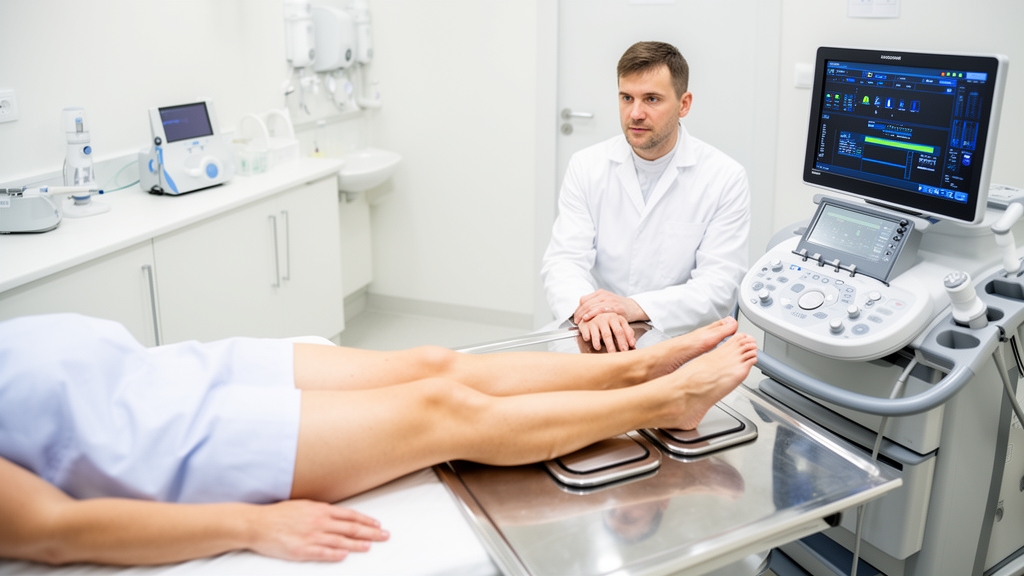
Electrochemical skin conductance measurements gathered through Sudoscan do not support diagnosing or localizing focal radiculopathy, according to a cross-sectional study published in BMC Neurology. The investigation evaluated whether region-appropriate electrochemical skin conductance (ESC) values in patients with radiculopathy confirmed by electromyography and nerve conduction studies (EMG/NCS) could aid clinical assessment, focusing on whether readings falling below standard device-defined cutoffs reflected local nerve root pathology or coexisting distal sudomotor dysfunction.
The cross-sectional investigation enrolled 177 participants who collectively contributed 200 EMG/NCS-confirmed radiculopathy-region observations. Within this clinical cohort, 23 participants contributed observations for both upper and lower anatomical regions. Study protocols specified that Sudoscan and EMG/NCS evaluations were performed concurrently across all participants.
To evaluate region-specific conductance, researchers recorded hand ESC for upper-region observations and foot ESC for lower-region observations. For patients presenting with unilateral radiculopathy, measurements from the affected side were analyzed, whereas left and right values were averaged for patients with bilateral radiculopathy. Below-threshold conductance was defined using device boundaries displayed on the Impeto Medical SUDOSCAN result page, specifically less than 60 µS for hands and less than 70 µS for feet, although these reference cutoffs were neither derived nor validated for radiculopathy.
Across all 200 radiculopathy-region observations, the mean region-specific conductance was 63.2 ± 15.9 µS, with upper-region observations averaging 51.9 ± 15.1 µS and lower-region observations averaging 68.1 ± 13.6 µS. Conductance fell below the device-defined limb-specific thresholds in 108 of the 200 observations, representing 54.0 percent (participant-clustered 95% confidence interval [CI], 46.5 to 61.5 percent). Evaluated at the individual participant level, values dropped below threshold boundaries in at least one region for 99 of the 177 participants, or 55.9 percent (95% CI, 48.6 to 63.0 percent). By anatomical region, below-threshold rates reached 70.5 percent for upper-region observations and 46.8 percent for lower-region observations.
A multivariable regression model incorporating participant-clustered robust standard errors analyzed 170 observations from 154 participants. The statistical analysis showed that older age was associated with lower conductance, yielding an adjusted beta of −0.29 µS per year (95% CI, −0.51 to −0.08; p = 0.007). In addition, upper-region hand measurements were associated with substantially lower conductance compared to lower-region foot measurements, with an adjusted beta of −16.50 µS (95% CI, −20.86 to −12.14; p < 0.001).
The study also examined side-to-side differences in an exploratory analysis of 51 unilateral radiculopathy observations from 50 participants. Within this subgroup, conductance on the affected side was 1.78 µS lower than on the contralateral unaffected side (participant-clustered 95% CI, −3.16 to −0.41; exploratory p = 0.012).
Despite this slight side-to-side difference in unilateral presentations, the authors concluded that the findings do not support the use of Sudoscan for diagnosing or localizing radiculopathy. The difference observed between upper and lower observations cannot be separated from inherent baseline measurement differences between hand and foot sites, and any potential role for Sudoscan in detecting coexisting distal sudomotor dysfunction remains hypothesis-generating and requires prospective validation.
Subject of Research: Diagnostic utility of Sudoscan electrochemical skin conductance in electromyography-confirmed radiculopathy
Article Title: Region-specific Sudoscan electrochemical skin conductance and clinical correlates in electromyography-confirmed radiculopathy: a cross-sectional study
Article References: Hojjati, F., Ghorbani Yekta, B., Ehteshami, K., Esmaeili, E., & Mohammadi, S. (2026). Region-specific Sudoscan electrochemical skin conductance and clinical correlates in electromyography-confirmed radiculopathy: a cross-sectional study. BMC Neurology. https://doi.org/10.1186/s12883-026-05537-6
Image Credits: AI Generated
DOI: 10.1186/s12883-026-05537-6
Keywords: Sudoscan, electrochemical skin conductance, radiculopathy, electromyography, nerve conduction study, sudomotor dysfunction, Impeto Medical, hand ESC, foot ESC, cross-sectional study, unilateral radiculopathy, bilateral radiculopathy, contralateral comparison, multivariable regression, BMC Neurology, peripheral nerve disorders, threshold boundaries
News Source: Ophelia Keating. (November 11, 2026). Sudoscan Measures Do Not Support Diagnosing Radiculopathy in Cross-Sectional Study. Scienmag.