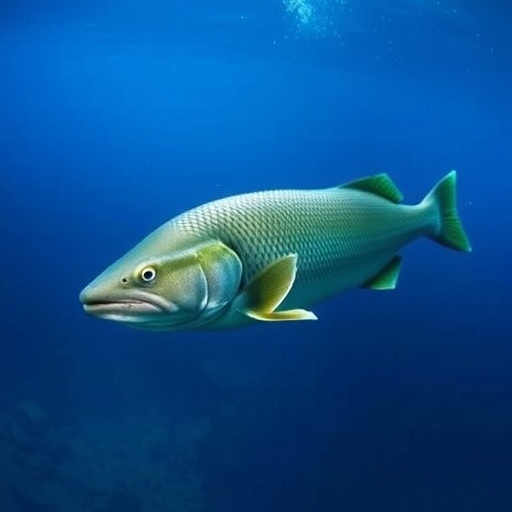
New legislative measures aimed at recreational pollack fishing are set to come into effect in 2026, marking a significant shift in how anglers interact with this commercially and ecologically important species. This legislation, emerging from a collaborative agreement between the UK Government and the European Union, will impose a daily catch limit of three pollack per angler. Given pollack’s crucial value both socio-economically and within marine ecosystems, these regulations will inevitably increase the frequency of fish releases post-capture. This development underscores the importance of understanding how release practices affect the long-term viability of pollack populations.
Recent research, led by a consortium of UK scientific institutions and industry partners under the Pollack Fisheries Industry Science Partnership project (Pollack FISP), has provided groundbreaking insights into optimizing post-capture survival rates of pollack. The study suggests that releasing pollack at depths closer to their natural capture environment significantly enhances their probabilities of survival, demonstrating improvements of approximately 25 percent compared to conventional surface release. These findings have the potential to redefine best practices within recreational fisheries, aiding in both conservation objectives and commercial sustainability.
The biological rationale behind this phenomenon is rooted in the physiological stress induced by barotrauma experienced during rapid ascent from depth. Similar to decompression sickness in humans, pollack suffer from gas expansion within their bodily cavities when brought abruptly to the surface from depths greater than 20 meters. This condition poses risks including tissue damage, impaired buoyancy, and disruptions in vital reflexes. By facilitating a recompression protocol, whereby fish are gradually returned to the pressure conditions of their original capture depth, these deleterious effects can be mitigated, substantially improving the likelihood of post-release survival.
Central to the Pollack FISP study was the deployment of an innovative experimental apparatus: a weighted cage designed to house captured pollack during release. This device, capable of controlled descent to various depths within the water column, was equipped with high-definition cameras enabling detailed behavioral observation immediately after submersion. Results indicated that pollack regain essential reflexes within one to four minutes post-release, a critical benchmark for survival in natural predatory and environmental conditions.
In addition to behavioral assessments, the research employed electronic tagging and acoustic telemetry to track released individuals over extended temporal scales. Tagged pollack showed active movement and site dispersal of up to 25 kilometers from their release points, with detectable presence in the water column persisting for as long as six months. These tracking data not only confirm the immediate physiological benefits of depth-appropriate release but also underscore the potential for successful reintegration into population dynamics and habitat utilization.
The implications of these findings extend beyond academic interest, offering actionable strategies for stakeholders throughout the fishing industry. Commercial descending devices such as Seaqualizers, which function to return fish to depth safely and cost-effectively, emerge as promising solutions. Adoption of such equipment could be integrated seamlessly into existing fishing protocols, promoting fish welfare while supporting regulatory compliance. The availability of practical, scalable tools is a crucial component in translating scientific insights into widespread conservation outcomes.
One challenge remains the communication and acceptance of these methods within the angling community. There exists some apprehension regarding the utility and reliability of descending devices. Recognizing this, the study’s authors stress the importance of ongoing evaluations to validate different devices and raise awareness. These efforts are essential to build confidence among anglers and charter operators, ensuring that conservation-oriented practices receive broad adoption and do not face resistance rooted in misinformation or skepticism.
Pollack, scientifically known as Pollachius pollachius, occupy a vital niche within the UK’s marine ecosystems and fishery sectors. Ranked as the fourth most valuable finfish species for commercial vessels under ten meters, their decline—over 70% in catch volumes across the English Channel, Celtic, and Irish Seas over two decades—raises concerns regarding sustainable exploitation. Addressing post-release mortality through improved capture and release methodologies is one component of a comprehensive approach to reversing this trend.
The Pollack FISP initiative itself exemplifies interdisciplinary collaboration, involving the University of Plymouth, University of York, Marine Biological Association, Centre for Environment, Fisheries and Aquaculture Science (Cefas), and University of East Anglia, alongside key fishing industry representatives. Such partnerships are critical in bridging scientific knowledge with practical fisheries management, ensuring research outcomes translate into policy recommendations and real-world applications that benefit both ecosystems and the economy.
The adoption of recompression techniques in recreational fisheries represents a paradigm shift. Beyond pollack, such approaches hold promise for other species affected by barotrauma, suggesting a broader applicability in fisheries conservation. This research advocates for a science-based recalibration of fishing practices, integrating physiological understanding with technological innovation to safeguard fish populations in the face of mounting anthropogenic pressures.
As the legislation approaches implementation, the integration of these findings offers a roadmap toward more sustainable recreational fishery practices. By enhancing survival rates, encouraging responsible release, and fostering acceptance of descending devices, it is possible to preserve pollack stocks for future generations while maintaining the cultural and economic benefits derived from recreational angling.
This study, published in the journal Fisheries Management and Ecology, underscores the importance of evidence-driven fisheries policies. It lays the groundwork for shifting normative behaviors in angling communities and advancing marine conservation strategies that align ecological health with human utility—a critical balance in contemporary ocean stewardship.
Subject of Research: Animals
Article Title: Recompression Improves Release Success in Pollack (Pollachius pollachius): A Step Towards Assessing Post Release Mortality in a Recreational Fishery
News Publication Date: 9-Jan-2026
Web References: http://dx.doi.org/10.1111/fme.70047
Image Credits: University of Plymouth
Keywords: Fisheries, Aquaculture, Fisheries management, Marine biology, Marine ecology, Marine life, Marine conservation, Marine ecosystems, Marine reserves, Food industry, Fishing, Ecosystem services, Applied ecology, Overfishing
Tags: barotrauma and fish survivalbest practices for fish releasecollaborative fisheries managementdeep-water fish release practicesecological importance of pollacklong-term survival of pollackmarine conservation strategiesoptimizing post-capture survival ratesPollack Fisheries Industry Science Partnershippollack fishing regulations 2026recreational fishing catch limitssocio-economic value of pollack