

• HOME
  • NEWS
  • EXPLORE
    • CAREER
      • Companies
      • Jobs
    • EVENTS
    • iGEM
      • News
      • Team
    • PHOTOS
    • VIDEO
    • WIKI
  • BLOG
  • COMMUNITY
    • FACEBOOK
    • INSTAGRAM
    • TWITTER
Thursday, March 26, 2026
BIOENGINEER.ORG
No Result
View All Result
  • Login
  • HOME
  • NEWS
  • EXPLORE
    • CAREER
      • Companies
      • Jobs
        • Lecturer
        • PhD Studentship
        • Postdoc
        • Research Assistant
    • EVENTS
    • iGEM
      • News
      • Team
    • PHOTOS
    • VIDEO
    • WIKI
  • BLOG
  • COMMUNITY
    • FACEBOOK
    • INSTAGRAM
    • TWITTER
  • HOME
  • NEWS
  • EXPLORE
    • CAREER
      • Companies
      • Jobs
        • Lecturer
        • PhD Studentship
        • Postdoc
        • Research Assistant
    • EVENTS
    • iGEM
      • News
      • Team
    • PHOTOS
    • VIDEO
    • WIKI
  • BLOG
  • COMMUNITY
    • FACEBOOK
    • INSTAGRAM
    • TWITTER
No Result
View All Result
Bioengineer.org
No Result
View All Result
Home NEWS Science News Psychology & Psychiatry

Study reveals rats show regret

Bioengineer by Bioengineer
June 9, 2014
in Psychology & Psychiatry
Reading Time: 2 mins read
1
Share on FacebookShare on TwitterShare on LinkedinShare on RedditShare on Telegram

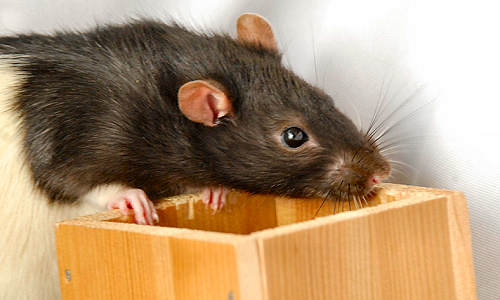
New research from the Department of Neuroscience at the University of Minnesota reveals that rats show regret, a cognitive behavior once thought to be uniquely and fundamentally human.

Study reveals rats show regret,

Research findings were recently published in Nature Neuroscience.

To measure the cognitive behavior of regret, A. David Redish, Ph.D., a professor of neuroscience in the University of Minnesota Department of Neuroscience, and Adam Steiner, a graduate student in the Graduate Program in Neuroscience, who led the study, started from the definitions of regret that economists and psychologists have identified in the past.

“Regret is the recognition that you made a mistake, that if you had done something else, you would have been better off,” said Redish. “The difficult part of this study was separating regret from disappointment, which is when things aren’t as good as you would have hoped. The key to distinguishing between the two was letting the rats choose what to do.”

Redish and Steiner developed a new task that asked rats how long they were willing to wait for certain foods. “It’s like waiting in line at a restaurant,” said Redish. “If the line is too long at the Chinese food restaurant, then you give up and go to the Indian food restaurant across the street.”

In this task, which they named “Restaurant Row,” the rat is presented with a series of food options but has limited time at each “restaurant.”

Research findings show rats were willing to wait longer for certain flavors, implying they had individual preferences. Because they could measure the rats’ individual preferences, Steiner and Redish could measure good deals and bad deals. Sometimes, the rats skipped a good deal and found themselves facing a bad deal.

“In humans, a part of the brain called the orbitofrontal cortex is active during regret. We found in rats that recognized they had made a mistake, indicators in the orbitofrontal cortex represented the missed opportunity. Interestingly, the rat’s orbitofrontal cortex represented what the rat should have done, not the missed reward. This makes sense because you don’t regret the thing you didn’t get, you regret the thing you didn’t do,” said Redish.

Redish adds that results from Restaurant Row allow neuroscientists to ask additional questions to better understand why humans do things the way they do. By building upon this animal model of regret, Redish believes future research could help us understand how regret affects the decisions we make.

Story Source:

The above story is based on materials provided by University of Minnesota Academic Health Center.

Share15Tweet10Share3ShareShareShare2

Related Posts

Rats Use Whiskers Almost as Humans Use Fingers

July 8, 2014

DNA modifications measured in blood signal related changes in the brain

April 9, 2014

First stem cell study of bipolar disorder yields promising results

March 25, 2014

New gene for bipolar disorder discovered

March 13, 2014
Please login to join discussion

POPULAR NEWS

  • blank

    Revolutionary AI Model Enhances Precision in Detecting Food Contamination

    96 shares
    Share 38 Tweet 24
  • Imagine a Social Media Feed That Challenges Your Views Instead of Reinforcing Them

    1003 shares
    Share 397 Tweet 248
  • Uncovering Functions of Cavernous Malformation Proteins in Organoids

    54 shares
    Share 22 Tweet 14
  • Promising Outcomes from First Clinical Trials of Gene Regulation in Epilepsy

    51 shares
    Share 20 Tweet 13

About

We bring you the latest biotechnology news from best research centers and universities around the world. Check our website.

Follow us

Recent News

In-Sensor Cryptography Links Physical Process to Digital Identity

Can Psychosocial Factors Influence Cancer Risk?

Depression Factors in Elderly: Pre vs. Post-COVID Analysis

Subscribe to Blog via Email

Success! An email was just sent to confirm your subscription. Please find the email now and click 'Confirm' to start subscribing.

Join 78 other subscribers
  • Contact Us

Bioengineer.org © Copyright 2023 All Rights Reserved.

Welcome Back!

Login to your account below

Forgotten Password?

Retrieve your password

Please enter your username or email address to reset your password.

Log In
No Result
View All Result
  • Homepages
    • Home Page 1
    • Home Page 2
  • News
  • National
  • Business
  • Health
  • Lifestyle
  • Science

Bioengineer.org © Copyright 2023 All Rights Reserved.
