• HOME
  • NEWS
  • EXPLORE
    • CAREER
      • Companies
      • Jobs
    • EVENTS
    • iGEM
      • News
      • Team
    • PHOTOS
    • VIDEO
    • WIKI
  • BLOG
  • COMMUNITY
    • FACEBOOK
    • INSTAGRAM
    • TWITTER
Saturday, November 14, 2026
BIOENGINEER.ORG
No Result
View All Result
  • Login
  • HOME
  • NEWS
  • EXPLORE
    • CAREER
      • Companies
      • Jobs
        • Lecturer
        • PhD Studentship
        • Postdoc
        • Research Assistant
    • EVENTS
    • iGEM
      • News
      • Team
    • PHOTOS
    • VIDEO
    • WIKI
  • BLOG
  • COMMUNITY
    • FACEBOOK
    • INSTAGRAM
    • TWITTER
No Result
View All Result
Bioengineer.org
No Result
View All Result
Home NEWS Science News Technology

Study Reveals Fundamental Limits of Large Language Models in Spatial Reasoning

by
November 9, 2026
in Technology
Reading Time: 2 mins read
0
Study Reveals Fundamental Limits of Large Language Models in Spatial Reasoning

Study Reveals Fundamental Limits of Large Language Models in Spatial Reasoning

Share on FacebookShare on TwitterShare on LinkedinShare on RedditShare on Telegram

Open-source large language models exhibit fundamental limits when tasked with solving complex spatial problems, failing to replicate the intuitive navigation of physical environments that humans display, according to a methods study published in Frontiers in Computer Science. The evaluation tested agents powered by five state-of-the-art open-source models to examine the limits of their ability to reason and navigate in complex physical spaces.

The investigation addresses an underexplored area in artificial intelligence research as large language model agents are rapidly deployed as assistive tools in real-world environments. While these systems have demonstrated impressive performance across many reasoning tasks, their spatial reasoning remains underexplored.

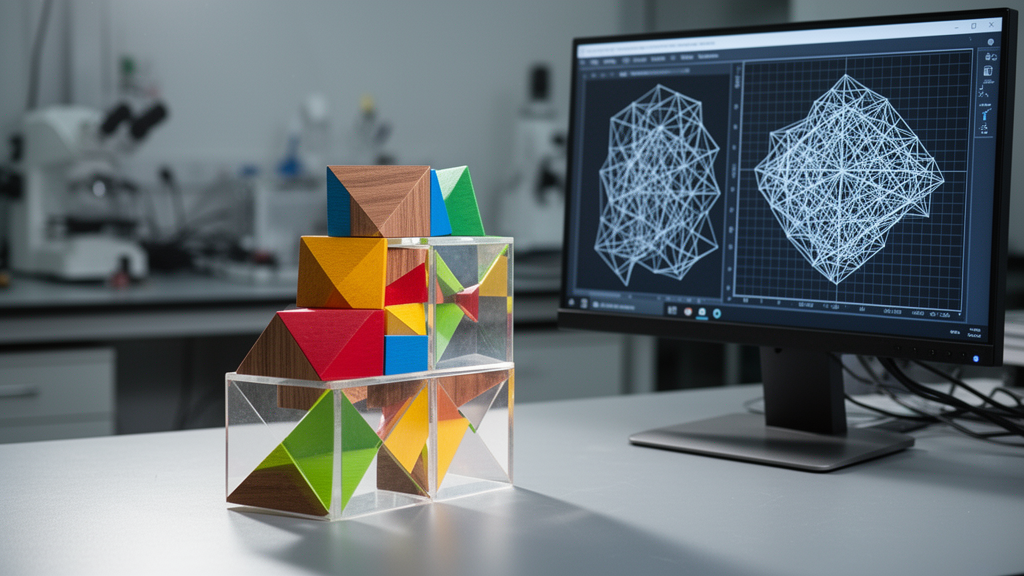
To probe these limitations, the research team evaluated the model-powered agents on two distinct, complex spatial problems that humans typically learn to solve with ease: the Tower of Hanoi puzzle and the game of Tetris. Because both tasks are fully describable in text, the experimental design provided the language models with the best conditions to succeed.

In the Tower of Hanoi task, the language model agents initially achieved successful results at lower complexity levels. However, as the puzzle complexity grew, the models failed to discover the general, complexity-independent solution strategies that human solvers typically learn with minimal practice. This strategic limitation culminated in a complete collapse of agent performance as the structural demands of the task escalated.

The models rarely produced legal placements, even in drastically simplified variants of the game.

By evaluating the agents’ chosen trajectories against optimal or acceptable problem-solving paths, the authors documented a fundamental lack of understanding of physical space and physical laws. Across both testing environments, the models routinely failed to adhere to core task rules, diverged into impossible spatial paths, and struggled to track and maintain the state of physical objects over successive steps.

In addition to tracking failures, the agents showed no comprehension of fundamental physical properties, including gravity, rigid bodies, and solid boundaries. Rahman and Sibert concluded that these findings highlight essential differences between human cognition and current language model approaches, pointing to a difficult uphill battle in attempting to scale purely text-based architectures into general problem solvers.

Subject of Research: Spatial reasoning limitations of large language models

Article Title: Lost in space: uncovering fundamental limits of large language models in complex, spatial problem solving

Article References: Rahman, R., & Sibert, C. (2026). Lost in space: uncovering fundamental limits of large language models in complex, spatial problem solving. Frontiers in Computer Science, 8, Article 1932390. https://doi.org/10.3389/fcomp.2026.1932390

Image Credits: AI Generated

DOI: 10.3389/fcomp.2026.1932390

Keywords: large language models, spatial reasoning, artificial intelligence, Tower of Hanoi, Tetris, problem solving, physical laws, AI evaluation, Lost, space, uncovering, fundamental

News Source: Denise Maddox. (November 9, 2026). Study Reveals Fundamental Limits of Large Language Models in Spatial Reasoning. Scienmag.


Tags: AI evaluationArtificial IntelligenceFundamentalLarge Language ModelsLostphysical lawsproblem-solvingspacespatial reasoningTetrisTower of HanoiUncovering
Share12Tweet7Share2ShareShareShare1

Related Posts

Stenosed Artery Blood Flow Model Couples Casson Rheology With Neural Surrogates

Stenosed Artery Blood Flow Model Couples Casson Rheology With Neural Surrogates

November 14, 2026
Traditional Omani Settlements Show Higher Street Network Connectivity Than Modern Neighborhoods

Traditional Omani Settlements Show Higher Street Network Connectivity Than Modern Neighborhoods

November 14, 2026

Neural Networks Predict Tunnel Boring Cutter Wear Better Than Empirical Models

November 14, 2026

Self-efficacy links AI enthusiasm to perceived learning success

November 14, 2026

POPULAR NEWS

  • SUN Automates Louvain Clustering Resolution Selection for Single-Cell RNA Sequencing Benchmarks

    SUN Automates Louvain Clustering Resolution Selection for Single-Cell RNA Sequencing Benchmarks

    29 shares
    Share 12 Tweet 7
  • Reinjection Maintains Sustainable Geothermal Yield in Dezhou Sandstone With Minimal Cooling

    29 shares
    Share 12 Tweet 7
  • Most Gaza Dermatology Clinic Patients Reported Skin Diseases Began During Conflict

    29 shares
    Share 12 Tweet 7
  • BAF Mutations Drive Cancer by Reshaping DNA Accessibility to CTCF

    29 shares
    Share 12 Tweet 7

About

We bring you the latest biotechnology news from best research centers and universities around the world. Check our website.

Follow us

Recent News

Most Ugandan HIV Patients with TB Symptoms Lack Documented Follow-Up Care

Suture Tension in Shoulder Repair Balances Interface Compression and Tissue Stress

Stenosed Artery Blood Flow Model Couples Casson Rheology With Neural Surrogates

Subscribe to Blog via Email

Enter your email address to subscribe to this blog and receive notifications of new posts by email.

Join 87 other subscribers
  • Contact Us

Bioengineer.org © Copyright 2023 All Rights Reserved.

Welcome Back!

Login to your account below

Forgotten Password?

Retrieve your password

Please enter your username or email address to reset your password.

Log In
No Result
View All Result
  • Homepages
    • Home Page 1
    • Home Page 2
  • News
  • National
  • Business
  • Health
  • Lifestyle
  • Science

Bioengineer.org © Copyright 2023 All Rights Reserved.