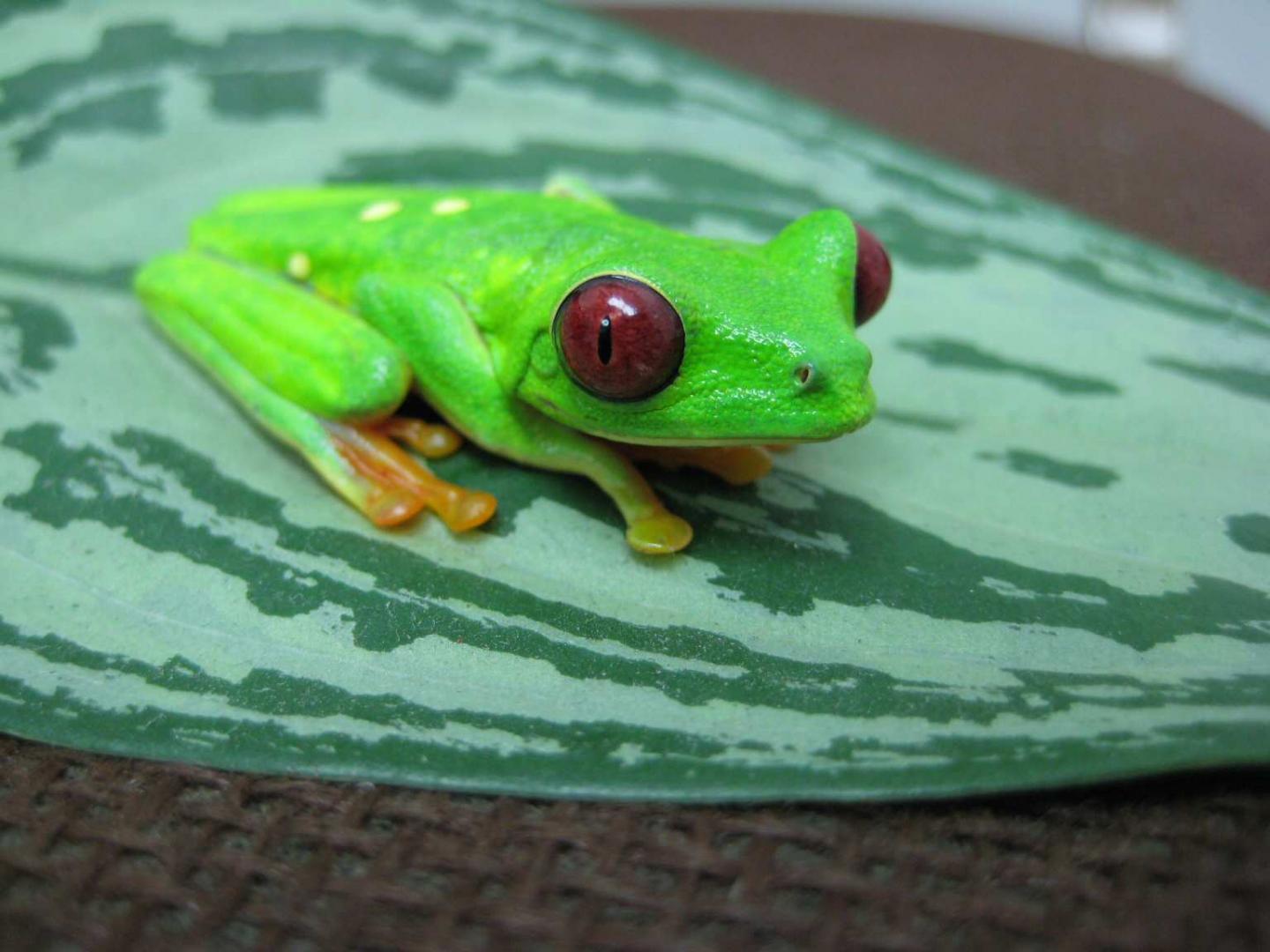
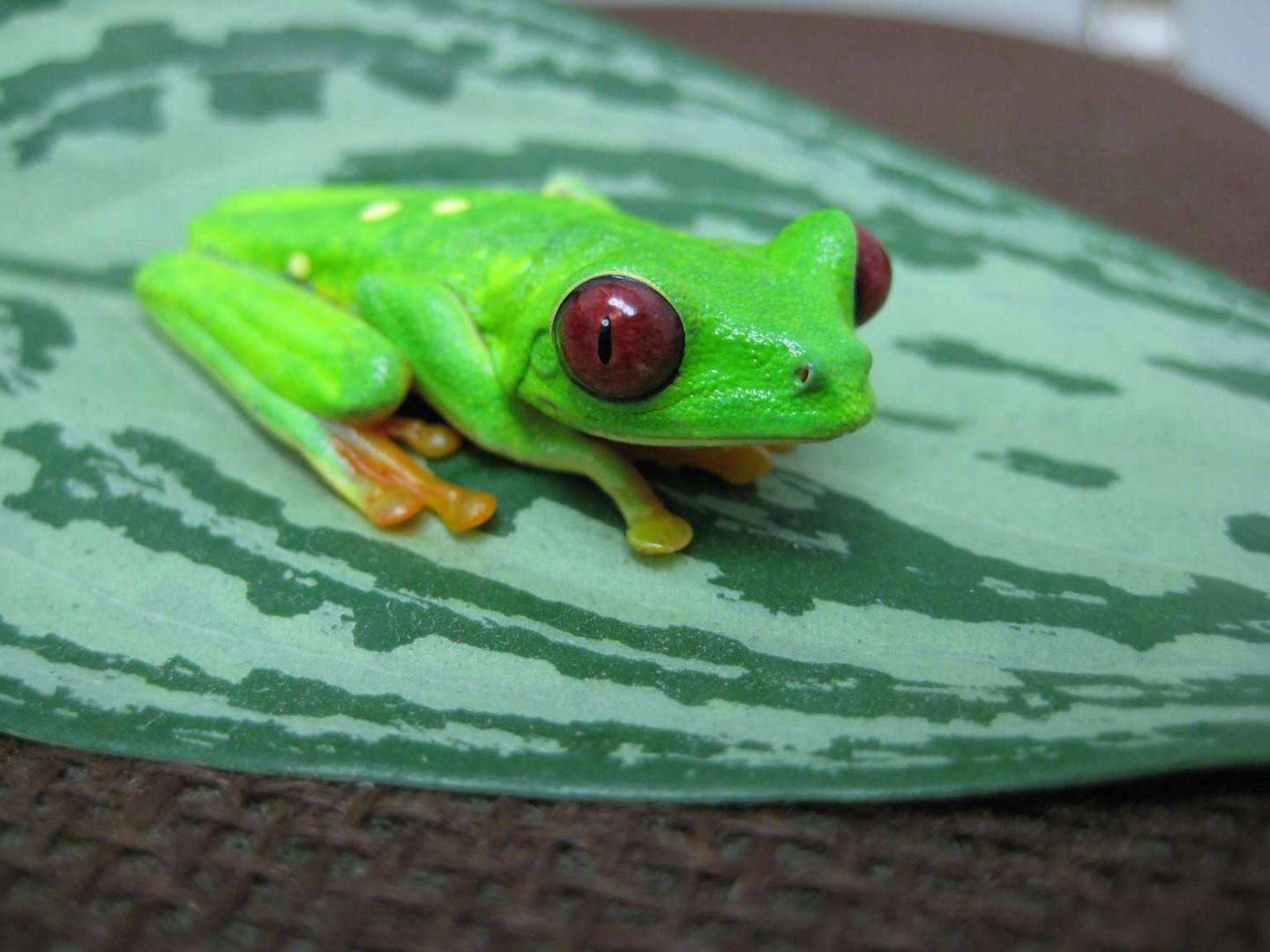
Credit: Photo by Louise Rollins-Smith, Ph.D.
For more than 40 years, frog populations around the world have been declining. Now, a new study reports that some Central American frog species are recovering, perhaps because they have better defenses against a deadly fungal pathogen.
"It's a hopeful, optimistic chapter," said Louise Rollins-Smith, PhD, associate professor of Pathology, Microbiology and Immunology, and a co-author of a study recently published in the journal Science.
A collaborative group of investigators at multiple institutions showed that the fungal pathogen Batrachochytrium dendrobatidis continues to be as lethal now as it was more than 10 years ago. The antimicrobial defenses produced by frog skin, however, appear to be more effective than they were before the fungal epidemic began.
Rollins-Smith and her colleagues began studying how frogs combat B. dendrobatidis in Panama in 2004. For several years, Douglas Woodhams, PhD, a postdoctoral fellow on her team, and laboratory manager Laura Reinert made multiple trips to Central America to collect samples of frog skin secretions.
At the time, the fungal disease was spreading eastward from Costa Rica through Panama.
"There was a predictable wave of pathogen moving to new populations," said Rollins-Smith, who also traveled to Panama in 2010. "It gave us the opportunity to collect samples from populations of animals that had already encountered the epidemic and from the same species in places where the epidemic had not yet occurred."
The researchers found that skin secretions from frogs in areas with endemic (established) disease were more effective against the fungus compared to skin secretions from frogs that had not been exposed to the disease.
They also compared early samples of the fungus to current samples, evaluating fungal genetics, growth patterns, infectability and production of substances that inhibit frog immune responses.
"By all of these criteria, the pathogen is not different," Rollins-Smith said.
The findings were surprising, she said.
"We expected that frogs were recovering because the pathogen had become less virulent. Instead, the pathogen seems to be just as virulent and the frog defenses appear to be better."
Rollins-Smith said it is not clear whether frogs that survived and are recovering already had better skin defenses or if the presence of the irritating fungus in the skin caused the skin defenses to change.
Understanding how amphibian species recover from an epidemic may hold clues for improving conservation strategies and confronting emerging diseases in other species.
Rollins-Smith hopes to explore how the skin secretions have changed by defining and comparing the peptides (small protein pieces) in pre- and post-epidemic secretions.
Her team previously showed that frog skin secretions block HIV infection, and in recent work they have studied the effectiveness of frog skin secretions against a pathogen similar to the bacterium that causes gonorrhea.
"Frogs are a rich source of potentially useful molecules that might work against human pathogens," Rollins-Smith said.
She noted the critical role played by the National Science Foundation and the Smithsonian Tropical Research Institute in Panama in supporting these and other studies of amphibian populations.
###
Vanderbilt colleagues who contributed to the current studies included Reinert, Shawna McLetchie and Florence Ann Sobell. Jamie Voyles, PhD, at the University of Nevada, Reno, was the lead author of the Science paper.
Additional funding for the research was provided by the Disney Worldwide Conservation Fund, the Association of Zoos and Aquariums and the National Institutes of Health (grant GM103451).
Media Contact
Craig Boerner
[email protected]
615-322-4747
http://www.mc.vanderbilt.edu/npa