


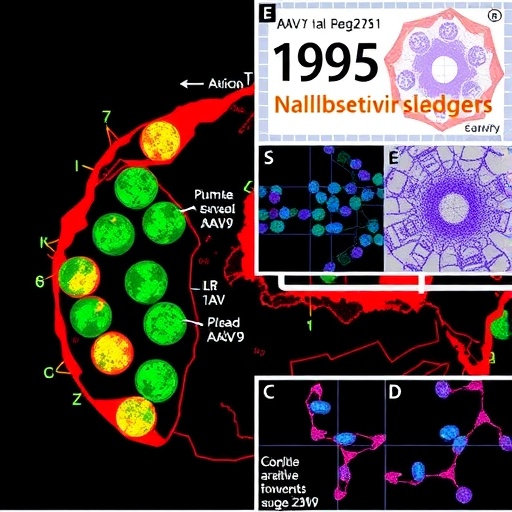
In a groundbreaking exploration of adeno-associated virus (AAV) vectors, recent research has shed light on the use of AAV9 in non-human primates, revealing significant insights into tissue-specific variations in expression efficiency. The study, led by Shahrukh et al., dives deep into the metadata surrounding numerous AAV9 studies conducted with non-human primates, revealing previously unrecognized nuances that could impact the design and implementation of gene therapies in clinical settings. The implications of this research may revolutionize our understanding of how different tissues respond to gene delivery methods, improving therapeutic outcomes for a range of genetic disorders.
Adeno-associated viruses represent one of the most promising vectors for gene therapy due to their ability to integrate into host genomes with minimal immunogenicity. They are particularly attractive because of their safety profile; they have been used extensively in preclinical studies and clinical trials. AAV9, a serotype within the AAV family, has gained attention for its capability to transduce various types of cells effectively, making it an optimal choice for targeting systemic diseases. The recent insights from Shahrukh and colleagues, however, point to variations in expression efficiency that may vary considerably by tissue type.
Through a meticulous analysis of existing studies, the researchers revealed that the efficiency of gene expression mediated by AAV9 is not uniform across different tissues in the primate model. This finding challenges the previously held assumption that AAV9 could be uniformly effective in advertising therapeutic genes to every part of the body. Instead, the research indicates that specific tissues may exhibit a higher proclivity to express transgenes delivered via AAV9, while others may demonstrate significantly lower efficiency. Understanding these differences is crucial in optimizing gene therapy protocols.
The study employed an exhaustive metadata analysis approach, analyzing a multitude of publications that investigated the impact of AAV9 on non-human primate models. By consolidating this data, the researchers were able to unify results and draw general conclusions about the behavior of AAV9 in various tissues. The comparative advantage of such an analysis lies in its ability to identify trends and inconsistencies that individual studies might overlook, providing a more comprehensive perspective on tissue-specific expression phenomena.
One of the standout findings relates to the differential performance of AAV9 in neuronal tissues versus other tissue types. The study suggests that neurons may harbor unique factors that facilitate enhanced transduction, leading to robust expression of transgenes. This understanding is particularly vital for developing effective gene therapies for neurological conditions, where precise targeting and expression of therapeutic genes are paramount. Conversely, other tissues like muscle or liver may not exhibit the same level of responsiveness, highlighting the need for tailored approaches based on the target tissue.
Additionally, factors such as the presence of specific receptors, the local microenvironment, and the underlying genetic variability among the subjects likely contributed to variations in expression levels. The research underscores the importance of considering these biological factors when designing AAV9-based gene therapies. Future therapies could potentially benefit from a tissue-specific optimization strategy, where the AAV vector and the gene of interest are paired with particular delivery methods that consider the unique biological characteristics of target tissues.
Among the noteworthy implications of this work lies its potential influence on the translation of gene therapies into effective treatments. By addressing tissue-specific challenges in transgene expression, this research paves the way for precision medicine approaches, enabling clinicians to tailor therapies towards individual patient needs based on the specific characteristics of the affected tissue. As the field of gene therapy continues to evolve, such targeted strategies could bolster the success rates of therapeutic interventions.
Understanding the details of AAV9’s interaction with various tissues can also guide researchers in selecting optimal administration routes for different applications. For instance, the choice of whether to administer AAV9 systemically or locally could be informed by how effectively different tissues respond to the viral vector. Such strategic insights could lead to enhanced efficacy and minimized adverse effects, thus improving the overall therapeutic window for gene therapies.
Importantly, the findings presented in this study will contribute to a more knowledgeable framework for evaluating AAV9’s utility in clinical trials. By providing a foundational understanding of how expression efficiency may fluctuate depending on the target tissue, future trials can be better designed to assess not only the safety and efficacy of AAV9-based therapies but also to explore the biological mechanisms that underpin these variations in expression.
As researchers continue to dissect the intricate behaviors of AAV vectors, particularly AAV9, it is imperative that they account for the diversity encountered in different biological contexts. Future experiments and clinical trials should focus on elucidating the mechanisms responsible for the observed tissue-specific expression variations, fostering a deeper understanding of how viral vectors function across varied physiological landscapes.
The comprehensive analysis pioneered by Shahrukh et al. serves as a clarion call to the scientific community to acknowledge and delve deeper into the complexities presented by viral gene delivery systems. As we inch closer to realizing the full potential of gene therapy, it becomes increasingly clear that a one-size-fits-all approach is inadequate to meet the demands of diverse diseases, calling for innovations that capitalize on the distinct advantages presented by various tissues and biological conditions.
Furthermore, the collaboration between multidisciplinary teams, including geneticists, molecular biologists, and clinicians, will be vital to move this field forward. Discussions surrounding the clinical implications of these findings should foster a spirit of collaboration that bridges the gap between laboratory discoveries and clinical applications, thus ensuring that emerging therapies can be rapidly developed and implemented in patient care.
In conclusion, the assessment of AAV9’s performance in non-human primates, illuminated by the metadata analysis conducted by Shahrukh and coworkers, unveils a landscape rich with potential for advancement in gene therapy techniques. By acknowledging and addressing tissue-specific expression challenges, researchers and clinicians alike can aspire to harness the full power of AAV vectors to transform the treatment paradigms of complex genetic diseases, thereby enriching the lives of patients with previously untreatable conditions.
Through this rigorous investigation into the nuances of gene delivery systems, the groundwork is laid for a new era of precision gene therapies aimed at crafting tailored solutions for individual patients. A deeper understanding of tissue interactions with AAV9 not only serves to enhance therapeutic strategies but also catalyzes innovations that may resonate through the broader landscape of medical biology.
Ultimately, as we look ahead, the revelations offered by this research may reshape our approach to gene therapy, marking a paradigm shift that can unlock unprecedented treatment avenues rooted in the fundamental biology of tissues. The journey towards effective gene therapy efficacy and safety continues, fueled by ongoing inquiry and discovery, now further inspired by the critical insights of AAV9’s intrinsic behaviors across the living systems we aim to serve.
Subject of Research: Tissue-specific variation in expression efficiency of AAV9 in non-human primates.
Article Title: Metadata assessment of non-human primate studies of AAV9 uncovers potential tissue specific variation in expression efficiency.
Article References:
Shahrukh, M., Sweeney, J.R., del Rio, T. et al. Metadata assessment of non-human primate studies of AAV9 uncovers potential tissue specific variation in expression efficiency.
Gene Ther (2026). https://doi.org/10.1038/s41434-025-00589-8
Image Credits: AI Generated
DOI: https://doi.org/10.1038/s41434-025-00589-8
Keywords: AAV9, gene therapy, non-human primates, expression efficiency, tissue specificity, precision medicine.
Tags: AAV vector safety profileAAV9 gene therapyAAV9 transduction efficiencyadeno-associated virus researchgene delivery methodsgene therapy clinical trialsgene therapy design implicationsnon-human primate studiespreclinical gene therapy studiessystemic disease treatmenttherapeutic outcomes for genetic disorderstissue-specific expression variability



