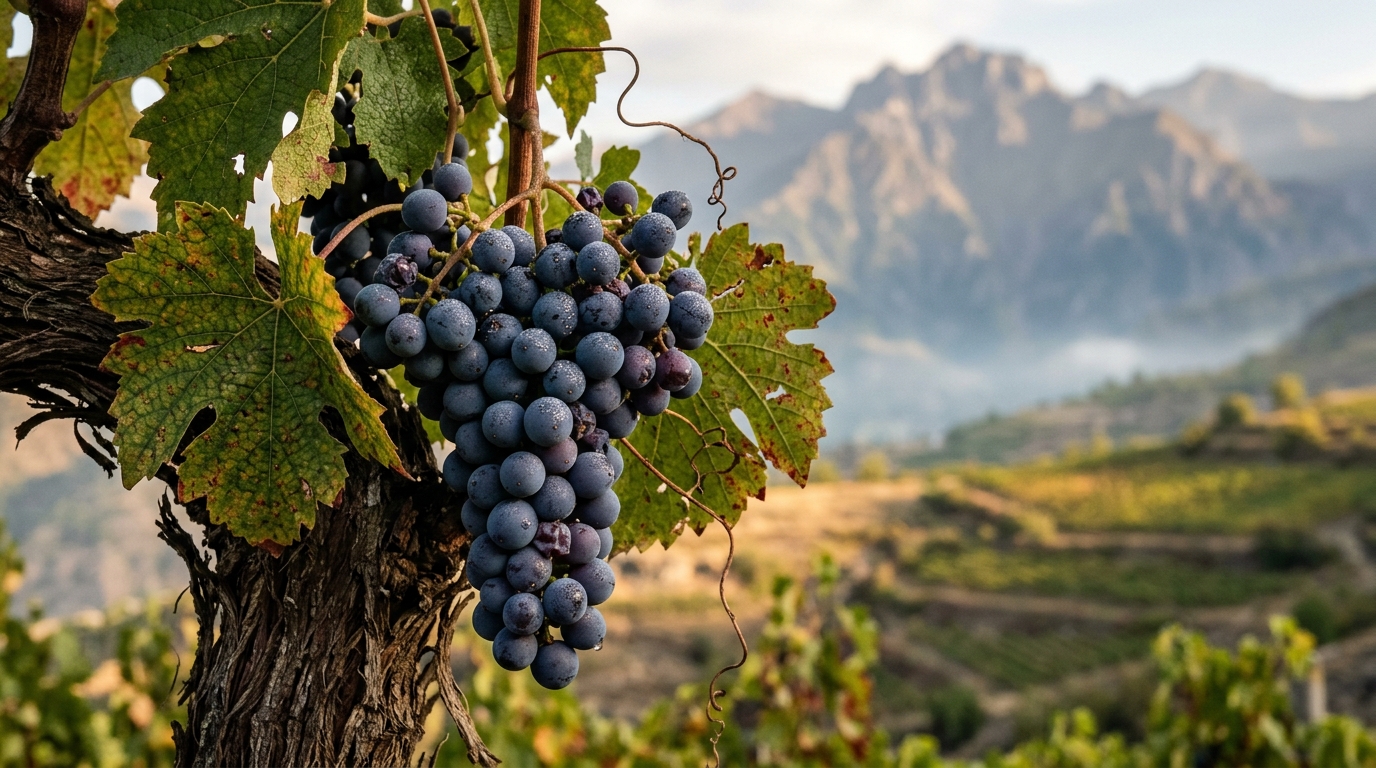
Researchers have completed the first large-scale genetic evaluation of grapevine diversity across Armenia, Azerbaijan, and Georgia, revealing that Armenian and Azerbaijani cultivars share a common gene pool while Georgian varieties maintain a more independent genetic structure. Published in Agriculture & Food Security, the study analyzed 425 non-redundant accessions of Vitis vinifera, including 366 cultivated varieties, 50 wild sylvestris individuals, and nine interspecific crosses. The investigation aimed to clarify the genetic relationships within this region, which is historically recognized as a primary center of grapevine domestication, to support conservation efforts and the valorization of local varieties in viticulture and breeding.
The study merged genetic profiles from three distinct projects to create the most extensive representation of South Caucasian grapevine diversity analyzed to date. These sources included 79 accessions from a cooperation between the Julius Kühn Institute in Germany and the Research Institute for Viticulture and Winemaking in Baku, 206 accessions from the COST Action FA1003, and 140 accessions from a survey of Armenian genetic diversity. Additionally, 59 varieties from Western to Eastern Europe and Asia were included to facilitate the discovery of putative genetic relationships and to validate breeder records for specific cultivars such as ‘Pinot Noir’ and ‘Muscat of Alexandria’.
To ensure comparability with existing data from previous projects, the team selected 24 nuclear simple sequence repeat markers for genotyping. Although modern single nucleotide polymorphism markers offer higher genomic resolution, the researchers chose these markers due to their high multi-allelic diversity and cost-effectiveness. DNA was extracted from fresh or dried young leaves and woody cuttings, and the samples were analyzed using multiplex polymerase chain reactions. This method allowed for the precise determination of allele sizes in base pairs, which were then harmonized using standard cultivars to correct for amplification shifts among different marker pools.
For the calculation of genetic diversity parameters and structure, the researchers excluded modern crosses and interspecific offspring that contributed alleles from non-native species. This resulted in a retained dataset of 339 genotypes, consisting of 287 traditional Caucasian and Eastern European varieties and 50 wild Vitis sylvestris accessions from Azerbaijan. Bayesian clustering analysis using the Structure program indicated that the optimal number of genetic clusters was three. This analysis revealed a significant overlap between the Armenian and Azerbaijani gene pools, whereas the Georgian varieties were primarily independent, with a higher degree of intermixing, particularly with wild grape populations.
Discriminant analysis of principal components and pairwise fixation index calculations further validated the Bayesian clustering results. The samples from Armenia and Azerbaijan could not be distinguished genetically, forming a single group, while Georgian samples were differentiated along the first discriminant function. The wild grape samples from Azerbaijan were clearly separated from the cultivated varieties along the second discriminant function. These findings suggest that genetic differentiation within the South Caucasus grape gene pool is very low, indicating a high level of interconnection, with Georgia exhibiting the closest continuity between wild and cultivated forms.
Parentage analysis using Cervus software identified 208 first-degree relationships among the 425 genotypes, involving 196 grape varieties. Approximately 46 percent of the varieties were involved in these relationships, while 54 percent of the genotypes showed no genetic relatedness. Forty-eight full parent-offspring trios were detected, with 45 of them being reported for the first time in this study.
Colony software was used to reconstruct genetic profiles of missing ancestors, identifying two key genitors that likely played a significant role in the development of local varieties. One of these profiles corresponded to the Georgian table grape variety ‘Mskhviltvala Tetri’, while the other, designated as ‘Reconstructed Genotype 51 (GEORGIA)’, was not found in existing databases. These two genitors were inferred to be the progenitors of six putative full parentages and were involved in numerous half-kinships. The high frequency of relationships involving ‘Reconstructed Genotype 51 (GEORGIA)’ suggests it was a prolific ancestor within the Georgian gene pool, potentially contributing to the diversity of prominent varieties like ‘Rkatsiteli’.
The study also examined the role of modern breeding programs in shaping the genetic landscape of the region. From the 24 modern crosses identified, 20 belonged to the sativa subspecies and four were interspecific. Georgian breeders frequently used varieties such as ‘Muscat of Alexandria’ and ‘Rkatsiteli’, while Azerbaijani breeders often employed ‘Angur Kalan’ and ‘Shaani belyi’. The analysis allowed for the validation and adaptation of some breeders’ records, confirming or rejecting proposed parentages for several cultivars. This detailed kinship analysis provides new insights into the genetic relatedness of South Caucasian germplasm and contributes valuable data to the Vitis International Variety Catalogue.
Limitations of the study include the inability to determine the direction of crosses, as chloroplast markers were not included in the analysis. Additionally, the missing relatives of many varieties may have disappeared or may still exist in old vineyards and germplasm repositories, meaning that the current data may not capture the full extent of genetic erosion. The researchers emphasize that further surveys and comprehensive studies are essential to clarify the true structure of the South Caucasus grapevine gene pool and to identify missing ancestors before making definitive statements about genetic loss.
The findings underscore the South Caucasus as a reservoir of unique grapevine genetic resources, with Armenia showing the highest allelic richness and Georgia exhibiting a strong interconnection of local varieties shaped by a few key ancestors. The preservation and utilization of this genetic diversity are crucial for promoting sustainable viticulture, enhancing the capacity of agricultural systems to adapt to environmental stressors, and preserving the cultural heritage of one of the cradles of grapevine breeding. The study provides a foundational framework for future research and conservation efforts in the region.
The genetic diversity parameters calculated for the 339 retained genotypes revealed comparable levels of variability across the three South Caucasian countries. The number of different alleles and effective alleles did not differ significantly among the groups, ranging from 9.71 to 11.63 and 4.55 to 5.25, respectively. However, the frequency of private alleles varied, with Armenian cultivars harboring nearly three times as many unique alleles as those from Azerbaijan or Georgia. This discrepancy is attributed to recent extensive surveys in Armenia that revealed historically documented landraces and previously unknown grapevine lineages. For the cultivated varieties, the differences between observed and expected heterozygosity were not significant, and the inbreeding coefficient was zero or slightly negative, indicating random mating. In contrast, the fixation index for the Vitis sylvestris population was 0.1, indicating a minor degree of inbreeding.
The historical and biological factors shaping the genetic structure of the region include the shared geographical origin and the influence of climate and trade routes. The wet climate of the Early Holocene facilitated the expansion of suitable habitats for wild grape populations across the South Caucasus. The region’s position at the crossroads of Asia and Europe, intersected by key trade routes, significantly facilitated the introduction and exchange of grapevine varieties. Additionally, religious and cultural shifts influenced viticultural practices; for instance, the adoption of Islam in Azerbaijan in the 10th century AD led to a preference for table grapes, while the adoption of Christianity in Georgia and Armenia in the 4th century AD supported the development of varieties suited for winemaking. The Russian Empire and the subsequent Soviet era further intensified interactions through the centralization of viticulture, designating Armenia for brandy, Georgia for wine, and Azerbaijan for both table grape and wine production.
Morphological classifications of Eurasian grapevine varieties into three proleses, orientalis, pontica, and occidentalis, may help explain the observed genetic patterns. Western Georgian varieties are typically classified within the pontica group, while a small number of varieties from Eastern Georgia, Armenia, and Azerbaijan fall within the orientalis group. This classification aligns with the closer genetic relationship between Armenian and Azerbaijani varieties and the distinction of Georgian varieties. The observed relatedness between the Armenian and Azerbaijani gene pools is likely the result of overlapping populations of wild grapes providing a shared ancestral foundation, reinforced by centuries of trade, migration, and agricultural exchange.
The kinship analysis highlighted the role of specific varieties in shaping the regional germplasm. ‘Reconstructed Genotype 51 (GEORGIA)’ was identified as the most prominent variety with 23 parent-offspring relationships, followed by ‘Muscat of Alexandria’, ‘Mskhviltvala Tetri’, ‘Shaani belyi’, and ‘Gabasha’ with 13, 10, 9, and 9 relationships, respectively. The high number of relationships involving ‘Tebrizi’, ‘Sultanina’, and ‘Rkatsiteli’ reflects breeder activities. The formerly non-identified ‘Genotype 77’ from the Tavush region, named ‘Berdavani Sirunik’, displayed six parent-offspring relationships. These findings suggest that a few key ancestors have played a significant role in the development of local varieties, particularly in Georgia.
The study also noted that the direction of crosses could not be determined due to the exclusion of chloroplast markers. However, the analysis provided insights into the genetic erosion and the potential for recovering missing relatives. From the 193 traditional varieties in the sample set, 63 showed genetic relationships, while 130 were unrelated. Missing relatives may have disappeared or may still exist in old vineyards and germplasm repositories. Further efforts are needed to recover South Caucasus grape germplasm to find missing ancestors before stating the presence of genetic erosion. The preservation of this genetic diversity is crucial for sustainable viticulture and the adaptation of agricultural systems to environmental stressors.
Subject of Research: Genetic diversity and kinship relationships of Vitis vinifera in the South Caucasus
Article Title: Genetic diversity and relationships of Vitis vinifera L. in the south caucasus
Article References: Röckel, F., Margaryan, K., Salimov, V., Maghradze, D., De Lorenzis, G., Failla, O., Laucou, V., Lacombe, T., Asadullayev, R., Huseynov, M., Huseynova, A., Töpfer, R., Trapp, O., & Maul, E. (2026). Genetic diversity and relationships of Vitis vinifera L. in the south caucasus. Agriculture & Food Security, 15(1), Article 56. https://doi.org/10.1186/s40066-026-00645-5
Image Credits: AI Generated
DOI: 10.1186/s40066-026-00645-5
Keywords: Vitis vinifera, Genetic diversity, South Caucasus, Grapevine breeding, nSSR markers, Population structure, Parentage analysis, Germplasm conservation, Agriculture & Food Security, Genetic, diversity, relationships
News Source: Juliet Wilcox. (November 9, 2026). Study Maps Genetic Links Across South Caucasus Grapevine Varieties. Scienmag.