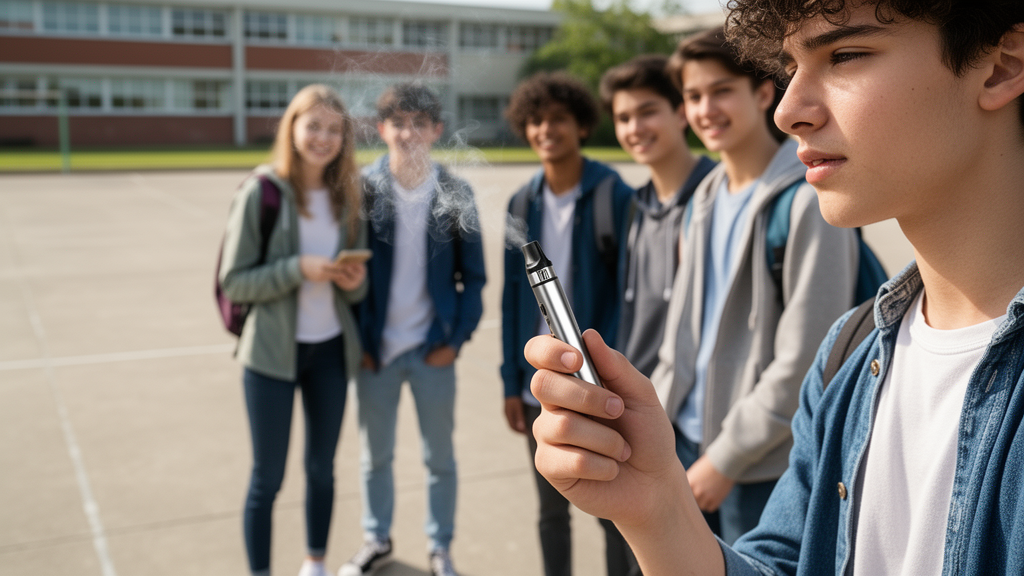
A comprehensive multicenter study evaluating substance use patterns among secondary and higher education students in Mexico has revealed that approximately one in three participants has experimented with electronic cigarettes. The cross-sectional investigation, surveying more than ten thousand students across public and private academic institutions in four geographic regions, demonstrated an overall lifetime experimentation prevalence of 33.4 percent. Notably, researchers found that overall lifetime experimentation rates were virtually indistinguishable between male and female respondents. However, detailed stratification by sex uncovered marked disparities in the behavioral contexts, emotional states, sensory preferences, and concurrent substance patterns that surround electronic cigarette consumption. While male students exhibited significantly greater tendencies toward dual product consumption and expressed more permissive attitudes regarding vaping in public environments, female students reported substantially higher rates of increased device consumption during periods of acute sadness and academic stress, alongside a greater susceptibility to commercial flavoring options.
The investigation unfolds against a complex and stringent legislative environment in Mexico, where legal measures have sought to eliminate the commercialization of electronic nicotine delivery systems. The national government instituted a strict ban on the commercial sale and distribution of e-cigarettes in 2024, followed in January 2026 by an explicit constitutional prohibition that comprehensively outlawed the manufacture, production, distribution, marketing, importation, exportation, advertising, and supply of electronic nicotine devices. Despite these nationwide legal restrictions, epidemiological observations have documented persistent consumption among youth cohorts, supported by active informal retail channels, unregulated social media transactions, and illicit digital marketplaces. Previous population assessments, such as the 2022 National Health and Nutrition Survey, established that electronic cigarette usage remained heavily concentrated within metropolitan and urban centers, with adolescent usage rates outpacing those recorded among older adults. By capturing detailed student-level responses following these major regulatory interventions, the study offers rigorous empirical insight into how young people navigate nicotine access within a formally prohibited consumer marketplace.
Methodologically, the project adopted an observational, cross-sectional, and analytical design coordinated through academic institutions across four primary geographical regions of the country. Data collection occurred between October 2024 and April 2025, deploying an institutional snowball sampling strategy to recruit eligible students enrolled in upper secondary schools and undergraduate university programs. Institutional leadership and academic authorities facilitated access during regular instructional hours, directing eligible participants to complete a standardized twenty-nine-item digital questionnaire hosted on the Google Forms platform via mobile quick-response codes. Institutional oversight was provided by the Research Ethics Committee of the Hospital Regional de Alta Especialidad de la Península de Yucatán IMSS-Bienestar under formal protocol approval 2024-003. Strict eligibility criteria required participants to be at least fourteen years old, hold Mexican nationality, actively attend an affiliated educational institution, and submit documented consent alongside parental or guardian assent for enrolled minors, while technical configuration prohibited partial or duplicate survey submissions.
The final analytic cohort comprised 10,074 completed student records, exhibiting a median participant age of 17 years with an interquartile range extending from 16 to 18 years among males and 16 to 19 years among females. The sex distribution leaned toward female participation, with female respondents accounting for 57.0 percent of the surveyed group (5,743 individuals) and male students representing 43.0 percent (4,331 individuals). Socio-educational distribution showed that 76.8 percent of participants attended public educational institutions, whereas 23.1 percent attended private institutions. Geographically, participation was concentrated in southeastern Mexico, where the state of Yucatán contributed 8,233 respondents, representing 81.7 percent of the entire sample. The northern region, comprising Baja California and Chihuahua, supplied 1,260 respondents (12.5 percent), while central institutions located in Mexico City accounted for 302 students (3.0 percent), and western schools in Jalisco provided 279 respondents (2.8 percent). Baseline awareness of electronic cigarettes proved nearly universal across all groups, with 98.1 percent of the total sample reporting prior knowledge of these products.
Analysis of product interaction patterns demonstrated that lifetime experimentation reached 33.5 percent among male students and 33.3 percent among female students, yielding no statistically significant difference between sexes. For both groups, the median self-reported age at initial electronic cigarette experimentation was 16 years. When categorized by broader consumption history, approximately 70 percent of all respondents classified themselves as confirmed non-users, while 18 percent identified as former users and roughly 11 percent reported active current use. Among those identifying as active users, consumption frequency remained predominantly intermittent rather than continuous. Occasional use, defined as consuming products between one and five days per month, was reported by 16.8 percent of males and 17.7 percent of females. Intermittent consumption of six to nineteen days per month occurred in 9.9 percent of males and 10.0 percent of females, whereas frequent consumption exceeding twenty days per month represented 6.7 percent of males and 5.6 percent of females.
Despite identical lifetime experimentation rates, distinct cognitive motivations and sensory appeals differentiated male and female cohorts. General curiosity regarding electronic cigarettes was significantly higher among female respondents, with 43.0 percent reporting curiosity to try the devices compared to 39.0 percent of male peers. When queried regarding specific rationales for utilizing electronic devices, more than half of the surveyed users stated that they initiated consumption without a defined reason. However, pronounced differences emerged regarding product characteristics. Flavor appeal operated as a primary motivator for 32.0 percent of female students, compared to 23.8 percent of males. In contrast, male students were more likely to cite sensory concealment, with 2.9 percent reporting a preference for electronic cigarettes because they leave no detectable residual odor, a rationale selected by only 1.4 percent of female participants. These patterns highlight how commercial product adaptations, particularly characterising flavor liquid formulations, uniquely incentivize experimentation across demographic segments.
The study identified striking sex-specific contrasts when examining the emotional contexts in which electronic cigarette use takes place. Female participants were significantly more likely to report escalating their electronic cigarette consumption in response to negative affective states and academic burdens. Specifically, 7.9 percent of female students reported increasing their vaping consumption when experiencing feelings of sadness, compared to 6.0 percent of male students. Similarly, during formal examination periods or times of acute stress, 10.5 percent of female respondents reported elevated device use, compared to 8.3 percent of males. These observed associations reinforce broader psychological research indicating that adolescents frequently turn to inhaled nicotine as an informal regulatory mechanism for coping with emotional distress, depressive symptoms, and scholastic tension. While the underlying cross-sectional dataset precludes proving directional causation, the elevated frequency of emotion-linked consumption among young women underscores an important psychosocial vulnerability requiring targeted emotional resilience and mental health support mechanisms.
Contrasting profiles emerged regarding health risk perceptions and public acceptability. Male students demonstrated a markedly greater tendency to minimize product risks, with 19.9 percent endorsing the belief that electronic cigarettes constitute a safe cessation alternative for combustible tobacco, compared to 15.5 percent of female students. Male respondents were also significantly more likely to view combustible tobacco as substantially more harmful than electronic cigarettes (58.2 percent versus 51.5 percent). Conversely, female students demonstrated greater apprehension regarding adverse physiological consequences: 57.6 percent believed electronic cigarettes could induce severe illness within weeks of initiation, compared to 55.6 percent of males. Females also attributed higher addictive potential to vaping devices relative to conventional tobacco, expressed greater concern regarding secondhand aerosol exposure, and anticipated more severe long-term clinical sequelae such as heart problems, respiratory deterioration, and death.
Evaluation of concurrent substance consumption revealed that male students engaged in substantially higher rates of polysubstance use involving traditional combustible tobacco and cannabis-derived formulations. Overall, 21.3 percent of male respondents reported combustible cigarette smoking, compared to 17.9 percent of females, with past-thirty-day combustible cigarette consumption reaching 6.9 percent in males versus 5.1 percent in females. When examining underlying rationales for combustible smoking, male students cited stress, boredom, and peer belonging significantly more often than females. Furthermore, male participants exhibited higher consumption of electronic devices loaded with delta-8-tetrahydrocannabinol or related cannabis derivatives, with 9.6 percent of males reporting use compared to 7.8 percent of females. These concurrent usage profiles suggest that among young males, electronic nicotine experimentation frequently coexists within a broader framework of polysubstance involvement rather than acting as a discrete, harm-reducing replacement for combustible tobacco.
From a biological and preventive perspective, the high rates of adolescent experimentation observed in this student population raise significant clinical concerns. Although biological outcomes and pulmonary function testing were not directly assessed within this survey protocol, the persistent disconnect between student risk awareness and behavioral experimentation indicates that traditional informational warnings alone are insufficient to deter initiation. The authors argue that public health frameworks must move beyond general toxicological warnings toward integrated strategies combining rigorous digital advertising surveillance, school-based mental health support, stress management education, and routine clinical screening for nicotine and cannabinoid device use during adolescent preventive medical visits.
The study authors emphasize several critical methodological boundaries that must contextualize the interpretation of these findings. Chief among these is the observational cross-sectional design, which inherently prevents the establishment of temporal or causal relationships between emotional distress, risk perception, and product initiation. Additionally, all variables were gathered via self-administered questionnaires on mobile devices, introducing potential recall inaccuracies, reporting bias, and social desirability pressures within an environment where product distribution is legally prohibited. Geographic representation was heavily skewed toward southeastern Mexico, with Yucatán accounting for more than eighty percent of participants, limiting direct generalization across diverse national environments. The research protocol also lacked biochemical validation of cotinine or cannabinoid exposure, precise technical characterization of liquid concentrations or device configurations, and prospective longitudinal follow-up, underscoring the urgent necessity for future prospective cohorts to track usage transitions over time.
Subject of Research: Sex-stratified e-cigarette experimentation, behavioral drivers, and risk perceptions among Mexican students
Article Title: Sex-specific motivations, risk perceptions, and E-cigarette experimentation among adolescents and young adults: implications of public health intervention
Article References: Figueroa-Hurtado, E., Pérez-Rubio, G., Espinoza-Hernández, M. E., Álvarez-Torres, C. N., Falfán-Valencia, R., & Cortés-Telles, A. (2026). Sex-specific motivations, risk perceptions, and E-cigarette experimentation among adolescents and young adults: implications of public health intervention. Frontiers in Psychiatry, 17, Article 1966247. https://doi.org/10.3389/fpsyt.2026.1966247
Image Credits: AI Generated
DOI: 10.3389/fpsyt.2026.1966247
Keywords: electronic cigarettes, vaping prevalence, adolescent health, substance use, cross-sectional survey, Mexico public health, sex differences, tobacco control, THC vaping, mental health, flavor appeal, academic stress, risk perception, polysubstance use, harm perception, nicotine consumption, school-based research
News Source: Glenn Wilkins. (November 14, 2026). Study Finds One in Three Mexican Students Experiments With Electronic Cigarettes. Scienmag.