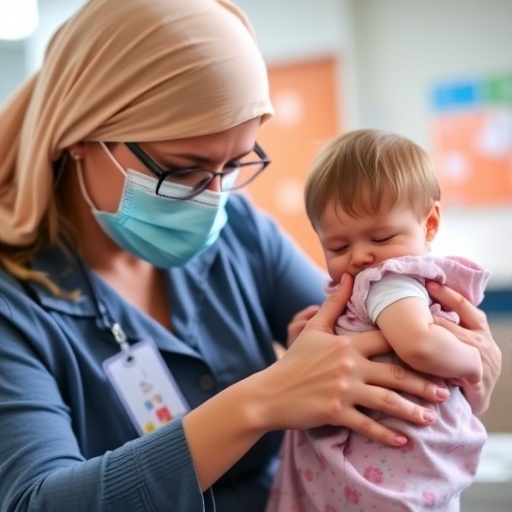
In an era marked by misinformation and social media-driven myths, a rigorous scientific investigation from Linköping University, Sweden, aims to definitively address concerns about the relationship between COVID-19 vaccination and fertility. The study unequivocally demonstrates that the COVID-19 mRNA vaccines do not influence childbirth rates, providing robust evidence to counter unfounded rumors that have circulated globally. Published in the reputable journal Communications Medicine, this research offers critical insights into public health and vaccine safety, underscoring the importance of data-driven perspectives amid widespread speculation.
The genesis of this research lies in the widespread hesitancy and fear regarding COVID-19 vaccines’ impact on reproductive health. Early in the pandemic, social media platforms became breeding grounds for viral misinformation, suggesting that vaccination could lead to reduced fertility and increase miscarriage rates. This narrative gained traction despite lacking scientific backing. Given that Sweden, like several other countries, observed a decline in childbirth rates during the pandemic period, researchers sought to investigate whether there was any causal connection between these demographic changes and the administration of COVID-19 vaccines.
To conduct a methodologically sound analysis, researchers focused on a comprehensive population cohort composed of nearly 60,000 women aged 18 to 45 residing in Region Jönköping County. This region offers a representative microcosm of the wider Swedish population, which numbers approximately 369,000. A significant majority — approximately 75% — of these women received at least one dose of a COVID-19 vaccine during the study period from 2021 through early 2024. The examination entailed cross-referencing vaccination records with registered childbirths, miscarriages, and death records from meticulously maintained healthcare databases.
The analytic framework employed controlled for potential confounders, most notably age, which is intrinsically linked to fertility outcomes. Statistical evaluations indicated no meaningful differences in childbirth rates between vaccinated versus unvaccinated women within the reproductive age group. This outcome aligns with prior smaller-scale studies and meta-analyses, reaffirming the lack of association between COVID-19 vaccination and fertility impairment.
Lead investigator Toomas Timpka, a professor of social medicine at Linköping University, emphasized the study’s stringent methodological approach and its implications: “Our findings robustly counter the myths circulating online; the mRNA vaccines deployed against COVID-19 do not correlate with decreased childbirth or increased miscarriage risk. These results should reassure the public about vaccine safety concerning reproductive health.”
Explorations into miscarriage statistics similarly revealed no statistically significant variations between vaccinated and unvaccinated cohorts. This suggests that the vaccine neither poses a teratogenic risk nor increases pregnancy loss. The comprehensive nature of healthcare records in Sweden enabled the researchers to conduct a near-complete follow-up, enhancing the study’s reliability and precision in outcome assessment.
The observed decline in childbirth rates during the pandemic era likely stems from an interplay of socio-economic, demographic, and behavioral factors rather than any direct biological effect of vaccination. For instance, individuals currently in their prime reproductive years were born in the late 1990s—a period marked by economic instability and historically low birth rates in Sweden. This cohort effect could inherently lead to fewer births in the present.
Moreover, the pandemic itself introduced numerous indirect influences that may have contributed to delayed childbearing. Prolonged periods of lockdown, heightened economic uncertainty, and health-related concerns understandably altered family planning decisions. Psychological stressors and changing social dynamics during this unprecedented time may also have played non-negligible roles in fertility trends.
From a public health perspective, this research addresses an urgent need for clear, evidence-based communication to dispel vaccine misinformation. The persistence of unfounded claims not only undermines vaccination campaigns but also jeopardizes public trust in health systems. This study’s ability to leverage high-quality, population-level data sets a gold standard for future vaccine safety studies and could be instrumental in shaping informed health policies.
The scientific rigor underpinning this research is illustrated by its extensive dataset, control for confounding variables, and comprehensive follow-up. Such strengths provide confidence that the findings are both reliable and generalizable to similar populations. Furthermore, the absence of any competing interests among the authors enhances the study’s credibility.
This investigation is part of a growing body of literature affirming the benign safety profile of COVID-19 vaccines beyond their primary role in infection prevention. As vaccine uptake continues globally, ensuring that reproductive health myths are quelled through research-based evidence remains a cornerstone of public health endeavors.
In conclusion, this substantive study delivers compelling and reassuring evidence that vaccination against COVID-19 has no detrimental impact on childbirth or miscarriage rates in Sweden. It dismantles one of the most pervasive myths associated with vaccine skepticism, paving the way for restored confidence among prospective parents considering vaccination. As the fight against COVID-19 continues, such scientific clarity is invaluable for maintaining momentum in vaccination uptake and safeguarding public health.
Subject of Research: Investigating the association between COVID-19 mRNA vaccination and fertility outcomes, specifically childbirth and miscarriage rates, in a large female population in Sweden.
Article Title: COVID-19 vaccination carries no association with childbirth rates in Sweden
News Publication Date: 21-Jan-2026
Web References:
DOI: 10.1038/s43856-026-01396-x
References:
Dennis Nordvall et al., COVID-19 vaccination carries no association with childbirth rates in Sweden, Communications Medicine, 2026.
Image Credits:
Charlotte Perhammar/Linköping University
Keywords: COVID-19 vaccine, fertility, childbirth rates, miscarriage, mRNA vaccine, public health, vaccine safety, fertility myths, social medicine, epidemiology, reproductive health, Sweden
Tags: addressing vaccine hesitancychildbirth rates during pandemicCOVID-19 vaccination and birth ratesdemographic changes and vaccinesimpact of COVID-19 vaccines on fertilityLinköping University studymisinformation about COVID-19mRNA vaccine effects on pregnancypublic health insights on vaccinesreproductive health and vaccinationsocial media misinformation on vaccinesvaccine safety research