Credit: Adrian V. Jaeggi
Vertebrate species, including humans, exposed to stress prenatally tend to have higher stress hormones after birth, according to a new Dartmouth-led study published in Scientific Reports. While previous research has reported examples of maternal stress experience predicting offspring stress hormones in different species, this study is the first to empirically demonstrate the impact of prenatal stress on offspring stress hormone levels using data from all known studies across vertebrates.
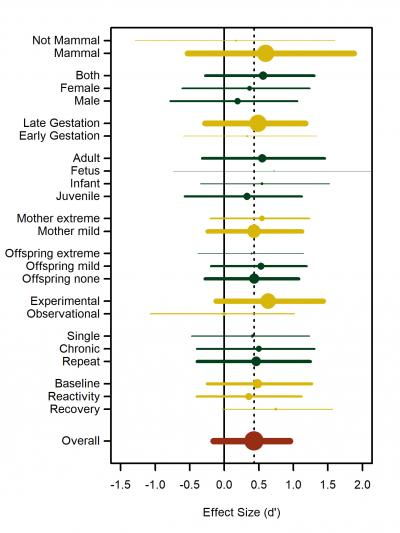
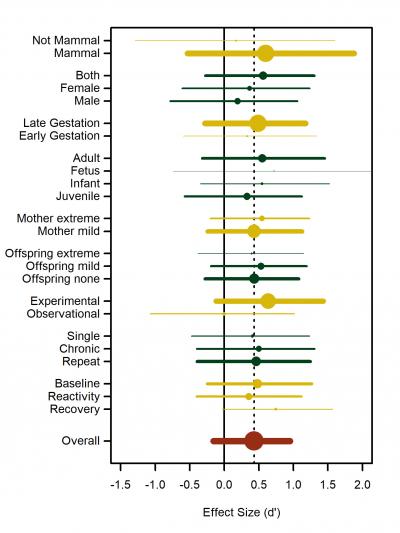
Through a meta-analysis of 114 results from a total of 39 observational and experimental studies across 14 vertebrate species, including birds, snakes, sheep and humans, the study examines the impact of prenatal exposure to maternal stress on offspring. The researchers analyzed the role of the hypothalamic pituitary adrenal (HPA)-axis, the stress physiological system that is shared across all vertebrates, which ultimately, results in the production of stress hormones known as "glucocorticoids." The HPA-axis is the hormonal system responsible for mobilizing an animal's stress response. Offspring exposed prenatally to maternal stress were found to have more stress hormone levels (glucocorticoids) after birth. This could reflect a biological adaptation with an evolutionary history, as more stress hormones could increase an animal's chances for survival in a stressful environment.
In the present study, the researchers tested the strength of the effect of prenatal stress on offspring stress hormone levels across a range of characteristics. Remarkably, the effects of prenatal stress on offspring stress hormones were consistent across species, regardless of evolutionary relationships or factors, such as brain or body size. There were also no differences when considering offspring sex, age of the offspring at the time of assessment, or the timing of the stressor exposure prenatally or its severity.
Only two factors influenced the size of the effect. Experimental studies had a stronger effect than observational studies. In addition, studies that measured glucocorticoid recovery showed a greater association with prenatal stress than was observed at baseline or during peak glucocorticoid response.
"Animals, including humans, modify their stress hormones in response to their environment. Your stress response is set like a thermostat– your body can amp up or down stress hormones in response to anticipated environmental conditions," explains lead author Zaneta Thayer, an assistant professor of anthropology at Dartmouth.
An animal's stress response tends to be activated by external factors, such as when its see a predator or whether food is availabile. Higher stress hormone levels among offspring may help extend survival but come at a cost and may affect other physiological systems, such as reproduction. In humans, the mere anticipation of stress or just thinking about prior experiences of discrimination or trauma can activate a stress response. Overactive stress hormones can lead to chronic health problems in humans, including anxiety, depression and cardiovascular disease.
One of the studies included in the meta-analysis looked at how maternal stress hormones in pregnant snow hares changed in relation to the abundance of their natural predators, lynxes, over a 10-year cycle. The research team found that in years where there were more lynxes, snow hare offspring had more stress hormones and anti-predator behaviors.
"Our stress response is meant to be adaptive to acute stress, such as being chased by predators. However, humans' stress response is often triggered by social evaluative threats and is not serving the adaptive purpose that it was designed for," added Thayer. "This research confirms what other scientists have long speculated that there are trends across species when it comes to linking prenatal stress and offspring hormonal stress responses."
Prior work co-authored by Thayer has explored early origins of humans' health disparities and the impacts of maternal stress during pregnancy on offspring's postnatal stress hormone levels.
###
Thayer is available for comment at: [email protected].
Meredith A. Wilson at the University of Illinois Urbana-Champaign, Andrew W. Kim at Northwestern University and Adrian V. Jaeggi at Emory University, also served as co-authors of the study.
Media Contact
Amy D. Olson
[email protected]
603-646-3274
@dartmouth
http://www.dartmouth.edu