• HOME
  • NEWS
  • EXPLORE
    • CAREER
      • Companies
      • Jobs
    • EVENTS
    • iGEM
      • News
      • Team
    • PHOTOS
    • VIDEO
    • WIKI
  • BLOG
  • COMMUNITY
    • FACEBOOK
    • INSTAGRAM
    • TWITTER
Wednesday, April 1, 2026
BIOENGINEER.ORG
No Result
View All Result
  • Login
  • HOME
  • NEWS
  • EXPLORE
    • CAREER
      • Companies
      • Jobs
        • Lecturer
        • PhD Studentship
        • Postdoc
        • Research Assistant
    • EVENTS
    • iGEM
      • News
      • Team
    • PHOTOS
    • VIDEO
    • WIKI
  • BLOG
  • COMMUNITY
    • FACEBOOK
    • INSTAGRAM
    • TWITTER
  • HOME
  • NEWS
  • EXPLORE
    • CAREER
      • Companies
      • Jobs
        • Lecturer
        • PhD Studentship
        • Postdoc
        • Research Assistant
    • EVENTS
    • iGEM
      • News
      • Team
    • PHOTOS
    • VIDEO
    • WIKI
  • BLOG
  • COMMUNITY
    • FACEBOOK
    • INSTAGRAM
    • TWITTER
No Result
View All Result
Bioengineer.org
No Result
View All Result
Home NEWS Science News Biology

Study explores risk factors linked to chikungunya and dengue outbreaks

Bioengineer by Bioengineer
July 24, 2018
in Biology
Reading Time: 2 mins read
0
Share on FacebookShare on TwitterShare on LinkedinShare on RedditShare on Telegram
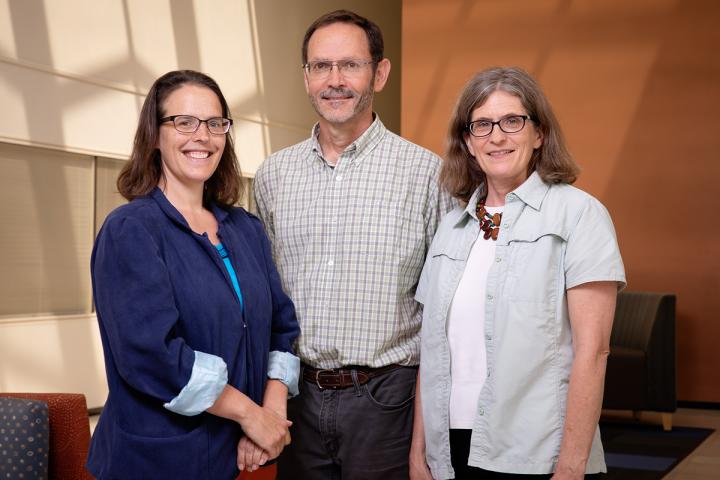
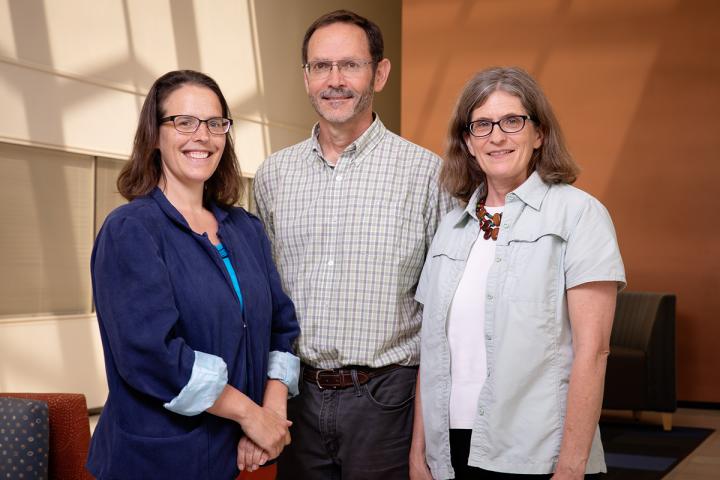
IMAGE

Credit: Photo by L. Brian Stauffer

CHAMPAIGN, Ill. — In one of the largest studies of its kind, researchers analyzed chikungunya and dengue outbreak data from 76 countries over a period of 50 years, focusing on regions across the Indian Ocean that are hard hit by these and other mosquito-borne infectious diseases.

The analysis of 1959-2009 data revealed that population density and proximity to a country already experiencing an outbreak were the factors most closely associated with a country's own likelihood of experiencing an outbreak.

"As a geographer, I was glad to see that the first law of geography held true, which is that things that are near each other tend to be more alike," said University of Illinois pathobiology professor Marilyn O'Hara Ruiz, who led the research with pathobiology professor Rebecca Lee Smith and former postdoctoral research associate Gianluigi Rossi.

"In general, when we look across time, these things are quite localized in that countries that are near each other are more likely to have the same outbreak," Ruiz said. "We also found that outbreaks are more likely to co-occur in densely populated areas."

Chikungunya and dengue are mosquito-borne viral diseases with overlapping distribution globally. Dengue can be a more serious infection, with a mortality rate of about 20 percent for severe infections that go untreated. Dengue infections are on the rise globally, according to the World Health Organization. Both diseases are more likely to occur in tropical or subtropical regions.

The new study found no significant association between local temperature or precipitation and outbreak risk, a somewhat unexpected finding since heat, rain and fluctuations in mosquito populations are often linked, the researchers said.

The findings should reassure those who worry that distant outbreaks will travel across the world to strike closer to home, Ruiz said.

"If one is trying to reduce the spread of an infectious disease, it's probably better to focus resources on places that have high-density populations and that have an outbreak nearby," she said.

Another important implication of the work is that countries need to share data with their neighbors, Smith said.

"People sometimes don't want to share that they have an outbreak going on," she said. "But mosquitoes don't recognize borders. So, we need epidemiology without borders."

###

The study is reported in the journal Spatial and Spatio-temporal Epidemiology.

Editor's notes:

To reach Marilyn O'Hara Ruiz, call 217-265-5115; email [email protected].

To reach Rebecca Lee Smith, email [email protected]. The paper "The spread of mosquito-borne viruses in modern times: A spatio-temporal analysis of dengue and chikungunya" is available online and from the U. of I. News Bureau . DOI: 10.1016/j.sste.2018.06.002

Media Contact

Diana Yates, Research Editor, Univ. of Illinois News Bureau
[email protected]
217-333-5802
@NewsAtIllinois

http://www.illinois.edu

Original Source

https://news.illinois.edu/view/6367/675032 http://dx.doi.org/10.1016/j.sste.2018.06.002

Share14Tweet8Share2ShareShareShare2

Related Posts

Chikungunya Virus Lingers in Joint Macrophages, Causes Chronic Disease

Chikungunya Virus Lingers in Joint Macrophages, Causes Chronic Disease

April 1, 2026
Unveiling How Two Genes Collaborate to Shape Dental and Facial Features

Unveiling How Two Genes Collaborate to Shape Dental and Facial Features

April 1, 2026

Do Your Genes Influence How Lifestyle Choices Affect Aging?

April 1, 2026

Combining Single-Cell Multiomics Unlocks Precise Identification of Rare Cell Types and States

March 31, 2026
Please login to join discussion

POPULAR NEWS

  • blank

    Revolutionary AI Model Enhances Precision in Detecting Food Contamination

    96 shares
    Share 38 Tweet 24
  • Imagine a Social Media Feed That Challenges Your Views Instead of Reinforcing Them

    1006 shares
    Share 398 Tweet 249
  • Promising Outcomes from First Clinical Trials of Gene Regulation in Epilepsy

    51 shares
    Share 20 Tweet 13
  • Popular Anti-Aging Compound Linked to Damage in Corpus Callosum, Study Finds

    43 shares
    Share 17 Tweet 11

About

We bring you the latest biotechnology news from best research centers and universities around the world. Check our website.

Follow us

Recent News

ALDH1L2 Controls ROS and Pancreatic Cell Changes

Tim-3 Agonist Limits ILC2, Eases Airway Reactivity

Correcting Clock and Bmal1’s Role in Cancer Cells

Subscribe to Blog via Email

Enter your email address to subscribe to this blog and receive notifications of new posts by email.

Join 78 other subscribers
  • Contact Us

Bioengineer.org © Copyright 2023 All Rights Reserved.

Welcome Back!

Login to your account below

Forgotten Password?

Retrieve your password

Please enter your username or email address to reset your password.

Log In
No Result
View All Result
  • Homepages
    • Home Page 1
    • Home Page 2
  • News
  • National
  • Business
  • Health
  • Lifestyle
  • Science

Bioengineer.org © Copyright 2023 All Rights Reserved.