In a newly published theoretical evaluation, neuroscientists have proposed a unifying neurophysiological framework to explain why stroke survivors consistently exhibit weakened communication between the brain cortex and peripheral musculature. Corticomuscular coupling, defined as the statistical dependency between cortical activity and muscular activation, is reliably reduced across the affected cerebral hemisphere in individuals recovering from stroke and spinal cord injury. However, the precise mechanistic interpretation of this pervasive physiological decline has remained unresolved within clinical neurorehabilitation. Rather than viewing diminished coupling merely as a quantitative loss of signal strength, researchers Wenjun Jiang, Ningnan Zhu, and Sheng Wang formulate the hierarchical regression of postural control hypothesis. Under this theoretical model, structural damage sustained by descending corticospinal motor pathways causes the central nervous system to revert from flexible, sensory-context-dependent cortical coordination to primitive, stereotyped motor patterns coordinated by lower brainstem structures. Evaluating this model against the emerging body of functional near-infrared spectroscopy and surface electromyography literature, the authors establish how non-invasive optical neuroimaging can track qualitative reorganizations in motor command hierarchies.
Clinical assessments in neurorehabilitation, such as the Fugl-Meyer Assessment of Upper Extremity and the Berg Balance Scale, routinely evaluate gross functional motor output across chronic hemiparesis but are inherently blind to the underlying neural architectures responsible for behavioral execution. For instance, two recovering stroke patients presenting with identical clinical scores on standardized motor scales might arrive at that behavioral capacity through fundamentally disparate pathways of neurological reorganization. One individual may execute functional limb movements through partially preserved or recovered descending cortical motor drive, whereas another might accomplish identical movement goals through compensatory, brainstem-mediated muscle synergies that reinforce pathological motor stereotypy. Traditional neurobehavioral scales cannot distinguish between these two neural recovery mechanisms, frequently consigning rehabilitation therapy to empirical trial-and-error. By measuring the neurovascular and electrophysiological coupling between the cerebral cortex and motor units, corticomuscular coupling analysis offers an objective, physiological window into the operational integrity connecting central and peripheral motor systems, potentially providing a mechanistic biomarker capable of informing individualized physical rehabilitation regimens.
Historically, electroencephalography coupled with surface electromyography has served as the conventional standard for assessing corticomuscular coherence, predominantly establishing that beta-band coupling spanning roughly fifteen to thirty hertz decreases in the stroke-affected hemisphere from the acute stage onward. Nonetheless, severe susceptibility to motion artifacts has largely restricted electroencephalography paradigms to static, seated, single-joint laboratory tasks that bear minimal relevance to the complex dynamic postural demands of daily life. Functional near-infrared spectroscopy overcomes these experimental constraints by utilizing the modified Beer-Lambert law to monitor cortical hemodynamics through scalp-mounted optodes, detecting concentration changes in oxygenated hemoglobin as an indirect marker of underlying neural activation via neurovascular coupling. Although functional near-infrared spectroscopy is constrained by the biological hemodynamic response function to very-low-frequency fluctuations between 0.01 and 0.1 hertz, it demonstrates substantial tolerance to gross movement artifacts during upright standing, treadmill walking, and equilibrium perturbations, providing an ideal optical platform for examining tonic, state-dependent neuromuscular control under ecologically valid conditions.
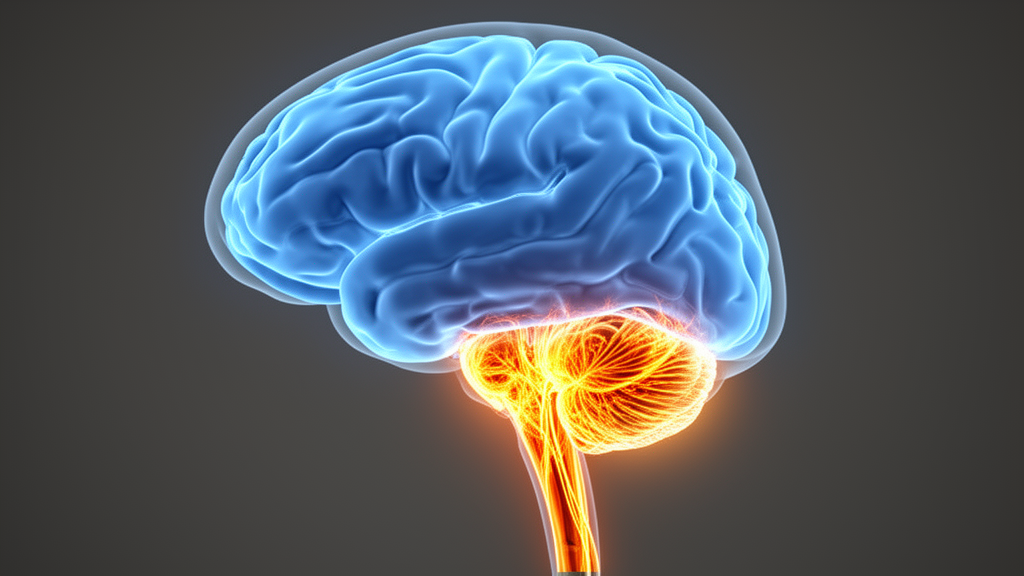
The central premise of the hierarchical regression framework conceptualizes the mammalian motor system as a tiered functional hierarchy comprising cortical, brainstem, and spinal control levels. In healthy individuals, higher cortical structures including the primary motor cortex, supplementary motor area, and premotor cortex maintain flexible, top-down supervisory authority over downstream subcortical circuits. When corticospinal projections are severed by ischemic or hemorrhagic infarction, this supervisory oversight is interrupted, and the central nervous system regresses to phylogenetically older motor networks. Subcortical structures, such as the pontomedullary reticular formation, vestibular nuclei, and red nucleus, disinhibit their output, generating stereotyped flexion synergies in the upper extremity and extension synergies in the lower extremity. While compensatory brainstem adaptations have been widely recognized in animal lesion studies, the authors emphasize that their theoretical framework makes this shift directly testable in humans by proposing an electrophysiological signature: a marked attenuation in directional corticomuscular communication paired with the emergence of rigid, low-dimensional motor coordination patterns.
Synthesizing the ten published functional near-infrared spectroscopy and electromyography investigations available through May 2026, the theoretical analysis identifies robust cross-population support for the model across stroke, spinal cord injury, and healthy controls. Among these ten studies, eight conducted definitive mathematical time-series coupling analyses, while two provided parallel adjacent neurophysiological evaluations. Healthy control investigations established that corticomuscular coupling is dynamic and context-dependent, showing modulation by external mechanical loads such as robotic exoskeletons and during treadmill locomotion. In clinical stroke populations, empirical observations consistently demonstrate substantial reductions in descending cortical influence. Crucially, in a benchmark investigation of subacute stroke survivors across six cortical regions of interest, patients exhibited pronounced hyperactivation across the supplementary motor area and primary motor cortex alongside heightened intracortical functional connectivity, yet simultaneously demonstrated diminished corticomuscular coherence, reduced phase synchronization, and decreased electromyographic complexity, directly demonstrating cortical compensation that fails to overcome severed corticospinal connections.
To rigorously test directional influence within neurovascular time series without imposing linear assumptions, the authors advocate for information-theoretic analytical approaches, specifically transfer entropy. Standard symmetric coupling methods, such as Pearson correlation, phase synchronization indices, and wavelet coherence, localize signal interdependence across time and frequency but remain fundamentally incapable of determining whether information is propagating down descending pathways or up ascending sensory loops. Transfer entropy resolves this ambiguity by quantifying the reduction in future state uncertainty of a target signal gained from the past states of a source signal beyond the target’s own history. The authors formalize the Cortical Descending Drive Index, defined as the mathematical difference between transfer entropy from cortex to muscle and transfer entropy from muscle to cortex. Because motion artifacts typically inject symmetric spurious coupling that drives this index toward zero, non-zero values furnish an inherent mathematical safeguard against dynamic movement distortion while isolating true efferent neural drive.
Clinical correlation studies within the surveyed literature demonstrate that transfer entropy from the contralateral primary motor cortex to agonist muscles correlates positively with Fugl-Meyer motor scores above 0.45. Stratification across clinical impairment tiers revealed a steep severity gradient, with severely impaired stroke survivors exhibiting an effect size of Cohen’s d equals 1.4 relative to healthy controls, whereas mildly impaired patients remained statistically indistinguishable from baseline. Furthermore, baseline cortical transfer entropy values explained eighteen percent of functional upper-limb recovery variance across four weeks of active rehabilitation, confirming its prospective prognostic utility. Beyond cerebrovascular disease, two evaluated spinal cord injury trials extended the framework’s transdiagnostic scope. In these studies, wheelchair Tai Chi paradigms and nonlinear maximal information coefficient algorithms revealed bilateral, distributed alterations in nonlinear corticomuscular dynamics that remained completely invisible to standard linear analytical algorithms, affirming that systemic disconnection of descending projections alters both linear and nonlinear communication regimes.
Building upon these empirical observations, the authors articulate three core falsifiable predictions to guide subsequent research. Prediction one posits a dual-axis hierarchical gradient: corticomuscular coupling magnitude should decrease monotonically as postural task difficulty escalates from seated isometric contractions to quiet standing, unstable foam balance, and platform perturbations, exhibiting an accelerated decline in stroke survivors who recruit brainstem centers earlier. Spatially, this reduction should follow a distal-to-proximal anatomical gradient, falling most severely in distal finger and wrist muscles that rely heavily on dense, monosynaptic corticospinal projections, while sparing proximal and axial trunk musculature that retains robust subcortical innervation. Prediction two states that neuromodulatory interventions enhancing cortical excitability, such as anodal transcranial direct current stimulation or high-frequency repetitive transcranial magnetic stimulation targeting ipsilesional primary motor cortex, should partially reverse hierarchical regression by elevating descending transfer entropy and restoring synergy flexibility. Prediction three specifies that diminished cortical descending drive and increased muscle synergy stereotypy must co-occur within individual patients.
To accelerate empirical validation, the authors articulate four concrete experimental testing designs tailored to address current literature gaps. Proposed Design A outlines a cross-sectional study of thirty chronic stroke patients and thirty age-matched controls navigating four progressively unstable postural conditions during multi-channel optode and electromyographic recording to measure the slope of Cortical Descending Drive Index decay. Design B delineates distal-to-proximal physiological mapping across five upper-limb and trunk muscle groups contracting at thirty percent maximum voluntary force. Design C formulates a sham-controlled, double-blind crossover trial applying two milliamperes of anodal direct current stimulation over ipsilesional motor cortex during dynamic standing to verify coupling reversibility. Finally, Design D outlines the integration of non-negative matrix factorization synergy analysis with optical neuroimaging during dual seated and standing tasks, directly correlating directional descending coupling against the quantity of independently modulated motor synergies to establish whether muscle coordination constraints truly reflect cortical disengagement.
Despite its explanatory power, the authors transparently acknowledge severe technical and physiological boundaries governing optical corticomuscular investigation. Because functional near-infrared spectroscopy relies on near-infrared light penetrating roughly fifteen millimeters beneath the scalp, optical signals are strictly confined to the superficial cerebral cortex and cannot directly record deep brainstem structures like the reticular formation. Consequently, brainstem takeover remains an indirect inference supported by the convergence of reduced descending drive and heightened synergy stereotypy, rather than direct subcortical visualization. Furthermore, systemic autonomic oscillations, including Mayer arterial blood pressure waves near 0.1 hertz, respiratory cycles at 0.2 to 0.3 hertz, and transient movement artifacts, overlap directly with the very-low-frequency optical spectrum. The framework also assumes intact downstream subcortical targets, meaning it cannot be applied without modification to primary brainstem stroke lesions where postural synergy generators are directly damaged.
Ultimately, this theoretical synthesis redefines post-stroke motor impairment by providing an actionable electrophysiological framework that links corticomuscular hemodynamics directly to clinical pathophysiology. As neurorehabilitation transitions toward precision medicine, the authors emphasize that validating these predictions across dynamic locomotion, prospective longitudinal recovery cohorts, and integrated muscle synergy paradigms will transform corticomuscular coupling from a descriptive laboratory readout into an essential clinical biomarker. By delineating whether an individual’s residual movement is driven by preserved corticospinal circuits or compensation governed by brainstem synergies, personalized neurorehabilitation protocols could systematically prescribe cortical stimulation for patients retaining descending reserve, while directing individuals exhibiting irreversible hierarchical regression toward targeted functional synergy retraining, establishing mechanistic precision in clinical neurorecovery.
Subject of Research: Corticomuscular coupling and hierarchical motor control reversion after stroke
Article Title: Corticomuscular coupling reveals hierarchical motor control reversion after stroke: a hypothesis and theory
Article References: Jiang, W., Zhu, N., & Wang, S. (2026). Corticomuscular coupling reveals hierarchical motor control reversion after stroke: a hypothesis and theory. Frontiers in Neurology, 17, Article 1948325. https://doi.org/10.3389/fneur.2026.1948325
Image Credits: AI Generated
DOI: 10.3389/fneur.2026.1948325
Keywords: corticomuscular coupling, stroke rehabilitation, functional near-infrared spectroscopy, surface electromyography, hierarchical motor control, postural control, transfer entropy, cortical descending drive index, corticospinal tract, reticulospinal tract, muscle synergies, transcranial direct current stimulation, motor recovery biomarkers, neurovascular coupling, spinal cord injury, hemodynamic response function, brainstem compensation
News Source: Cassandra Pierce. (November 26, 2026). Stroke Disrupts Cortical Motor Oversight Triggering Brainstem Hierarchical Control Reversion. Scienmag.