Hesitation is an intrinsic part of human and animal behavior. From the split-second pause before crossing a busy street to the momentary uncertainty when making complex decisions, hesitation reflects a sophisticated neural process that modulates action under uncertainty. Despite its ubiquity, the precise neural mechanisms underpinning hesitation have remained elusive, leaving a critical gap in our understanding of action control in the brain. A groundbreaking study published in Nature Neuroscience by Geramita, Ahmari, and Yttri now sheds light on this enigma by uncovering how specific neural circuits in the striatum govern hesitation in mice, revealing new insights into the brain’s decision-making architecture.
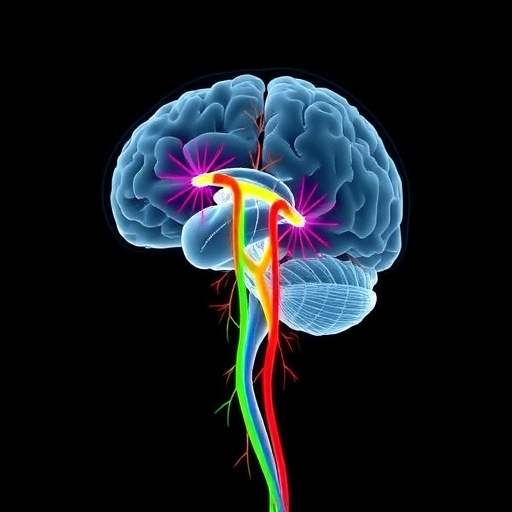
At the heart of this investigation lies the striatum, a deep brain structure integral to action selection, motor control, and reinforcement learning. The striatum is classically divided into two major output pathways: the direct pathway and the indirect pathway. These pathways exert opposing influences on movement; the direct pathway generally facilitates the initiation of actions, while the indirect pathway suppresses competing or inappropriate movements. Prior research has mainly focused on these pathways’ roles in general motor control and habit formation, but their contributions to complex behavioral phenomena such as hesitation remained speculative.
To dissect the neural substrates of hesitation, the research team developed an innovative experimental paradigm specifically designed to evoke reliable hesitation behavior in mice. This model involved tasks that induced situations of uncertainty, prompting the animals to pause before executing an action. The meticulous design allowed for the reproducible observation of hesitation episodes, providing a valuable framework to investigate the correlated neural activity within the dorsomedial striatum, a region implicated in goal-directed behavior and executive function.
Using a combination of advanced neural recording techniques and cell-type-specific manipulation approaches, the scientists were able to decipher the distinct roles of the direct and indirect pathway neurons during moments of hesitation. Through optogenetics, they selectively activated or inhibited these pathways while monitoring the behavioral outcomes. Intriguingly, the data revealed that activity in the indirect pathway neurons increased markedly during hesitation, whereas direct pathway neurons did not exhibit significant modulation. This finding challenges the traditional view that both pathways operate in a balance and underscores a unique function of the indirect pathway in suppressing premature actions when certainty is lacking.
Further analysis demonstrated that elevating the activity of indirect pathway neurons enhanced the likelihood and duration of hesitation, effectively causing the mice to pause longer when faced with ambiguous choices. Conversely, dampening activity in these neurons reduced hesitation, leading to more impulsive decisions. These results suggest a causal relationship, where the striatal indirect pathway acts as a neural brake, enabling organisms to withhold action when environmental cues are uncertain or contradictory. Such a mechanism could be essential for adaptive behavior, preventing rash decisions that might lead to negative outcomes.
From a circuit perspective, the research lends crucial insight into how the basal ganglia network integrates information relevant to decision confidence and action initiation. The indirect pathway traditionally has been viewed through the lens of motor suppression, particularly in disorders such as Parkinson’s disease, where this inhibitory system is dysfunctional. However, the current findings extend its functional repertoire to encompass a more nuanced role in modulating hesitation—a process that transcends mere motor inhibition and involves evaluative cognitive control.
At a technical level, the methodology stood out due to the precision with which the investigators mapped neuronal activity during naturalistic behavior. Employing genetically encoded calcium indicators allowed the monitoring of pathway-specific neural ensembles in freely moving animals, capturing the temporal dynamics of hesitation in unprecedented detail. This approach was complemented by temporally controlled optogenetic manipulation, which provided direct evidence for the causal role of the indirect pathway neurons in shaping hesitation responses.
One of the important implications of this work is its potential relevance to neuropsychiatric conditions characterized by impaired decision-making and motor control. Disorders such as obsessive-compulsive disorder, attention-deficit/hyperactivity disorder, and anxiety often involve abnormal hesitation or indecisiveness. Understanding how the striatal indirect pathway contributes to action suppression under uncertainty could lead to novel therapeutic strategies aimed at recalibrating dysfunctional basal ganglia circuits, thereby restoring balanced decision-making processes.
Moreover, the study intersects with broader themes in neuroscience regarding the neural computation of uncertainty and confidence. The ability to pause and hesitate provides a behavioral window into how the brain encodes ambiguity and risk, crucial elements that influence learning, motivation, and executive function. By demonstrating that the indirect pathway mediates this pause, the research offers a cellular-level explanation for how uncertainty influences motor output, linking cognitive evaluation with motor execution at the neural circuit level.
Notably, the research also opens avenues for further investigation into how the indirect pathway integrates inputs from other brain regions involved in assessing uncertainty, such as the prefrontal cortex and amygdala. Decoding the interaction between these structures and the basal ganglia could unravel the multilayered networks underlying hesitation, enhancing our understanding of adaptive behavior in complex environments.
This study also highlights the versatility and adaptability of the basal ganglia circuitry. While the classical model posited largely antagonistic roles for the direct and indirect pathways in movement facilitation and suppression, respectively, these data advocate for a refined conceptual framework. In this framework, the indirect pathway serves not only as a stop signal but also as a modulator that dynamically adjusts the likelihood of action initiation based on uncertainty, thereby integrating cognitive and motor domains.
The significance of the findings goes beyond neuroscience, touching upon philosophical questions concerning free will and volition. Hesitation embodies a moment of deliberation—a neural pause that could symbolize the substrate of conscious choice. By elucidating the neural mechanisms that allow organisms to delay action, this work brings us a step closer to decoding the brain’s capacity for controlled, goal-directed behavior essential for survival and social interaction.
In summary, the study by Geramita, Ahmari, and Yttri represents a landmark advance in our understanding of hesitation at the neural circuit level. By establishing the striatal indirect pathway as a key mediator of action suppression under uncertainty, it bridges gaps between motor control, decision-making, and behavioral neuroscience. This new knowledge promises to transform our grasp of how the brain navigates ambiguity and suggests exciting directions for future research in both basic and clinical neuroscience.
This discovery not only enhances the fundamental science of neural circuit function but also sets a precedent for developing targeted interventions for a variety of disorders with impaired decision-making and motor control. The sophisticated interplay between neural pathways in the striatum, as revealed in this study, exemplifies the elegance of brain mechanisms that enable flexible, adaptive behavior in the face of uncertainty. As research progresses, these insights could pave the way for innovative therapies that harness the power of specific neural circuits to optimize cognitive and motor function.
The clarity with which this study delineates the indirect pathway’s role in hesitation underscores the importance of pathway-specific investigations in neuroscience. By moving beyond broad regional analyses to the level of discrete neuronal populations, the field gains the precision necessary to tackle complex behaviors. This paradigm shift toward circuit-specific understanding heralds a new era of neuroscience research with profound implications for both health and disease.
By merging state-of-the-art technology, creative behavioral paradigms, and deeply insightful neural analyses, the research team has illuminated a fundamental aspect of brain function—the neural circuitry of hesitation. This work enriches the tapestry of neuroscience literature and sets the stage for ongoing exploration into how the brain orchestrates the delicate balance between action and inaction in a world filled with uncertainty.
Subject of Research: Neural circuitry underlying hesitation and decision-making uncertainty in the striatum of mice.
Article Title: The striatal indirect pathway mediates hesitation.
Article References:
Geramita, M.A., Ahmari, S.E. & Yttri, E.A. The striatal indirect pathway mediates hesitation. Nat Neurosci (2025). https://doi.org/10.1038/s41593-025-02135-6
Image Credits: AI Generated
DOI: https://doi.org/10.1038/s41593-025-02135-6
Tags: behavioral neuroscience studiescomplex decision-making processesdecision-making architecture in the brainimplications of hesitation in action selectionindirect pathway in decision-makingmotor control and hesitationneural circuits and action controlneuroscience of hesitation in animalsreinforcement learning and hesitationstriatal pathways in micestriatum and hesitation behavioruncertainty in behavioral neuroscience