

• HOME
  • NEWS
  • EXPLORE
    • CAREER
      • Companies
      • Jobs
    • EVENTS
    • iGEM
      • News
      • Team
    • PHOTOS
    • VIDEO
    • WIKI
  • BLOG
  • COMMUNITY
    • FACEBOOK
    • INSTAGRAM
    • TWITTER
Wednesday, October 28, 2026
BIOENGINEER.ORG
No Result
View All Result
  • Login
  • HOME
  • NEWS
  • EXPLORE
    • CAREER
      • Companies
      • Jobs
        • Lecturer
        • PhD Studentship
        • Postdoc
        • Research Assistant
    • EVENTS
    • iGEM
      • News
      • Team
    • PHOTOS
    • VIDEO
    • WIKI
  • BLOG
  • COMMUNITY
    • FACEBOOK
    • INSTAGRAM
    • TWITTER
No Result
View All Result
Bioengineer.org
No Result
View All Result
Home NEWS Science News Biology

Stress protein CHOP shields the liver from acetaminophen damage, mouse study finds

by
October 28, 2026
in Biology
Reading Time: 2 mins read
0
Stress protein CHOP shields the liver from acetaminophen damage, mouse study finds

Stress protein CHOP shields the liver from acetaminophen damage, mouse study finds

Share on FacebookShare on TwitterShare on LinkedinShare on RedditShare on Telegram

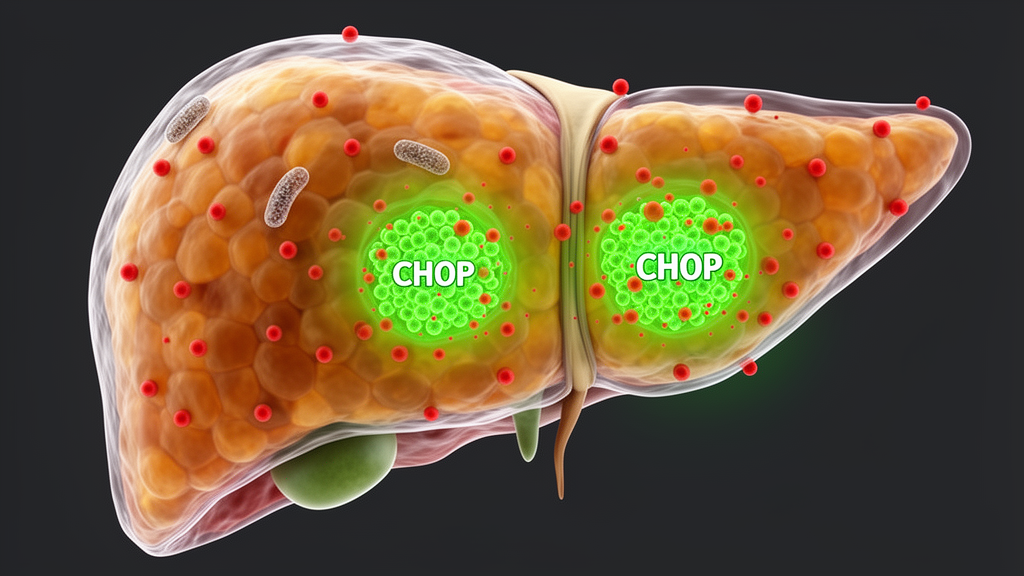
The protein, C/EBP homologous protein (CHOP), was found to defend the liver against injury by promoting a glutathione-dependent antioxidant program that operates through the FOS protein.

Acetaminophen overdose is a major cause of acute liver injury. The damage is driven primarily by oxidative stress and mitochondrial dysfunction that result from excessive formation of N-acetyl-p-benzoquinone imine, a reactive metabolite of the drug. Although CHOP levels rise markedly during acetaminophen-induced liver injury, its functional role in hepatocellular stress responses had remained unclear.

To probe that role, the research team compared wild-type mice with mice lacking the Chop gene. When both groups received acetaminophen, the absence of CHOP significantly worsened the liver injury. The Chop-null animals showed elevated serum alanine aminotransferase levels, a standard marker of liver damage, along with extensive necrosis of liver tissue.

The molecular explanation pointed to a weakened antioxidant defense. CHOP deficiency impaired the induction of GSH-dependent antioxidant pathways and reduced the hepatic levels of reduced glutathione, the molecule that normally buffers the oxidative assault triggered by acetaminophen metabolism.

A striking finding was the dependence of Fos expression on CHOP. The acetaminophen-induced rise in Fos expression was strongly CHOP-dependent, suggesting that CHOP sits upstream of this antioxidant-linked transcriptional response rather than acting in a parallel pathway.

Spatial analysis added a further layer of detail. CHOP and FOS showed partial overlap in their distribution at the boundary between injured and preserved liver parenchyma, the region where surviving hepatocytes are mounting their adaptive response to the toxic challenge.

Two independent lines of evidence supported the regulatory link. Promoter-reporter analysis and ChIP-qPCR both supported CHOP-dependent transcriptional regulation of the Fos gene.

The authors conclude that a CHOP–FOS-associated antioxidant response contributes to hepatic redox homeostasis by promoting GSH-dependent antioxidant defenses, thereby supporting hepatocyte adaptation during acetaminophen-induced liver injury. The work was performed in mice, so direct implications for human patients with acetaminophen poisoning will require further investigation. The article was published as peer-reviewed accepted research on 23 October 2026, with a final version of record to follow.

Subject of Research: The role of the transcription factor CHOP in protecting the liver from acetaminophen-induced injury through a FOS-associated antioxidant program in mice.

Article Title: C/EBP homologous protein protects against acetaminophen-induced liver injury and promotes a FOS-associated antioxidant program

Article References: Nguyen, V. D., Daikoku, A., Ando, M., Kosugi, M., Kadono, C., Nakai, H., Yuasa, H., Urushima, H., Gi, M., Kawamura, E., Gonzalez, F. J., & Matsubara, T. (2026). C/EBP homologous protein protects against acetaminophen-induced liver injury and promotes a FOS-associated antioxidant program. Cell Biology and Toxicology. https://doi.org/10.1007/s10565-026-10318-5

Image Credits: AI Generated

DOI: 10.1007/s10565-026-10318-5

Keywords: acetaminophen, liver injury, CHOP, FOS, glutathione, oxidative stress, hepatotoxicity, transcription factor, mouse study, antioxidant defense, homologous, protein

News Source: Drew Townsend. (October 28, 2026). Stress protein CHOP shields the liver from acetaminophen damage, mouse study finds. Scienmag.

Tags: acetaminophenantioxidant defenseCHOPFOSglutathionehepatotoxicityhomologousliver injurymouse studyoxidative stressproteintranscription factor
Share12Tweet7Share2ShareShareShare1

Related Posts

Laboratory Generations of Sugarcane Parasitoid Wasp Lose Fitness Within Ten Generations

Laboratory Generations of Sugarcane Parasitoid Wasp Lose Fitness Within Ten Generations

October 28, 2026
Prophages Shape Virulence, Not Resistance, in Staphylococcus aureus Genomes

Prophages Shape Virulence, Not Resistance, in Staphylococcus aureus Genomes

October 28, 2026

TREX1 enzyme shields tumors by destroying immune-activating DNA fragments

October 28, 2026

Evolutionary Feature Optimization Sharpens Latent Learning in Endoscopy Images

October 28, 2026

POPULAR NEWS

  • Systematic review maps end-of-life psychosocial and spiritual needs in physical disability

    Systematic review maps end-of-life psychosocial and spiritual needs in physical disability

    29 shares
    Share 12 Tweet 7
  • Text Message Campaign Reached Only a Third of Patients Overdue for Colorectal Cancer Screening

    29 shares
    Share 12 Tweet 7
  • FOXO1 Emerges as Candidate Regulator and Biomarker in Hip Dysplasia

    29 shares
    Share 12 Tweet 7
  • Regulators, developers and clinicians in Shenzhen voice concerns over medical AI governance

    29 shares
    Share 12 Tweet 7

About

We bring you the latest biotechnology news from best research centers and universities around the world. Check our website.

Follow us

Recent News

Systematic review maps end-of-life psychosocial and spiritual needs in physical disability

Text Message Campaign Reached Only a Third of Patients Overdue for Colorectal Cancer Screening

FOXO1 Emerges as Candidate Regulator and Biomarker in Hip Dysplasia

Subscribe to Blog via Email

Enter your email address to subscribe to this blog and receive notifications of new posts by email.

Join 85 other subscribers
  • Contact Us

Bioengineer.org © Copyright 2023 All Rights Reserved.

Welcome Back!

Login to your account below

Forgotten Password?

Retrieve your password

Please enter your username or email address to reset your password.

Log In
No Result
View All Result
  • Homepages
    • Home Page 1
    • Home Page 2
  • News
  • National
  • Business
  • Health
  • Lifestyle
  • Science

Bioengineer.org © Copyright 2023 All Rights Reserved.
