In a groundbreaking study poised to revolutionize post-surgical tendon recovery, researchers have unveiled a novel approach to preventing peritendinous adhesions through the use of lubricious supramolecular hydrogels. This innovative strategy targets a long-standing challenge in orthopedics and reconstructive surgery—adhesions that commonly form around tendons after injury or surgical repair, often compromising mobility and causing chronic pain. The implications of this development extend far beyond basic science, opening pathways for therapies that could dramatically improve patient outcomes and reduce rehabilitation times.
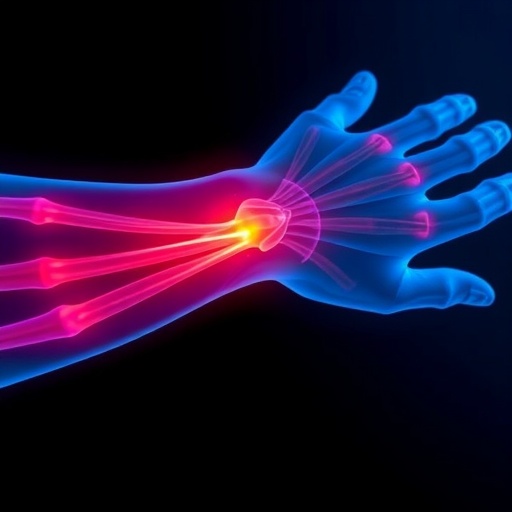
Peritendinous adhesions occur when scar tissue improperly bonds the tendon to surrounding tissues during the healing process. This pathological tethering restricts the smooth gliding motion necessary for normal tendon function, frequently resulting in stiffness and impaired joint mobility. Traditional interventions—including physical therapy and surgical release—offer limited success, underscoring the urgent need for preventative strategies that act at the molecular level to maintain tendon gliding interfaces during regeneration.
The team behind this breakthrough has engineered supramolecular hydrogels with exceptional lubricity, designed to mimic the natural extracellular environment while providing a physical barrier against fibrotic adhesion formation. These hydrogels leverage dynamic, reversible non-covalent interactions allowing them to self-heal and adapt to mechanical stresses imposed by tendon motion, a feature critical for integration in dynamic biological systems. By forming a hydrated, slippery interface, these materials effectively reduce friction and mechanical irritation, key contributors to pathological scar tissue development.
At the core of this innovation lies supramolecular chemistry principles, enabling the assembly of polymeric networks held together not by permanent covalent bonds, but by transient supramolecular motifs such as host-guest complexes, hydrogen bonding, and π-π interactions. This chemistry imparts stimuli-responsive properties to the hydrogel, granting it the ability to undergo shear-thinning and self-healing behaviors. Such properties are paramount in surgical applications, where injectability and resilience in the physiological environment determine clinical feasibility.
Experimental models using these hydrogels demonstrated remarkable efficacy in mitigating adhesion formation in vivo. The hydrogel coatings were applied peri-tendinously post-surgery in animal models, where they provided a lubricious interface that persisted through the critical early phases of tendon healing. Histological analyses revealed a marked reduction in fibrotic tissue development, preservation of tendon gliding capacity, and significantly improved functional outcomes relative to controls.
Mechanical characterization of the hydrogels underscored their suitability for this application. Rheological assessments showed that the materials maintain a delicate balance between elasticity and fluidity, enabling them to withstand repetitive motion and mechanical compression without structural failure. This viscoelastic behavior permits the hydrogels to maintain their integrity and lubricity throughout the prolonged healing period—a key factor for long-term prevention of adhesions.
Beyond mechanical performance, the biocompatibility and biodegradability of these hydrogels further enhance their clinical promise. Composed of non-toxic polymers and assembled through reversible interactions, they minimize inflammatory responses and facilitate gradual resorption aligned with tissue healing timelines. This synergy reduces the risk of foreign body reactions and chronic inflammation, common pitfalls in implantable biomaterials.
The design and optimization process involved intricate molecular engineering, where polymer chain architecture was tuned to optimize binding affinities and network stability without sacrificing dynamic exchange. By adjusting parameters such as polymer length, supramolecular motif concentration, and crosslinking density, the researchers could fine-tune the balance between mechanical strength and self-healing kinetics. This precision chemistry approach exemplifies the future direction of biomaterials development—where molecular-level design translates directly into functional clinical outcomes.
Importantly, the success of these supramolecular hydrogels in preventing adhesion formation could generalize to other surgical contexts plagued by fibroblast-mediated scarring. Potential applications include abdominal surgeries, tendon grafts, nerve regeneration scaffolds, and even cardiac tissue engineering, where limiting fibrotic encapsulation remains a significant hurdle. This versatility underscores the broad impact of the study and its potential to shift paradigms across multiple medical disciplines.
The translational pathway from bench to bedside looks promising, with the materials’ injectable nature and minimally invasive delivery aligning well with current surgical workflows. The research team is already exploring scale-up manufacturing and regulatory pathways, with preclinical safety and efficacy studies underway to pave the way for human clinical trials. The capacity to tailor hydrogel formulations for patient-specific scenarios further expands clinical applicability, positioning these materials as next-generation tools in regenerative medicine.
This breakthrough also invites a re-examination of long-standing biological dogmas about tendon healing and scar tissue formation. By providing a non-toxic, mechanically competent platform that modulates the cellular microenvironment and mechanical cues, the hydrogels leverage physical biology principles to steer tissue repair processes toward regenerative rather than fibrotic outcomes. Such mechanobiology-informed materials engineering heralds a new era in therapeutic interventions.
Furthermore, the study’s implications extend into the realm of sports medicine, where high-performance athletes frequently suffer tendon injuries that are prone to adhesion formation. Faster, more effective recovery enabled by these hydrogels could reduce downtime, prevent chronic disability, and extend athletic careers. This potential for enhancing quality of life and economic outcomes adds a compelling dimension to the technology’s value proposition.
Importantly, the research builds upon an interdisciplinary collaboration between polymer chemists, bioengineers, and clinical specialists, embodying the modern paradigm of convergent science. The integration of fundamental supramolecular chemistry, materials engineering, and surgical expertise exemplifies how complex biomedical problems require coordinated, cross-disciplinary solutions. The success of this approach is likely to inspire further innovation at the interfaces of chemistry, biology, and medicine.
In summary, the development of lubricious supramolecular hydrogels represents a seminal advance in preventing peritendinous adhesions, combining elegant molecular design with practical clinical benefits. As the field moves forward, this work signals the dawn of customizable, smart biomaterials that not only protect tissue function but actively guide healing processes. Such technology embodies the vision of next-generation regenerative therapies—intelligent materials that seamlessly integrate with biology to transform patient outcomes at an unprecedented scale. The broader medical community will undoubtedly watch closely as this promising intervention enters the translational pipeline, hopeful it becomes a standard of care in tendon repair surgeries worldwide.
Subject of Research: Prevention of peritendinous adhesions using specialized biomaterials.
Article Title: Preventing peritendinous adhesions using lubricious supramolecular hydrogels.
Article References:
Meany, E.L., Williams, C.M., Song, Y.E. et al. Preventing peritendinous adhesions using lubricious supramolecular hydrogels. Nat Commun (2026). https://doi.org/10.1038/s41467-026-71244-y
Image Credits: AI Generated
Tags: dynamic self-healing hydrogelsextracellular matrix mimicking hydrogelsimproving tendon gliding motioninnovations in reconstructive tendon surgerylubricious biomaterials in orthopedicsmolecular level adhesion preventionnon-covalent interaction biomaterialspostoperative tendon recovery strategiespreventing peritendinous adhesionsreducing tendon fibrosis after surgerysupramolecular hydrogels for tendon repairtendon scar tissue prevention