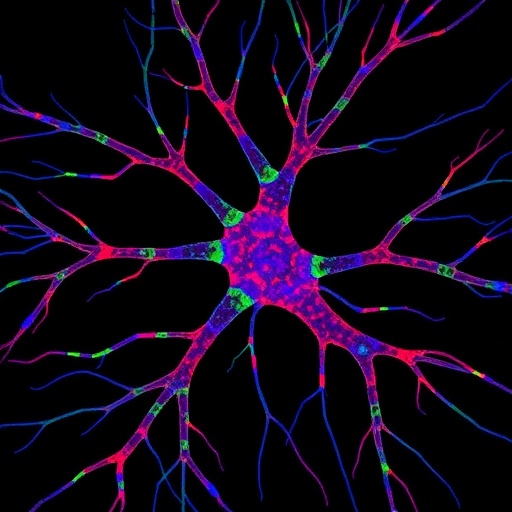
In a groundbreaking study poised to reshape our understanding of Parkinson’s disease and neuroinflammation, researchers have recently shed light on the elusive role of the STING pathway in the progression of dopaminergic neuron degeneration. Parkinson’s disease, characterized by motor dysfunction and the selective loss of dopamine-producing neurons, has long been linked to neuroinflammatory processes. Yet, the precise mechanisms by which immune signaling influences the neuronal demise remain a hotbed of scientific inquiry. The latest work by Klæstrup, Reinert, Ferreira, and colleagues dives deeply into the intersection of innate immunity and neurodegeneration, employing a mouse model based on alpha-synuclein pre-formed fibrils to simulate the pathological hallmark of Parkinson’s: the accumulation of misfolded alpha-synuclein proteins.
The STING (Stimulator of Interferon Genes) pathway, an integral component of the cellular response to cytosolic DNA, plays a pivotal role in innate immunity by inducing type I interferon production upon detection of pathogenic DNA. This pathway has attracted increasing attention across multiple fields including infectious diseases, cancer immunology, and notably, neurodegeneration. Prior studies have suggested that chronic activation of innate immune sensors could exacerbate neuronal damage, raising the hypothesis that modulating these pathways may confer neuroprotection. Here, the authors investigate whether lack of functional STING signaling alters the course of neuronal loss in the context of Parkinson’s pathology.
Using sophisticated genetic tools, the team generated mice deficient in STING function and exposed these animals to intracranial injections of alpha-synuclein pre-formed fibrils. This model robustly recapitulates the progressive aggregation of alpha-synuclein and subsequent dopaminergic neuron degeneration observed in patients, providing a valuable in vivo platform to interrogate mechanistic drivers. The researchers performed comprehensive immunohistochemical and molecular analyses to track neuronal survival, immune cell infiltration, and cytokine expression over time. Their findings, remarkably, reveal a nuanced role for STING: while its absence significantly modulates inflammatory signaling dynamics, it does not translate into neuroprotection of vulnerable dopaminergic populations.
This dissociation between immune modulation and neuronal preservation underscores the complexity of neuroimmune interactions in Parkinson’s disease. In STING-deficient mice, altered cytokine profiles included attenuated interferon responses and shifts in microglial activation states. These immune alterations point to STING’s critical function in orchestrating innate immune defense in the brain. However, the finding that dopaminergic neuron loss proceeds unabated despite these changes challenges prevailing assumptions that dampening STING-mediated inflammation alone suffices to interrupt disease progression. It suggests that other inflammatory or neurodegenerative pathways may act in concert or independently to drive neuronal demise.
Notably, the study elucidates how STING functionality shapes microglial phenotypes, the resident immune cells of the central nervous system, which have emerged as key players in both neuroprotection and neurotoxicity. The immune landscape within the substantia nigra—a brain region devastated in Parkinson’s—was profoundly influenced by STING status. In particular, the researchers observed that microglia lacking STING exhibited altered morphological and functional states, reflecting a reprogrammed immune environment. Yet, these modifications failed to mitigate the toxic impact of alpha-synuclein aggregation, highlighting a disconnect between immune recalibration and effective neuroprotection in vivo.
Mechanistically, the study postulates that the pathogenic processes driving dopaminergic neuron loss transcend simple inflammatory stimuli mediated by cytosolic DNA sensing through STING. Alpha-synuclein pathology likely activates a complex network of cellular stress responses, mitochondrial dysfunction, and protein homeostasis impairments that collectively culminate in neuronal death. This multifactorial landscape implies therapeutic interventions must adopt multimodal strategies rather than targeting single immune pathways in isolation. The research thus invites a reevaluation of neuroinflammatory axes and bolsters the case for combinatorial approaches in future drug development.
Another dimension explored pertains to the temporal dynamics of neuroimmune interactions. The researchers document how immune signatures evolve during disease progression and how the absence of STING rewires these trajectories. Chronic inflammation in neurodegeneration often involves cyclical waves of immune activation and resolution, and the precise timing of therapeutic modulation could be critical. This work highlights the necessity of dissecting such temporal patterns to optimize intervention windows and maximize clinical impact. Future studies may expand on these insights by longitudinally profiling immune states and correlating them with functional outcomes.
The translational implications of these findings extend beyond experimental models to the clinical realm. Given the growing interest in STING agonists and antagonists in immunotherapy, understanding their effects in neurodegenerative contexts becomes crucial. The data caution against simplistic extrapolations that STING inhibition automatically equals neuroprotection. Instead, nuanced strategies may be required to harness the pathway’s immune benefits while circumventing unintended consequences for vulnerable neuronal populations. This calls for precise biomarker development to monitor STING activity and inflammation in human patients and tailor treatments accordingly.
Importantly, the authors acknowledge the limitations of their study, notably the reliance on a single genetic knockout model and the inherent differences between murine physiology and human neuropathology. Parkinson’s disease is a heterogeneous disorder with multiple etiologies and likely involves diverse immune mechanisms across patients. Hence, future research must validate these findings in additional models and ultimately in clinical samples. Integrating multi-omics approaches and advanced imaging could illuminate the broader network interactions influencing disease outcomes and identify new therapeutic targets.
This research marks a significant advance in decoding the immune-neuronal dialogues underpinning Parkinson’s disease. It elegantly demonstrates that modulating innate immune sensors such as STING shifts immune landscapes but is insufficient alone to protect dopaminergic neurons from alpha-synuclein-induced toxicity. Consequently, it advocates for a paradigm shift towards more comprehensive models of neurodegeneration that accommodate the complexity and redundancy inherent in the pathological cascade. Such perspectives will be critical to developing next-generation therapies capable of halting or reversing disease progression in patients.
The study also engages with broader questions about the double-edged nature of neuroinflammation. While immune responses can clear pathological protein aggregates and promote tissue repair, they may conversely exacerbate oxidative stress and neuronal injury if dysregulated. Balancing these opposing roles requires precise manipulation of immune pathways, informed by in-depth mechanistic understanding. The current data emphasize that STING is a key modulator within this delicate equilibrium but not the sole arbiter of neurodegenerative fate.
In summary, the findings presented by Klæstrup, Reinert, Ferreira, and their team provide pivotal insights into the relationship between innate immune signaling and neuronal vulnerability in Parkinson’s disease. Their work challenges the assumption that STING is a straightforward therapeutic target for neuroprotection and instead reveals its role as a complex immunological regulator that modulates but does not prevent dopaminergic neuron loss in the alpha-synuclein fibril model. This nuanced understanding opens new avenues for investigation and highlights the sophisticated interplay of immune pathways in neurodegenerative disorders.
The exploration of STING’s function within the diseased brain refines our conceptual frameworks regarding neuroimmune contributions to Parkinson’s pathogenesis. It underscores the necessity of developing context-dependent therapeutic strategies that address both immune dysregulation and intrinsic neuronal pathology. As research continues to unravel the intricacies of cellular crosstalk and molecular drivers in neurodegeneration, such studies will be instrumental in guiding the next generation of interventions aimed at combating this devastating disease.
This compelling work enriches the evolving narrative of Parkinson’s disease research and reinforces the critical importance of integrated approaches that bridge immunology and neurology. It invites scientists and clinicians alike to reconsider simplistic models of inflammation-driven neurodegeneration and embrace a more holistic perspective, one that appreciates the multifaceted and dynamic nature of the brain’s immune environment.
Subject of Research: The role of the STING innate immune pathway in modulating neuroinflammation and dopaminergic neuron survival within the alpha-synuclein pre-formed fibrils mouse model of Parkinson’s disease.
Article Title: Lack of functional STING modulates immunity but does not protect dopaminergic neurons in the alpha-synuclein pre-formed fibrils Parkinson’s disease mouse model.
Article References:
Klæstrup, I.H., Reinert, L.S., Ferreira, S.A. et al. Lack of functional STING modulates immunity but does not protect dopaminergic neurons in the alpha-synuclein pre-formed fibrils Parkinson’s disease mouse model. npj Parkinsons Dis. (2025). https://doi.org/10.1038/s41531-025-01228-0
Image Credits: AI Generated
Tags: alpha-synuclein misfolding and toxicitychronic activation of immune sensorsdopaminergic neuron loss mechanismsimmune signaling in neuronal damageimplications for treating neurodegenerative diseasesinnate immunity in neurodegenerationmouse models of Parkinson’s diseaseneuroinflammation and neuron degenerationneuroprotection strategies in Parkinson’srole of STING in the immune responseSTING pathway and Parkinson’s diseasetype I interferon production in neurodegeneration