• HOME
  • NEWS
  • EXPLORE
    • CAREER
      • Companies
      • Jobs
    • EVENTS
    • iGEM
      • News
      • Team
    • PHOTOS
    • VIDEO
    • WIKI
  • BLOG
  • COMMUNITY
    • FACEBOOK
    • INSTAGRAM
    • TWITTER
Saturday, July 11, 2026
BIOENGINEER.ORG
No Result
View All Result
  • Login
  • HOME
  • NEWS
  • EXPLORE
    • CAREER
      • Companies
      • Jobs
        • Lecturer
        • PhD Studentship
        • Postdoc
        • Research Assistant
    • EVENTS
    • iGEM
      • News
      • Team
    • PHOTOS
    • VIDEO
    • WIKI
  • BLOG
  • COMMUNITY
    • FACEBOOK
    • INSTAGRAM
    • TWITTER
  • HOME
  • NEWS
  • EXPLORE
    • CAREER
      • Companies
      • Jobs
        • Lecturer
        • PhD Studentship
        • Postdoc
        • Research Assistant
    • EVENTS
    • iGEM
      • News
      • Team
    • PHOTOS
    • VIDEO
    • WIKI
  • BLOG
  • COMMUNITY
    • FACEBOOK
    • INSTAGRAM
    • TWITTER
No Result
View All Result
Bioengineer.org
No Result
View All Result
Home NEWS Science News

Staying one step ahead to stop hackers in their tracks

Bioengineer by Bioengineer
September 23, 2020
in Science News
Reading Time: 2 mins read
0
IMAGE
Share on FacebookShare on TwitterShare on LinkedinShare on RedditShare on Telegram

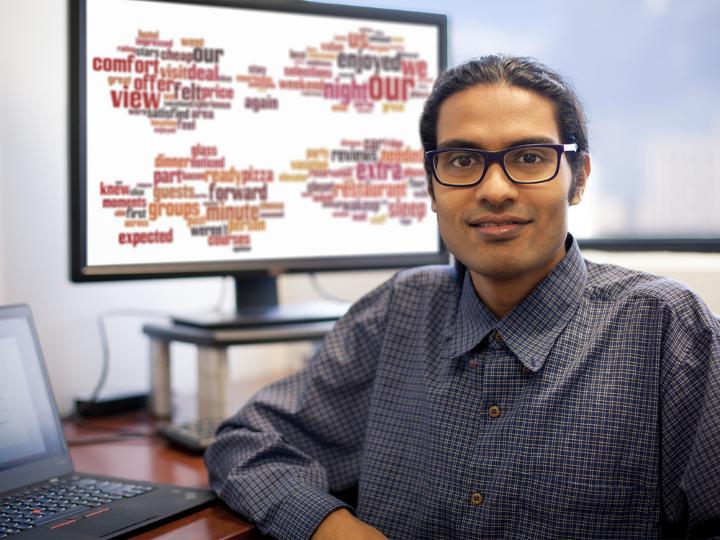
US Army grant helps UH researchers develop techniques to detect, deceive cyber attackers
IMAGE

Credit: University of Houston

The COVID-19 pandemic and the presidential election have led to a significant increase in cyberattacks via email, text message and social media aimed at stealing personal information and destroying vital data. To help stop these hackers before they strike, computer science researchers at the University of Houston have been awarded a three-year, $660,000 grant from the U.S. Army Research Office.

Rakesh Verma, computer science professor at the UH College of Natural Sciences and Mathematics and co-principal investigator, said his research team will go beyond commonly-used cyber defense techniques such as honeypots or moving target defense, both focused on fooling the hacker by mimicking likely targets of attacks or increasing uncertainty and complexity.

“Instead, we will generate new attacks of our own. We want to be proactive rather than reactive,” said Verma. “Cyber criminals are getting more creative at each turn, so the idea is to be one step ahead of any type of attack.”

The team of postdoctoral, graduate and undergraduate researchers will design machine learning and natural language processing techniques — a computer system’s ability to read and understand spoken or written language — that can produce unlimited, open-ended attacks. The goal is to generate novel attacks on a daily basis using adversarial machine learning to help develop new, ingenious filters to ward off those attacks.

“We want to close the loop by subjecting our detectors to these new attacks, so the detectors are continuously learning and improving themselves rather than passively waiting for attacks,” said Arjun Mukherjee, principal investigator and associate professor of computer science. “We will compare our techniques against state-of-the-art baselines on diverse datasets in realistic scenarios.”

A recent assessment by the International Criminal Police Organization (INTERPOL) on the impact of COVID-19 on cybercrime showed a significant target shift from individuals and small businesses to major corporations, governments and critical infrastructure. The agency projects a further increase in cybercrime in the future.

“Vulnerabilities related to working from home and the potential for increased financial benefit will see cybercriminals continue to ramp up their activities and develop more advanced and sophisticated modi operandi,” according to the report.

Verma believes at some point online criminals will start to use machine learning and natural language processing to produce cyberattacks.

“We want to have that cycle of automatic improvement, so we create our own attacks and subject our filtering methods to the new attack and see if the new attacks are successful,” Verma explained. “If they are unsuccessful, then we will try to generate better attacks and if they are successful, we will work to improve our filters.”

###

Media Contact
Sara Tubbs
[email protected]

Original Source

https://uh.edu/news-events/stories/2020/september-2020/09232020-us-army-grant-to-help-stop-cybercriminals.php

Tags: Computer ScienceGraduate/Postgraduate EducationHardwareMultimedia/Networking/Interface DesignScience/MathSoftware EngineeringSystem Security/HackersTechnology/Engineering/Computer ScienceTheory/Design
Share12Tweet8Share2ShareShareShare2

Related Posts

Study Finds Dopamine System Damage in Long COVID Patients’ Brains

July 11, 2026

HMGA Proteins Linked to Brain Tumors and Neurodegenerative Diseases

July 11, 2026

Physical Activity Lowers Frailty Risk in Older Adults: Review and Analysis

July 11, 2026

Han directs new $15M NIH center for organ-on-chip technology

July 11, 2026
Please login to join discussion

POPULAR NEWS

  • Detection of EDCs in Breast Milk and Infant Urine Up to Six Months Highlights Early Exposure Risks

    77 shares
    Share 31 Tweet 19
  • New Drug Candidate Developed at McMaster Shows Potential for Treating Brain Cancer

    58 shares
    Share 23 Tweet 15
  • KTU Researchers Explore Ultrasound’s Role in Enhancing Blood Flow Beyond Diagnostics

    53 shares
    Share 21 Tweet 13
  • 高齢者の骨粗鬆症治療の持続性比較

    51 shares
    Share 20 Tweet 13

About

BIOENGINEER.ORG

We bring you the latest biotechnology news from best research centers and universities around the world. Check our website.

Follow us

Recent News

Study Finds Dopamine System Damage in Long COVID Patients’ Brains

HMGA Proteins Linked to Brain Tumors and Neurodegenerative Diseases

Physical Activity Lowers Frailty Risk in Older Adults: Review and Analysis

Subscribe to Blog via Email

Success! An email was just sent to confirm your subscription. Please find the email now and click 'Confirm' to start subscribing.

Join 84 other subscribers
  • Contact Us

Bioengineer.org © Copyright 2023 All Rights Reserved.

Welcome Back!

Login to your account below

Forgotten Password?

Retrieve your password

Please enter your username or email address to reset your password.

Log In
No Result
View All Result
  • Homepages
    • Home Page 1
    • Home Page 2
  • News
  • National
  • Business
  • Health
  • Lifestyle
  • Science

Bioengineer.org © Copyright 2023 All Rights Reserved.