• HOME
  • NEWS
  • EXPLORE
    • CAREER
      • Companies
      • Jobs
    • EVENTS
    • iGEM
      • News
      • Team
    • PHOTOS
    • VIDEO
    • WIKI
  • BLOG
  • COMMUNITY
    • FACEBOOK
    • INSTAGRAM
    • TWITTER
Wednesday, November 25, 2026
BIOENGINEER.ORG
No Result
View All Result
  • Login
  • HOME
  • NEWS
  • EXPLORE
    • CAREER
      • Companies
      • Jobs
        • Lecturer
        • PhD Studentship
        • Postdoc
        • Research Assistant
    • EVENTS
    • iGEM
      • News
      • Team
    • PHOTOS
    • VIDEO
    • WIKI
  • BLOG
  • COMMUNITY
    • FACEBOOK
    • INSTAGRAM
    • TWITTER
No Result
View All Result
Bioengineer.org
No Result
View All Result
Home NEWS Science News Health

Spatial Models Map Spread and Warming Risks of Invasive Kenya Mosquito

by
November 25, 2026
in Health
Reading Time: 2 mins read
0
Spatial Models Map Spread and Warming Risks of Invasive Kenya Mosquito

Spatial Models Map Spread and Warming Risks of Invasive Kenya Mosquito

Share on FacebookShare on TwitterShare on LinkedinShare on RedditShare on Telegram

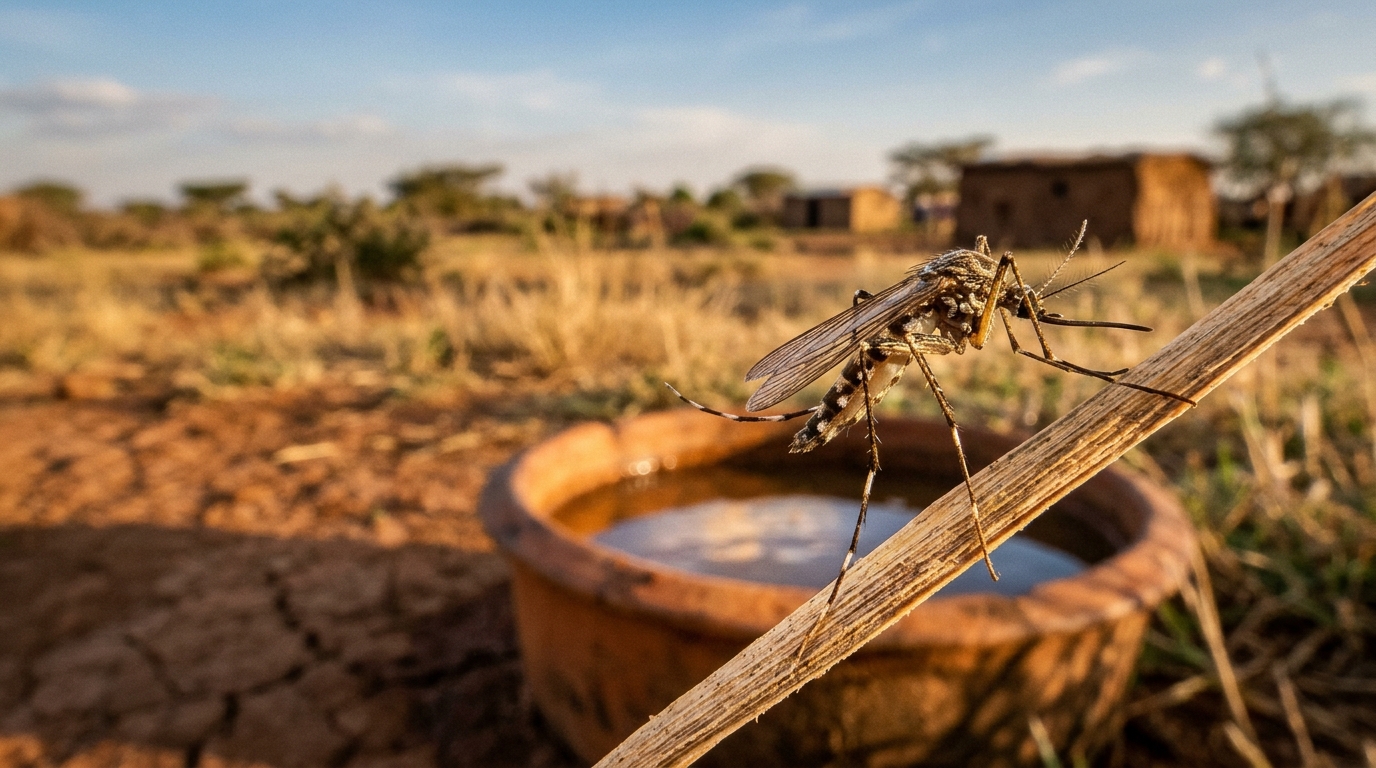
Geospatial modeling integrating national entomological surveillance data reveals that the invasive malaria mosquito Anopheles stephensi exhibits substantial spatial variation across Kenya, with modeled habitat suitability projected to shift toward central regions under progressive climate warming scenarios.

Originally endemic to South Asia and the Middle East, An. stephensi is an urban-adapted, thermally resilient vector of both Plasmodium falciparum and Plasmodium vivax. In addition to challenging malaria control efforts, the mosquito has demonstrated laboratory competence for transmitting o’nyong’nyong virus. In Kenya, the species was first confirmed in Marsabit County in 2022 and has since expanded across arid and semi-arid counties in the northern part of the country.

To investigate the environmental drivers and potential distribution of the vector, researchers integrated national entomological surveillance records collected from 2022 through 2025 with geospatial environmental and anthropogenic predictors. The study implemented two complementary analytical frameworks: Geographically Weighted Regression using county-level occurrence counts and Mahalanobis Distance modeling relying on presence-only records.

The investigation incorporated predictor variables spanning anthropogenic activity, topography, climate, and vegetation metrics. To assess how sensitive modeled habitat suitability is to rising minimum temperatures, the researchers simulated incremental warming scenarios spanning increases from plus one degree Celsius to plus five degrees Celsius.

The Geographically Weighted Regression analysis projected the highest spatial risk in northern counties, including Marsabit, Mandera, and Isiolo, while indicating the lowest spatial risk across southern counties. However, the Mahalanobis Distance analysis detected environmental conditions in southern counties, such as Kajiado and Makueni, that are environmentally similar to those observed in the high-risk north. Furthermore, the Mahalanobis modeling projected that progressive warming would lead to declining suitability in certain currently suitable areas, shifting suitable habitat toward central Kenya.

The authors concluded that spatial modeling and environmental similarity mapping can help authorities prioritize targeted surveillance and early detection programs. Nevertheless, the researchers noted that key factors such as transport-mediated dispersal and regional physical barriers require further testing, underscoring the ongoing need for integrated surveillance of An. stephensi and its associated pathogens.

Subject of Research: Spatial modeling and climate warming projections for invasive Anopheles stephensi in Kenya

Article Title: Vector on the move: climate and infrastructure drive the spread of Anopheles stephensi in Kenya

Article References: Obanda, V., Agwanda, B., Luande, V. N., Wango, T. L., & Lwande, O. W. (2026). Vector on the move: climate and infrastructure drive the spread of Anopheles stephensi in Kenya. Frontiers in Malaria, 4, 1864261. https://doi.org/10.3389/fmala.2026.1864261

Image Credits: AI Generated

DOI: 10.3389/fmala.2026.1864261

Keywords: Anopheles stephensi, Kenya, malaria vector, Geographically Weighted Regression, Mahalanobis Distance modeling, climate warming scenarios, Marsabit County, Mandera County, Isiolo County, Kajiado County, Makueni County, entomological surveillance, o'nyong'nyong virus, Plasmodium falciparum, Plasmodium vivax, habitat suitability, arid and semi-arid lands, minimum temperatures

News Source: Ophelia Keating. (November 25, 2026). Spatial Models Map Spread and Warming Risks of Invasive Kenya Mosquito. Scienmag.
Tags: Anopheles stephensiarid and semi-arid landsclimate warming scenariosEntomological Surveillancegeographically weighted regressionhabitat suitabilityIsiolo CountyKajiado CountyKenyaMahalanobis Distance modelingMakueni Countymalaria vectorMandera CountyMarsabit Countyminimum temperatureso'nyong'nyong virusPlasmodium falciparumPlasmodium vivax
Share12Tweet7Share2ShareShareShare1

Related Posts

Mannitol Matches Ficoll in Sustaining Respiratory Rhythms in Rodent Perfusion Models

Mannitol Matches Ficoll in Sustaining Respiratory Rhythms in Rodent Perfusion Models

November 25, 2026
Gelatin and Polydopamine Surface Coating Dramatically Enhances Silicone Biocompatibility in Laboratory Models

Gelatin and Polydopamine Surface Coating Dramatically Enhances Silicone Biocompatibility in Laboratory Models

November 25, 2026

Elite Female Footballers Face Peak ACL Injury Risk in Early Season Months

November 25, 2026

Hungarian Lip, Oral, and Pharynx Cancer Incidence Decreased From 2000 to 2019

November 25, 2026

POPULAR NEWS

  • Machine Learning and NSGA-II Optimize Deposition Geometry in Additive Manufacturing

    Machine Learning and NSGA-II Optimize Deposition Geometry in Additive Manufacturing

    29 shares
    Share 12 Tweet 7
  • Pediatric Cancer Caregivers Face Shifting Burdens and Fear Across Treatment Phases

    29 shares
    Share 12 Tweet 7
  • Hospital Study Uncovers Major Deficits in Suicide Care Pathways Across Lusaka

    29 shares
    Share 12 Tweet 7
  • Immobilized Bacterial Biosensor Enables Prototype Conductometric Biodetection of Acrylamide in Water

    29 shares
    Share 12 Tweet 7

About

We bring you the latest biotechnology news from best research centers and universities around the world. Check our website.

Follow us

Recent News

Ancient Turkish Carbonate Rocks Reveal Fluctuating Marine Environments and Arid Climate

Mannitol Matches Ficoll in Sustaining Respiratory Rhythms in Rodent Perfusion Models

Liquid Contact Microelectrode Maps Dynamic Calcium Release Above Dental Composites

Subscribe to Blog via Email

Enter your email address to subscribe to this blog and receive notifications of new posts by email.

Join 89 other subscribers
  • Contact Us

Bioengineer.org © Copyright 2023 All Rights Reserved.

Welcome Back!

Login to your account below

Forgotten Password?

Retrieve your password

Please enter your username or email address to reset your password.

Log In
No Result
View All Result
  • Homepages
    • Home Page 1
    • Home Page 2
  • News
  • National
  • Business
  • Health
  • Lifestyle
  • Science

Bioengineer.org © Copyright 2023 All Rights Reserved.