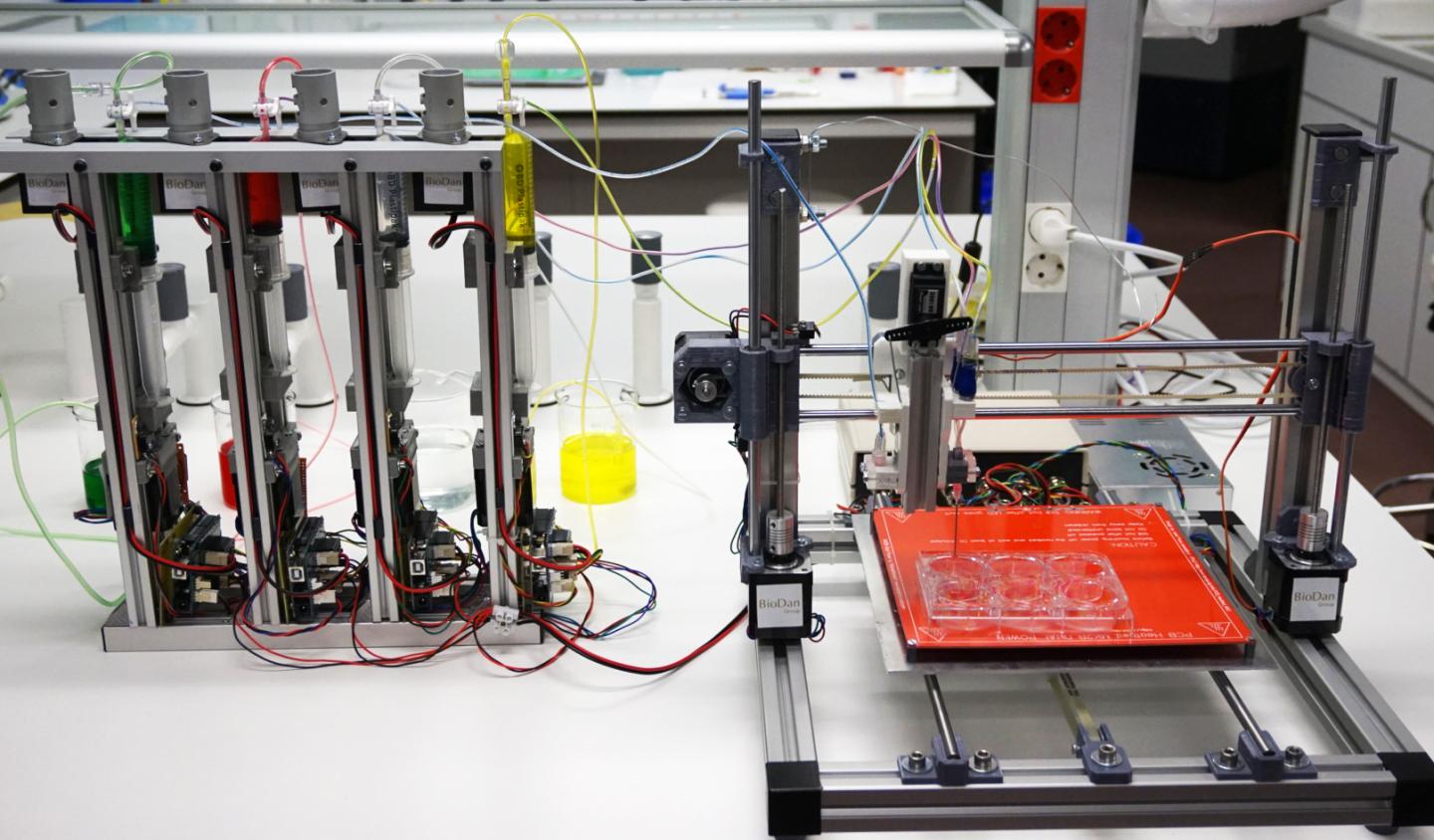
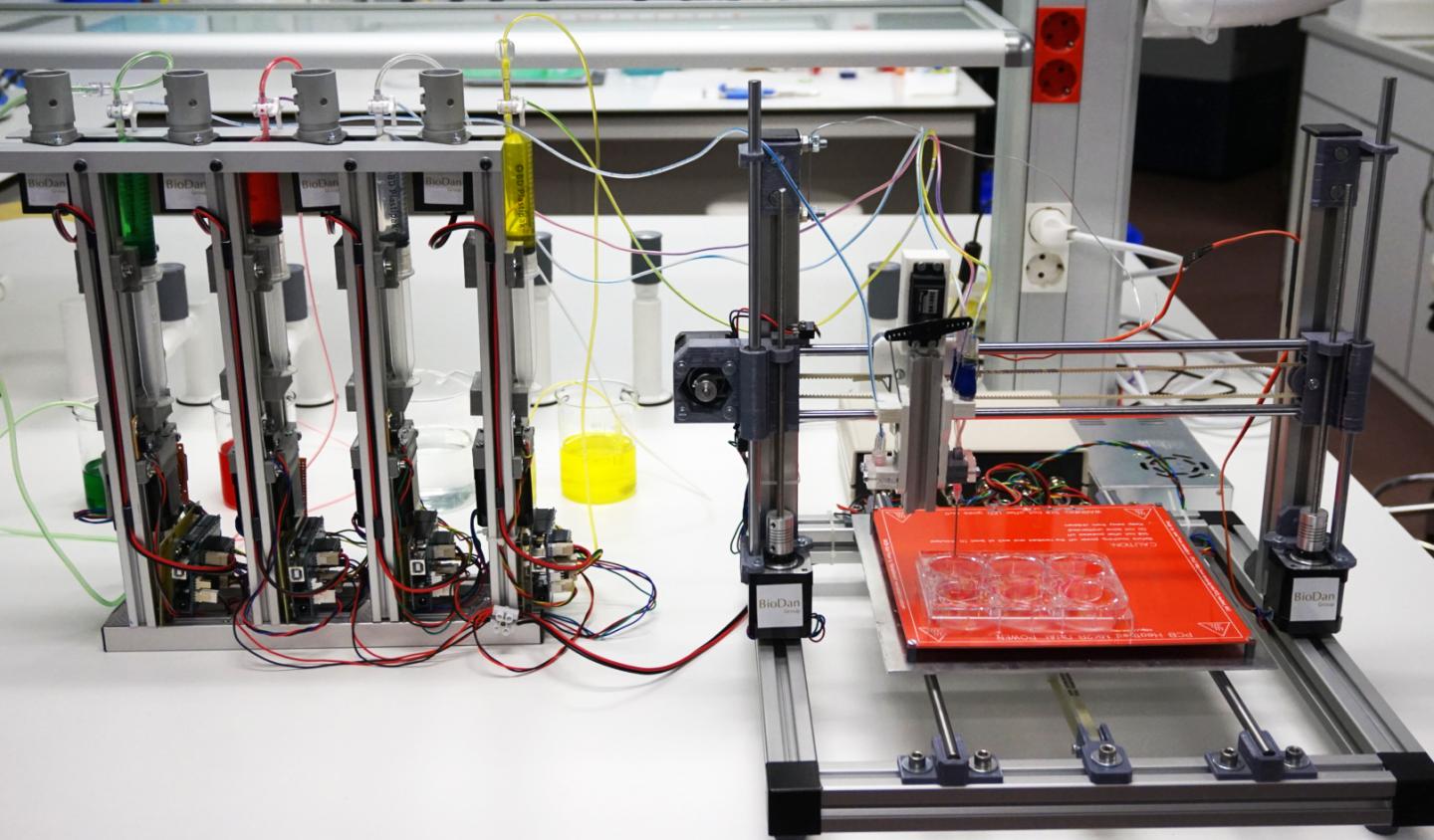
Credit: UC3M
This research has recently been published in the electronic version of the scientific journal Biofabrication. In this article, the team of researchers has demonstrated, for the first time, that, using the new 3D printing technology, it is possible to produce proper human skin. One of the authors, José Luis Jorcano, professor in UC3M's department of Bioengineering and Aerospace Engineering and head of the Mixed Unit CIEMAT/UC3M in Biomedical Engineering, points out that this skin "can be transplanted to patients or used in business settings to test chemical products, cosmetics or pharmaceutical products in quantities and with timetables and prices that are compatible with these uses."
This new human skin is one of the first living human organs created using bioprinting to be introduced to the marketplace. It replicates the natural structure of the skin, with a first external layer, the epidermis with its stratum corneum, which acts as protection against the external environment, together with another thicker, deeper layer, the dermis. This last layer consists of fibroblasts that produce collagen, the protein that gives elasticity and mechanical strength to the skin.
Bioinks are key to 3D bioprinting, according to the experts. When creating skin, instead of cartridges and colored inks, injectors with biological components are used. In the words of Juan Francisco del Cañizo, of the Hospital General Universitario Gregorio Marañón and Universidad Complutense de Madrid researcher. "Knowing how to mix the biological components, in what conditions to work with them so that the cells don't deteriorate, and how to correctly deposit the product is critical to the system." The act of depositing these bioinks, which are patented by CIEMAT and licensed by the BioDan Group, is controlled by a computer, which deposits them on a print bed in an orderly manner to then produce the skin.
The process for producing these tissues can be carried out in two ways: to produce allogeneic skin, from a stock of cells, done on a large scale, for industrial processes; and to create autologous skin, which is made case by case from the patient's own cells, for therapeutic use, such as in the treatment of severe burns. "We use only human cells and components to produce skin that is bioactive and can generate its own human collagen, thereby avoiding the use of the animal collagen that is found in other methods," they note. And that is not the end of the story, because they are also researching ways to print other human tissues.
There are several advantages to this new technology. "This method of bioprinting allows skin to be generated in a standardized, automated way, and the process is less expensive than manual production," points out Alfredo Brisac, CEO of BioDan Group, the Spanish bioengineering firm specializing in regenerative medicine that is collaborating on this research and commercializing this technology.
Currently, this development is in the phase of being approved by different European regulatory agencies to guarantee that the skin that is produced is adequate for use in transplants on burn patients and those with other skin problems. In addition, these tissues can be used to test pharmaceutical products, as well as cosmetics and consumer chemical products where current regulations require testing that does not use animals.
###
Video
Media Contact
Fco. Javier Alonso
[email protected]
@uc3m
http://www.uc3m.es
############
Story Source: Materials provided by Scienmag