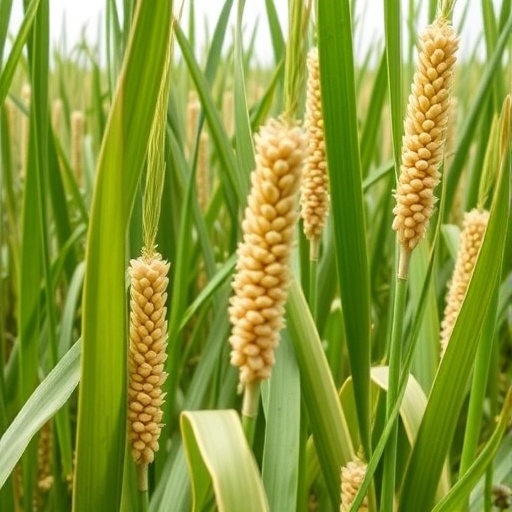
In the intricate world of agriculture and plant genetics, sorghum stands out as a vital crop, particularly in regions reliant on sustainable food sources like Western Ethiopia. Recent research conducted by Earecho and Alemu has taken a significant step forward in enhancing our understanding of sorghum’s resilience through the lens of anthracnose resistance. This work sheds light on how to better cultivate sorghum as climate change and pests increasingly threaten global food security.
Sorghum, a cereal grain with remarkable adaptability, serves as a staple food for millions and livestock feed in various parts of the world. The research team focused on anthracnose, a fungal disease caused by the pathogen Colletotrichum sublineolum, which inflicts considerable damage on sorghum crops, thereby hindering yield. Understanding and mitigating the effects of such diseases is critical for sustaining the agricultural landscape, especially in an area characterized by diverse climatic conditions.
The innovative approach taken by Earecho and Alemu involved an extensive phenotyping effort, which is the systematic measurement of observable traits of sorghum genotypes. By examining different genetic varieties under varying environmental conditions, the researchers discovered key characteristics that contributed to disease resistance. This data enables plant breeders to identify and select more resilient genotypes for future cultivation, paving the way for improved agricultural practices.
Central to their findings was the identification of specific phenotypic traits associated with higher resistance levels. These traits included leaf angle, height, and overall canopy architecture, which contribute to a plant’s ability to fend off infections. The selected genotypes showed promise not just in resisting anthracnose, but also in exhibiting robust growth patterns under stress conditions commonly found in Western Ethiopia.
Interestingly, the study revealed a genetic correlation between disease resistance and certain morphological traits. This relationship underscores the complexity inhered in plant breeding, demonstrating that selection processes must consider multiple dimensions of plant biology. Through rigorous genetic analysis and field trials, the authors were able to pinpoint particular genotypes demonstrating superior performance against fungal attacks.
Furthermore, as climate change continues to exacerbate agricultural vulnerabilities, the importance of such genetic research becomes even more pronounced. The researchers highlighted how shifts in temperature and precipitation patterns could magnify the spread and severity of anthracnose in sorghum fields. By selecting disease-resistant varieties, farmers can better prepare for the uncertain climate challenges that lay ahead.
In addition to immediate agricultural benefits, this research has broad implications for food security. Sorghum is not only a staple but also boasts drought-resistant properties, making it a critical crop in arid regions. With a more profound understanding of disease resistance, communities can enhance their self-sufficiency and reduce dependency on imported food supplies.
The methodology employed in the research was a blend of field trials and laboratory assessments, creating a comprehensive understanding of plant responses under real-world conditions. This dual approach is essential, as laboratory results alone can sometimes misrepresent how a plant species might react when exposed to the myriad of stresses found in nature.
As the study progressed, the researchers engaged local farmers to gather insights and feedback. This participatory approach ensured that the research remained relevant and that the solutions proposed would be practical for implementation in local farming practices. Engaging the agricultural community is vital for successful adoption of new varieties and techniques.
Additionally, their findings underline the urgency of developing a robust breeding program that prioritizes disease resistance in sorghum. Establishing partnerships with agricultural institutions and breeding companies could accelerate the diffusion of these resistant varieties into farming practice, enhancing the resilience of local food systems.
The authors’ comprehensive study also highlights the potential for future research avenues. Investigation into the underlying genetic mechanisms that confer anthracnose resistance could unlock new pathways for enhancing not only sorghum but also other economically important crops facing similar challenges. Expanding this research could foster greater insights into plant-pathogen interactions across various species.
In summary, the remarkable work by Earecho and Alemu represents a significant stride in the ongoing battle against agricultural disease threats. Through methodical phenotyping and a keen understanding of plant genetics, they have provided essential tools and insights that could reshape how sorghum is cultivated in Western Ethiopia and potentially beyond. This research not only stands to fortify sorghum against current challenges but also sets a precedent for the critical examination of resilience in other staple crops.
The urgency of these issues cannot be overstated. With global populations on the rise and climate patterns shifting, ensuring the sustainability and resilience of our food systems has never been more imperative. As such, the contributions of this study could serve as a vital component in the collective effort to secure food for future generations, enabling communities to thrive even amidst adversity.
The collaboration between researchers and local agricultural practices exemplifies the integrated approach needed to tackle these pressing challenges. With continued dedication to research and community engagement, the path to a more resilient agricultural future in Ethiopia—and worldwide—seems ever more attainable.
Subject of Research: Phenotyping sorghum genotypes for anthracnose resistance in Western Ethiopia
Article Title: Phenotyping sorghum genotypes for anthracnose resistance in Western Ethiopia
Article References:
Earecho, M.K., Alemu, H. Phenotyping sorghum genotypes for anthracnose resistance in Western Ethiopia.
Discov. Plants 3, 15 (2026). https://doi.org/10.1007/s44372-026-00478-3
Image Credits: AI Generated
DOI: https://doi.org/10.1007/s44372-026-00478-3
Keywords: Sorghum, Anthracnose, Phenotyping, Disease Resistance, Food Security, Plant Genetics, Agriculture, Climate Change.
Tags: agricultural research in Western Ethiopiacereal grain adaptabilityColletotrichum sublineolum pathogencombating fungal diseases in cropsenhancing food security with sorghumgenetic diversity in sorghum cultivationimpact of climate change on cropsphenotyping techniques in agricultureplant breeding for disease resistancesorghum anthracnose resistancesorghum genotypes in Ethiopiasustainable agriculture practices