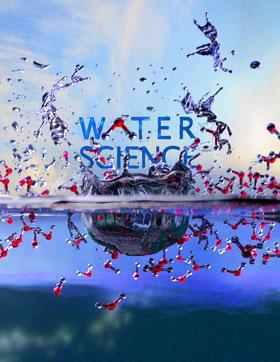
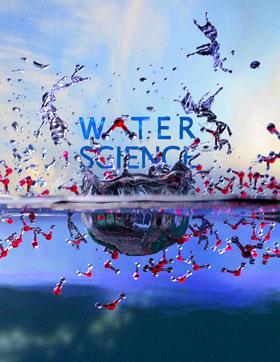
Credit: Institute for Molecular Engineering at Argonne National Laboratory
WASHINGTON, D.C., July 17, 2018 — In response to rising water scarcity, leading Argonne National Laboratory researcher Seth Darling describes the most advanced research innovations that could address global clean water accessibility. His comprehensive paper focuses on understanding and controlling the interfaces between materials and water.
Interfaces determine the performance of technologies like water quality sensors, filtration membranes and even pipes. Darling's own labs are working on adsorbents to advance water treatment. He presented his findings this week in the Journal of Applied Physics, from AIP Publishing.
Adsorbents
Adsorption is one of the best mechanisms for cleaning water. In this process, contaminants adhere to the surface of porous materials to maximize surface-to-volume ratio.
Highly porous activated carbon is the most extensively used because it is abundant and inexpensive. Zeolites can trap whole molecules in their 3D crystalline cage structures, enabling them to selectively bind particular compounds from water-based solutions. Polymer-based sorbents have nearly limitless flexibility in their design.
"We will continue to rely [on] these proven technologies," Darling said. "But there is also a pressing need for sorbents that are more effective and energy-efficient."
Reusability
Reusability is a critical metric for sorbent materials, which can markedly reduce costs and increase the sustainability of a treatment process. Polymeric foam sponges are promising candidates for this approach.
Darling is heading a group that created the Oleo Sponge, which can soak up 90 times its weight in oil throughout the entire water column. To create the Oleo Sponge, the researchers implemented a technique called sequential infiltration synthesis (SIS). Using SIS, they grew metal oxide within the foam fibers to transform common polyurethane foam, found in seat cushions, into an oil adsorbent.
The oxide serves as the "glue" to which the oil-loving (oleophilic) molecules attach. Reusable oil is extracted from the sponge, so it can be used repeatedly.
Targeting Individual Pollutants
Researchers are also designing next-generation sorbents that have higher specificity –more binding power to target individual pollutants. Ideally, researchers could tailor interfacial properties to adsorb specific molecules to capture challenging water contaminants like nutrients and heavy metals.
Researchers are now investigating how to repurpose metal-organic frameworks (MOFs), a material already used in gas sorption, for this purpose. Related to zeolites, MOFs consist of metal ions or clusters bound by organic ligands. MOFs have a high surface area, controllable structures and tunable pores.
"We have a water crisis, which is based on increasing population, urbanization and climate disruption. And there's unsustainable use of our water," Darling said. "Part of addressing this is through policy solutions, but we also need new, more energy-efficient and cost-effective technologies."
###
The article, "Perspective: Interfacial materials at the interface of energy and water," is authored by Seth Darling. The article appeared in the Journal of Applied Physics July 17, 2018 (DOI: 10.1063/1.5040110) and can be accessed at http://aip.scitation.org/doi/full/10.1063/1.5040110.
ABOUT THE JOURNAL
Journal of Applied Physics is an influential international journal publishing significant new experimental and theoretical results of applied physics research. See http://jap.aip.org.
Media Contact
Rhys Leahy, AIP Media
[email protected]
301-209-3090
@AIPPhysicsNews
http://www.aip.org
Related Journal Article
http://dx.doi.org/10.1063/1.5040110