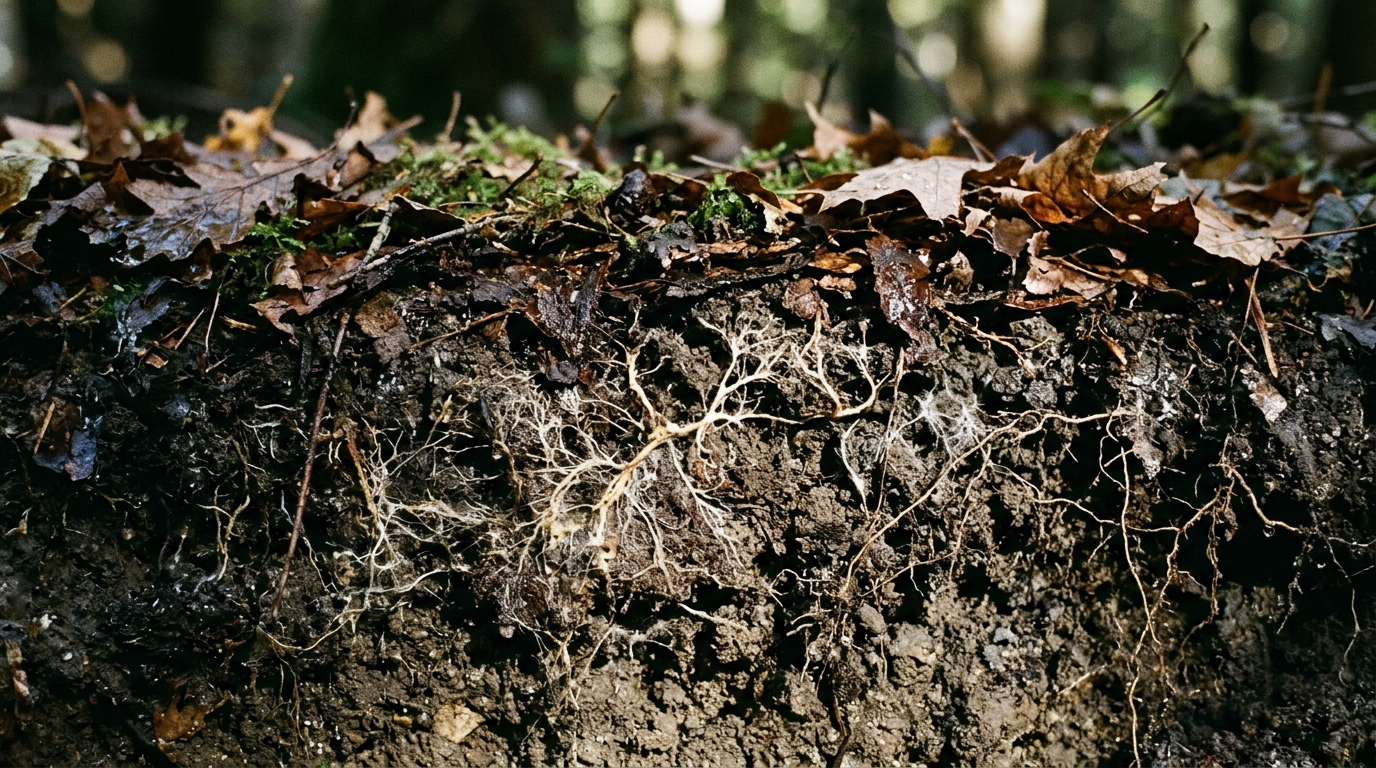
Forensic researchers have demonstrated that regular temporal shifts in soil microbial communities surrounding buried remains can accurately estimate postmortem intervals. Because soil acts as a primary environmental medium during cadaver decomposition, the microorganisms residing within it capture time-specific biological signals. By tracking these dynamic community transitions over time, investigators evaluated whether postmortem microbial succession patterns could be translated into an objective, quantitative predictive model for forensic death investigations.
To establish this predictive framework, the researchers developed an experimental soil burial model utilizing rat carcasses as subjects. Soil sampling was conducted across twelve distinct time points spanning a decomposition window between zero and sixty days postmortem. Following the recovery of soil samples at each scheduled interval, the investigative team extracted soil microbial DNA to examine community shifts across decomposition stages. The extracted genetic material underwent high-throughput Illumina MiSeq sequencing targeting 16S rRNA gene regions to characterize the taxonomic makeup of the bacteria inhabiting the surrounding burial matrix.
The research team employed multiple computational and statistical approaches to evaluate the resulting sequencing datasets. Community composition analysis was conducted alongside alpha diversity calculations to measure ecological variety throughout decomposition. Non-metric multidimensional scaling analysis was applied to assess structural shifts across the microbial community over time. Additionally, linear discriminant analysis effect size screening was utilized to pinpoint differential species that varied in abundance across postmortem intervals, establishing candidate microbial biomarkers linked to specific decomposition stages.
To translate microbial community dynamics into time-of-death estimates, the scientists integrated a feature embedding strategy for dimensionality reduction with a random forest regression algorithm. This computational framework constructed postmortem interval prediction models across seven standard taxonomic levels, ranging from the broad phylum level down to individual operational taxonomic units. The predictive performance of these candidate models was systematically evaluated using four quantitative statistical metrics: the coefficient of determination, mean absolute error, root mean square error, and Pearson correlation coefficients.
The experimental results revealed that the soil microbial community underwent a significant, phasic succession over the course of decomposition following death. Measurements of microbial alpha diversity and richness indices reached their peak at six days postmortem before exhibiting a continuous decline through the remainder of the sixty-day observation period. Furthermore, non-metric multidimensional scaling confirmed a distinct three-phase succession pattern within the community structure. Through linear discriminant analysis effect size screening, the investigators identified thirty time-dependent differentially expressed taxonomic units serving as potential candidate microbial biomarkers.
This order-level model achieved a coefficient of determination of 0.9370, a mean absolute error of 4.05 days, a root mean square error of 4.98 days, and a Pearson correlation coefficient of 0.9687. These findings indicate that order-level bacterial profiling from soil provides an accurate, microbiome-based technical approach for estimating postmortem intervals within a zero-to-sixty-day window under controlled rat carcass burial conditions.
Subject of Research: Postmortem interval estimation using soil microbial succession and machine learning
Article Title: Temporal patterns of soil microorganisms near buried corpses and the development of a model for estimating postmortem interval
Article References: Xiao, T., Li, Z., Jia, Z., Zhang, T., Sun, J., & Feng, C. (2026). Temporal patterns of soil microorganisms near buried corpses and the development of a model for estimating postmortem interval. International Journal of Legal Medicine. https://doi.org/10.1007/s00414-026-04074-8
Image Credits: AI Generated
DOI: 10.1007/s00414-026-04074-8
Keywords: postmortem interval, soil microbiome, microbial succession, buried carcasses, random forest regression, 16S rRNA sequencing, Illumina MiSeq, alpha diversity, NMDS analysis, LEfSe, microbial biomarkers, cadaver decomposition, order-level modeling, feature embedding, forensic microbiology, rat carcass model, operational taxonomic units
News Source: Morgan Morrow. (November 27, 2026). Soil Microbial Succession Accurately Estimates Postmortem Interval in Buried Carcass Model. Scienmag.