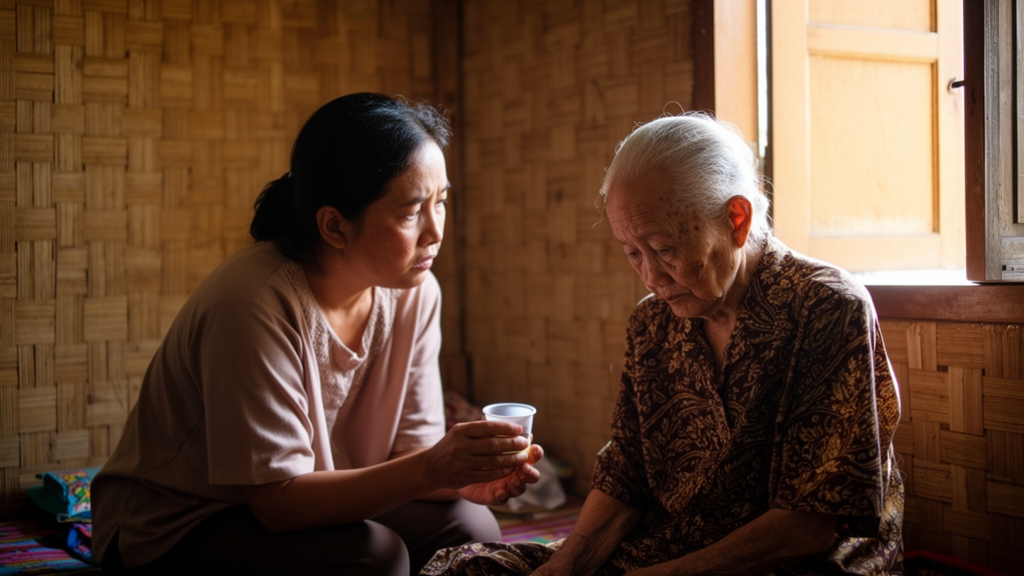
In West Java, Indonesia, delayed medical help-seeking and treatment non-adherence among tuberculosis patients are driven primarily by the social meanings of the disease, family dynamics, and structural healthcare hurdles rather than an absence of health knowledge, according to a qualitative descriptive study published in BMC Public Health. Indonesia continues to bear one of the highest tuberculosis burdens globally, yet the critical psychosocial and cultural determinants that influence patient care-seeking intervals and treatment continuation have remained insufficiently understood.
Designed as a qualitative descriptive study, the investigation was grounded in a social constructivist epistemology and guided by a phenomenological orientation focused on lived human experience. The research team purposively sampled nine participants receiving outpatient care at the DOTS clinic of RSUD dr. Slamet, a public general hospital situated in Garut, West Java. The study cohort comprised seven female participants and two male participants between the ages of 18 and 42 years. Data collection relied on in-depth, semi-structured online interviews, which the authors subsequently evaluated through the six distinct phases of reflexive thematic analysis established by Braun and Clarke. Methodological rigor and analytical trustworthiness were systematically maintained through member checking, documented audit trails, and continuous reflexive journaling.
From the qualitative analysis, the researchers developed six overarching themes, four of which established the descriptive context of the participants’ illness experience. The first contextual theme focused on the meaning of tuberculosis symptoms, revealing that individuals frequently normalized their early physical symptoms, while extrapulmonary symptoms were consistently not recognized as indicators of tuberculosis. The second contextual theme centered on treatment experiences within the formal healthcare environment, which participants characterized as being marked by fragmented diagnostic pathways and inconsistent communication from healthcare personnel.
The remaining two contextual themes explored the personal disruption and emotional trajectories associated with the condition. When reflecting on the meaning of living with tuberculosis, participants described experiencing substantial identity disruption, with social stigma frequently extending beyond the patients themselves to directly impact their children. In evaluating their emotional experiences, participants retrospectively recounted an evolving psychological path following their diagnosis, initially moving from profound fear and emotional distress toward pervasive feelings of hopelessness, with only some individuals ultimately arriving at acceptance.
The remaining two developed themes directly addressed the study’s central research questions regarding the drivers of healthcare delays and non-adherence. Help-seeking was delayed substantially by anticipated and enacted stigma, which several participants explicitly described through the cultural concept of aib, an Indonesian term signifying disgrace. Furthermore, help-seeking delays were compounded by structural barriers within the health system, particularly mandatory digital registration procedures that created procedural hurdles for patients attempting to access care. Within the sample, social stigma represented one of the most widely shared subthemes, explicitly reported by five of the nine participants.
Participants reported that adherence was severely challenged by ongoing medication fatigue, persistent fear, and distressing communication experienced during clinical interactions with healthcare workers. Family relationships played a vital yet dual role, emerging as the most widely shared subtheme across the entire cohort—reported by six of the nine participants—with domestic dynamics functioning either to sustain medication completion or to undermine it. To maintain compliance, patients actively relied on patient-generated strategies, notably including cautionary witnessing, in which participants observed and learned from the negative outcomes of peers who had discontinued treatment, alongside an intense fear of having to restart their multi-month regimen from the beginning. Other identified subthemes in the analysis rested on accounts from two to four participants.
The authors concluded that within this West Java setting, both the timing of help-seeking and daily treatment adherence were governed less by biomedical knowledge of tuberculosis than by the social meaning of the condition, family obligations, and patients’ self-developed coping strategies. Based on these findings, the study suggests that tuberculosis control programmes can advance patient-centred care by actively engaging family members as formal collaborative partners in treatment adherence. The researchers also recommended transforming clinical interactions so that healthcare workers communicate in ways that explain rather than frighten, taking measures to reduce the visibility of specialized tuberculosis services to alleviate public stigma, and offering supportive patient-generated strategies, such as structured self-monitoring tools, from the very beginning of treatment.
Subject of Research: Psychosocial and cultural determinants of tuberculosis help-seeking and treatment adherence in Indonesia
Article Title: Exploring psychosocial and cultural determinants of delayed help-seeking and treatment adherence in Indonesian tuberculosis (TB) patients
Article References: Heriawan, I. S., Abidin, F. A., Jongsma, M., & Hinduan, Z. R. (2026). Exploring psychosocial and cultural determinants of delayed help-seeking and treatment adherence in Indonesian tuberculosis (TB) patients. BMC Public Health. https://doi.org/10.1186/s12889-026-30272-5
Image Credits: AI Generated
DOI: 10.1186/s12889-026-30272-5
Keywords: tuberculosis, delayed help-seeking, treatment adherence, Indonesia, West Java, Garut, RSUD dr. Slamet, DOTS clinic, reflexive thematic analysis, qualitative descriptive study, anticipated stigma, enacted stigma, aib, cautionary witnessing, medication fatigue, mandatory digital registration, extrapulmonary tuberculosis, patient-centred care
News Source: Ophelia Keating. (November 13, 2026). Social Stigma and Family Dynamics Shape Tuberculosis Care Delays in West Java. Scienmag.