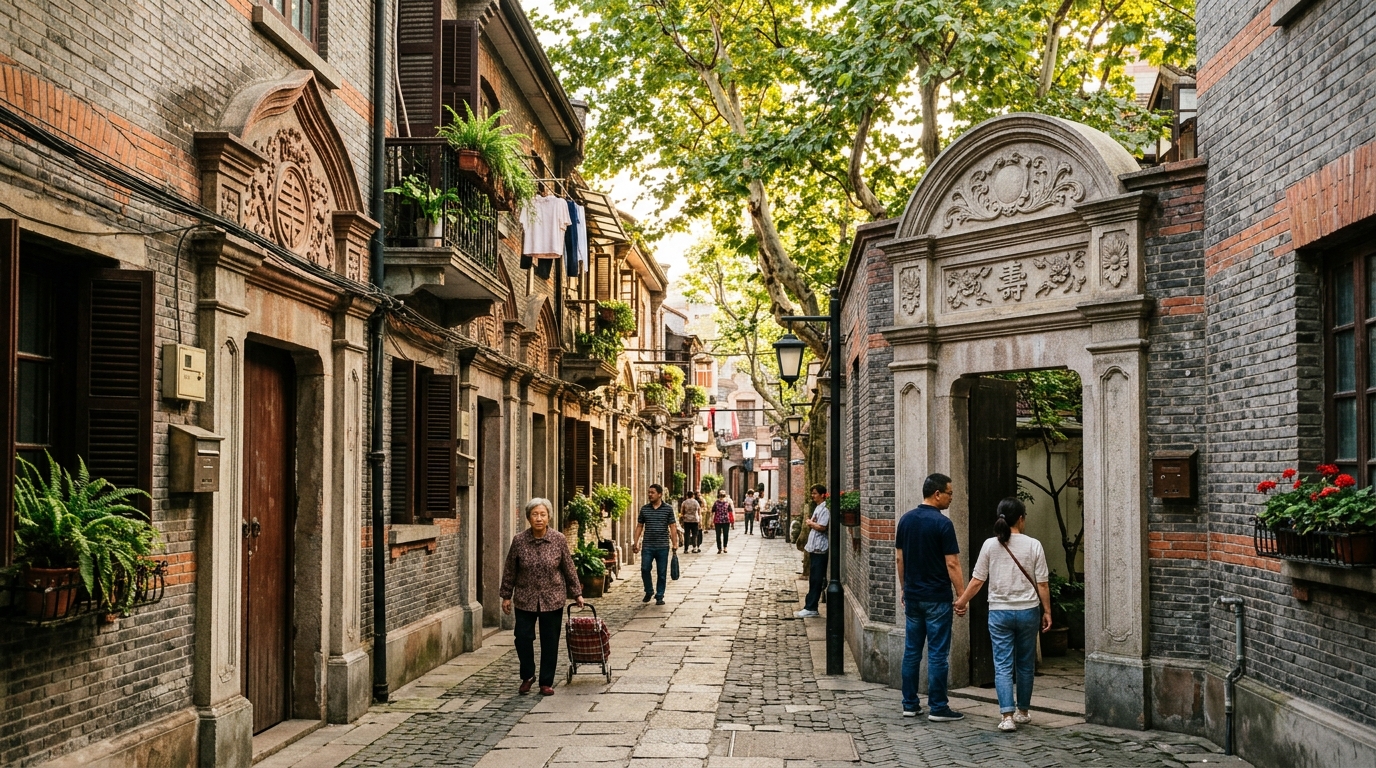
A new study published in Built Heritage examines how the public perceives positive and negative heritage values in Shanghai’s old concessions through a large-scale analysis of social media comments. The research, led by Qingyun Luo, utilizes a machine learning approach to categorize 25,588 user-generated comments collected from two major Chinese travel platforms, Dianping and Ctrip. By applying a Bidirectional Encoder Representations from Transformers (BERT) model, the study identifies distinct patterns in how residents and visitors discuss the historical, social, and physical attributes of these former colonial districts. The findings suggest that while positive heritage values are frequently acknowledged and integrated into urban branding, negative values associated with painful histories and physical decay are often marginalized in public discourse and conservation efforts.
The study focuses on the former International Settlement and French Concession areas in Shanghai, which cover approximately 15 square kilometers. These regions were established by British, French, and American merchants following the Opium War in 1845 and became centers for modern industry, finance, and intellectual activity. The historical context of these concessions is complex, involving both cultural encounters and violent conflicts, including the Second Sino-Japanese War. Today, these areas have been transformed into multifunctional urban spaces featuring high-end hotels, financial institutions, and cultural industries. This transformation makes them a critical case study for understanding how heritage management shapes public perception of both affirmative and dissonant historical values.
The methodology involves a three-part process: data collection and cleaning, data mining for perceived values, and knowledge discovery through spatial, content, and sentiment analysis. The BERT model was fine-tuned to assess whether each comment reflected attention to 11 specific heritage value dimensions, including historic, social, political, aesthetic, scientific, economic, age, and ecological values. To address the imbalance in the dataset, where positive values significantly outnumbered negative ones, the researchers used large language models to augment the training data. This ensured that each value type had sufficient representation for accurate classification.
The results reveal a marked skew in public perception toward positive heritage values. On average, positive values were perceived in 2,689.38 comments across eight dimensions, whereas negative values appeared in only 626.25 comments across four dimensions. Historic value was the most prominent positive dimension, mentioned in over 37% of the comments. Economic and aesthetic values also received high attention, each accounting for more than 15% of the total. In contrast, negative values were less frequently discussed, with the social dimension being the most salient negative category, appearing in 6.10% of comments. Other negative dimensions, such as historic, political, and age values, were each mentioned in less than 2% of the comments.
Geographical analysis using QGIS kernel density estimation showed that sites with high positive values are concentrated in popular tourist areas such as the Bund waterfront and garden villa neighborhoods. These areas are characterized by early heritagization and now serve as hubs for cultural tourism. Conversely, sites associated with negative historic and political values cluster in the Northern Public Concession and at concession-Chinese boundaries. These locations, including the Sihang Warehouse Memorial and the Shanghai Jewish Refugees Memorial, embody memories of wartime violence and colonial expansion. Negative age value is concentrated in working-class lilong housing within Chinese-administered districts, often reflecting physical deterioration and a lack of official heritage recognition.
Content analysis using Term Frequency-Inverse Document Frequency (TF-IDF) identified key cognitive tendencies in user comments. Positive historic and social values are frequently associated with keywords like architecture, history, and Shanghai, reinforcing a narrative of cultural continuity and urban prosperity. Positive economic value is linked to terms such as check-in and take photos, highlighting the commercial and touristic function of these sites. In contrast, negative historic value is associated with keywords like warehouse, prison, and Japanese, evoking memories of colonial oppression and wartime trauma. Negative social value is closely tied to personal memories of loss and decline, with frequent use of terms like already, now, and none, reflecting regret over the disappearance of historical landscapes due to rapid urbanization.
Sentiment analysis revealed that positive heritage values do not always correlate with positive emotional experiences. Only economic value showed a significant positive correlation with positive emotions, suggesting that commercial vitality and modernization foster feelings of pride and urban identity. Other positive values, such as historic and aesthetic, showed no significant relationship with positive onsite experiences. In contrast, all four negative heritage values demonstrated negative correlations with positive emotional experience. Negative social value showed the strongest negative correlation, indicating that the loss of personal memories and social dislocation triggers stronger negative emotions such as sadness and regret. Negative political value also correlated negatively with emotions, reflecting the sensitive nature of political stances and group confrontations.
The study further explored the structural relationships between positive and negative values using Pearson correlation and factor analysis. The results showed that negative and positive values are not independent but often co-expressed. For instance, negative political value and positive political value exhibited a moderate positive correlation, suggesting that these values are frequently perceived together. Factor analysis identified four latent factors shaping public perception: Colonisation/conflict background, Positive historical elements, Damage to space/identity, and Design quality. These factors account for 69.558% of the total variance in perceived value scores. The Colonisation/conflict background factor is primarily associated with negative political and historic values, while the Damage to space/identity factor highlights processes of spatial decay and memory loss.
The findings suggest that the value integrity of Shanghai’s old concession heritage has been compromised by the marginalization of negative values. This marginalization may be driven by institutional and economic factors, where heritage conservation is often aligned with geopolitical agendas and profit-oriented local government strategies. The study argues for a more inclusive heritage discourse that recognizes both positive and negative values. It proposes that negative values could be embedded in existing heritage protection procedures, such as listing and assessment, to ensure that difficult histories are not erased. This approach would contribute to a more complete understanding of heritage value integrity and support the preservation of contested narratives.
However, the study acknowledges limitations in relying on social media data, which may introduce sampling bias. Social media users in China are predominantly middle-aged and young adults, potentially underrepresenting the elderly generation who personally witnessed the concession era. This demographic skew may affect the generalizability of the findings, particularly regarding the emotional responses to negative historical information. Future research should triangulate these findings through offline methods, such as semi-structured interviews and oral histories, to provide a more comprehensive understanding of collective memory. The study emphasizes the need for cautious and reflective approaches to managing diverse heritage values, avoiding the marginalization of negative values due to their potential economic impact.
In conclusion, this research advances the concept of value integrity by integrating both positive and negative heritage values into conservation frameworks. It demonstrates that Shanghai’s old concessions are perceived as relatively positive heritage spaces, a perception shaped by past conservation processes. The study highlights the importance of acknowledging the unique historical and emotional narratives embedded in negative heritage values. By providing a safe space for the expression of negative history and emotions, heritage management can foster a more inclusive and pluralistic understanding of cultural heritage. This approach aligns with global shifts toward recognizing the complexity and conflict inherent in heritage sites, ensuring that both positive and negative values are comprehensively perceived and passed on to future generations.
Subject of Research: Public perceptions of positive and negative heritage values: a social media analysis of Shanghai’s old concessions
Article Title: Public perceptions of positive and negative heritage values: a social media analysis of Shanghai’s old concessions
Article References: Luo, Q. (2026). Public perceptions of positive and negative heritage values: a social media analysis of Shanghai’s old concessions. Built Heritage, 10(1), Article 44. https://doi.org/10.1186/s43238-026-00287-3
Image Credits: AI Generated
DOI: 10.1186/s43238-026-00287-3
Keywords: Public, perceptions, positive, negative, heritage, values, social, media, analysis, Shanghai, concessions, scientific research
News Source: Denise Maddox. (November 8, 2026). Social Media Data Reveals Shanghai Heritage Value Perceptions. Scienmag.