


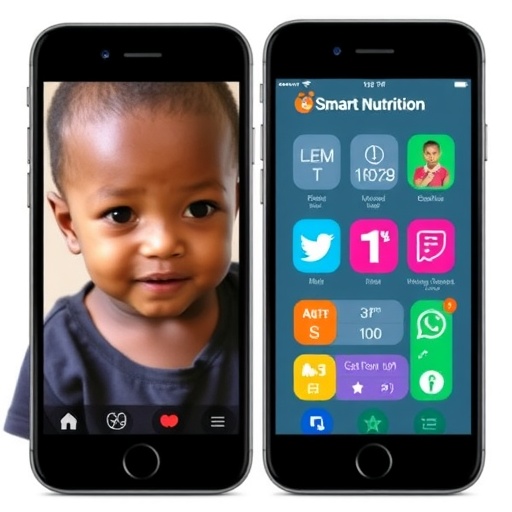
In the ever-evolving realm of pediatric healthcare, nutrition remains a cornerstone of child well-being, especially in clinical settings. A recent study published in BMC Pediatrics has shed light on a groundbreaking mobile nutritional application designed to enhance the management of malnutrition in hospitalized children. The research, spearheaded by Maholarnkij and colleagues, highlights how this technological advancement is not just a matter of convenience, but a vital tool that significantly improves time efficiency and user experience for healthcare providers and caretakers alike.
This innovative application integrates robust algorithms with user-centric design to streamline the nutritional assessment process. The application allows caregivers and healthcare professionals to input and track dietary data seamlessly. Given the complexities of pediatric nutrition, especially in vulnerable populations such as hospitalized children, this app’s capabilities offer a much-needed solution to an age-old challenge in healthcare. The app is well-equipped to assist healthcare providers in making informed nutritional interventions, ensuring that malnourished children receive the precise dietary requirements needed for their recovery.
The study conducted by Maholarnkij and his team explored the efficacy of this mobile application through a meticulous observational analysis involving various pediatric clinical departments. Their approach focused on assessing both qualitative and quantitative outcomes which included time spent in dietary assessments and user satisfaction levels. The findings, though preliminary, were overwhelmingly positive. Health professionals reported a reduction in the workload and time required to assess and manage nutritional needs, enabling them to focus more on direct patient care rather than administrative tasks.
Moreover, the easy-to-navigate interface of the application played a crucial role in its acceptance among users. Feedback collected during the study indicated that healthcare providers, often pressed for time in high-demand settings, found the application intuitive. This ease of use encouraged even those with limited technological skills to adopt the application quickly. In a sector where time is often short, the platform’s design minimized the learning curve, allowing practitioners to enhance patient care with minimal disruption to their routines.
Conversely, user experience plays a pivotal role in the successful implementation of any healthcare technology. Recognizing this, the research team placed considerable emphasis on user-centered design principles while developing the application. By conducting multiple focus groups with pediatric healthcare workers and nutritionists, they gathered invaluable insights that shaped the app’s development. Adjustments were made based on direct user feedback, allowing the application to evolve continuously in line with the needs of its users.
Grounded in evidence-based practice, the application’s functionalities include the ability to customize dietary plans based on individual patient data. This feature is particularly essential for children with specific nutritional deficiencies or those who require specialized diets due to underlying medical conditions. The creators of the app provided a platform that could not only adapt to the needs of various patients but also reflect current clinical guidelines and recommendations pertinent to pediatric nutrition.
One of the most compelling aspects of the research is the potential for this application to bridge the gap between clinical practice and technological innovation. As hospitals continue to embrace digital health tools, the integration of applications that promote better nutritional management can set a precedent for future developments in pediatric care. Indeed, as highlighted by the study, improving nutritional management through innovative solutions may lead to better clinical outcomes for children. Further studies could solidify this notion, paving the way for broader acceptance and integration of similar technologies in healthcare systems worldwide.
In taking a closer look at the implications of this study, one cannot ignore the persistence of malnutrition among hospitalized children, a problem exacerbated by rapid hospitalizations and changing family dynamics. The advent of this mobile application could signal a shift in how pediatric malnutrition is addressed within hospital settings. By streamlining the nutritional assessment process, patients might experience a smoother journey through recovery, fueling discussions on how technology can actively contribute to improving patient care.
The promise of this application extends beyond individual hospitals; it presents a model for scalability that could be adopted in various healthcare systems globally. With malnutrition still presenting a significant challenge in many parts of the world, fostering technological advancements offers a glimmer of hope. The proliferation of mobile applications in healthcare offers not just tools for efficiency, but also the capacity to democratize access to quality nutritional care for children, regardless of their geographical location.
Looking ahead, the future of this mobile nutritional application appears bright, yet further validation through extensive trials will be crucial. The research team notes that while initial findings are encouraging, comprehensive evaluations involving larger populations and diverse clinical settings could fortify the app’s credibility. It will be interesting to observe how these technological interventions evolve and adapt over time, particularly in response to ongoing feedback from both healthcare providers and patients.
In conclusion, the research conducted by Maholarnkij et al. marks a significant step in the intersection of healthcare and technology, where mobile applications serve not merely as tools, but as catalysts for change. Today’s landscape of pediatric healthcare is continuously shaped by innovations that prioritize the needs of young patients with malnutrition, and this comprehensive mobile nutritional application stands as an exemplary model of what the future holds. Empowering healthcare professionals in their quest to provide optimal nutritional care through technological means could very well lead to transformative outcomes for the health of children everywhere.
Subject of Research: Mobile nutritional application for managing malnutrition in hospitalized children.
Article Title: A comprehensive mobile nutritional application is associated with improved time efficiency and user experience in managing hospitalized children with malnutrition.
Article References:
Maholarnkij, S., Visuthranukul, C., Mekangkul, E. et al. A comprehensive mobile nutritional application is associated with improved time efficiency and user experience in managing hospitalized children with malnutrition.
BMC Pediatr (2025). https://doi.org/10.1186/s12887-025-06423-9
Image Credits: AI Generated
DOI:
Keywords: Mobile application, pediatric nutrition, malnutrition, healthcare technology, user experience, clinical outcomes, dietary management, children’s health.
Tags: dietary data tracking for kidsevidence-based nutrition interventionshealthcare provider efficiency toolsimproving child well-being through technologymalnourished children recovery solutionsmalnutrition care for childrenmobile application for nutritionnutritional assessment in pediatricspediatric clinical research findingspediatric healthcare technologysmart nutritional appuser-centric design in healthcare apps



