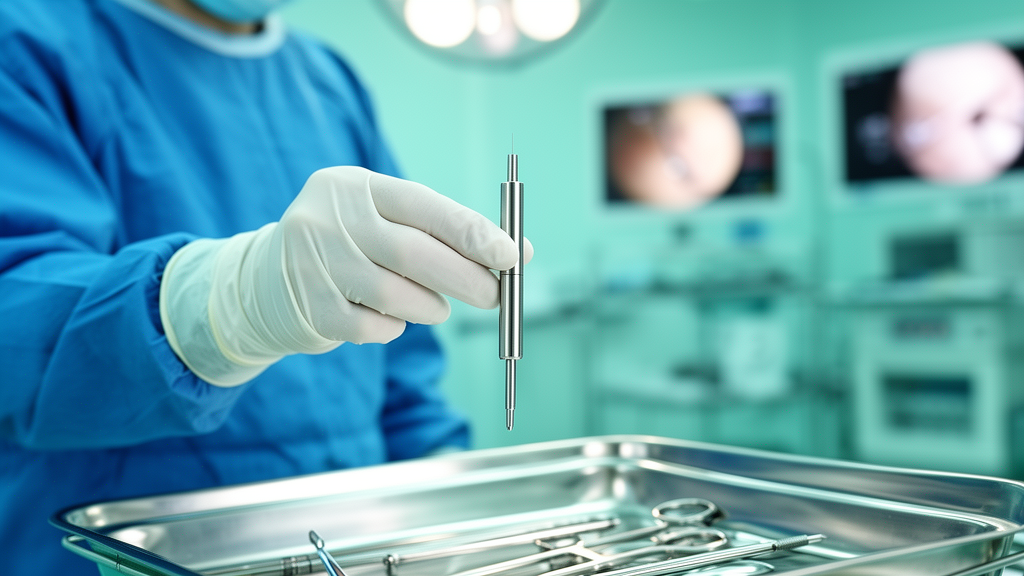
In a comparative clinical study evaluating endoscopic instrumentation for benign prostatic hyperplasia, urologists found that using a smaller twenty-two French resectoscope sheath during holmium laser enucleation of the prostate significantly reduced early postoperative urinary incontinence and overall complications compared to a standard twenty-six French sheath. The retrospective investigation analyzed prospectively collected data from one hundred ninety male patients treated between May 2023 and September 2024 to determine whether instrument caliber directly alters surgical efficiency, functional recovery, and urethral morbidity. While patients treated with the larger twenty-six French instrument achieved superior maximum urinary flow rates from three months onward and recorded lower postvoid residual volumes across all follow-up visits, multivariable statistical modeling identified the larger sheath as the sole independent predictor of overall surgical complications. Both surgical cohorts achieved statistically significant, durable relief from baseline lower urinary tract symptoms across twelve months of structured follow-up, confirming that instrument selection creates a distinct clinical balance between flow dynamics and early recovery.
Benign prostatic hyperplasia represents a common urological condition causing bladder outlet obstruction, for which holmium laser enucleation of the prostate is an established, size-independent surgical intervention. Compared with traditional transurethral resection of the prostate, the procedure has gained widespread adoption due to reduced perioperative morbidity, shorter hospital stays, and durable long-term outcomes. Despite these documented benefits, postoperative complications remain an important clinical concern. Transient stress urinary incontinence is frequently reported during early recovery and is commonly attributed to temporary stretching of the urinary sphincter during transurethral manipulation. Earlier studies cited by the researchers observed overall urinary incontinence rates of forty-three percent at six weeks, fifteen percent at three months, and five point eight percent at twelve months postoperatively. Concurrently, urethral stricture development represents another potential complication, with prior studies linking it to preoperative incontinence, patient obesity, frailty, elevated prostate volume, and mechanical trauma from larger resectoscope sheath diameters.
The diameter of the endoscopic sheath directly impacts both intraoperative conditions and postoperative tissue recovery through contrasting physical mechanisms. A larger sheath, such as a twenty-six French instrument, accommodates greater continuous irrigation flow, which improves operative visibility, clears blood from the surgical field, and potentially reduces overall operative time. However, introducing a larger instrument through the urethra exerts increased mechanical friction and radial dilation, elevating the risk of mucosal injury, postoperative dysuria, and stricture formation. Conversely, using a smaller twenty-two French sheath diminishes mechanical stretch on the urethral mucosa and external sphincter, potentially protecting urinary continence and mitigating stricture risk. The trade-off of a downsized sheath is the potential for restricted irrigation and compromised visibility, which can prolong surgery. Despite these theoretical and clinically observed considerations, direct comparative studies evaluating twenty-two French against twenty-six French sheaths have remained limited, prompting the present investigation to clarify their clinical performance.
The research protocol involved a retrospective analysis of prospectively gathered records from patients treated with holmium laser enucleation of the prostate between May 2023 and September 2024. Eligible participants were men presenting with lower urinary tract symptoms due to benign prostatic hyperplasia who had either failed or refused medical therapy. Inclusion required a baseline serum prostate-specific antigen concentration below twenty nanograms per milliliter and an objective peak urine flow rate under fifteen milliliters per second on uroflowmetry testing. The investigators applied strict exclusion criteria, removing patients with diagnosed neurological disorders, prostate cancer, bladder cancer, or any history of prior prostate surgery to prevent confounding baseline voiding function. Under these criteria, the final cohort comprised one hundred ninety patients. Ninety-four men were assigned to Group One, undergoing enucleation with a twenty-two French resectoscope sheath, while ninety-six men were assigned to Group Two, undergoing surgery with a twenty-six French sheath.
Before surgery, each patient completed a detailed diagnostic evaluation to record baseline clinical parameters. This pre-procedure workup included taking a comprehensive medical history, conducting physical examinations, and evaluating lower urinary tract symptoms using the International Prostate Symptom Score and its associated quality of life measurement. Objective diagnostic assessments involved uroflowmetry to measure peak urine flow rate, ultrasound assessment to record postvoid residual urine volume, laboratory testing for serum prostate-specific antigen, and pelvi-abdominal ultrasound to measure prostate size. To eliminate surgical variation, all procedures were conducted by a single experienced urologist who performs more than one hundred holmium laser enucleations each year. Following surgery, patients returned for scheduled follow-up assessments at one, three, six, and twelve months. Postoperative complications were tracked systematically, categorized using the modified Clavien-Dindo classification, and consolidated into an overall complication measure that encompassed all documented intraoperative and postoperative events, including incontinence, hematuria, and stricture formation.
The surgical team utilized specific instrumentation and standardized laser settings corresponding to each sheath size. In Group One, enucleation was carried out using a twenty-two French laser resectoscope from RZ Medizintechnik, while Group Two utilized a standard twenty-six French continuous-flow resectoscope from Karl Storz. In both cohorts, laser energy was delivered with a Lumenis Pulse one hundred twenty-watt holmium laser machine coupled to an end-firing five hundred fifty-micrometer Slimline fiber. The laser console was configured to deliver two Joules at fifty Hertz on short pulse for tissue enucleation, switching to one point five Joules at thirty Hertz on long pulse for hemostasis. Following enucleation, mechanical tissue morcellation was performed using a Piranha morcellator from Richard Wolf. A urethral catheter was placed at the conclusion of surgery for twenty-four to forty-eight hours and subsequently removed once the patient’s urine appeared clear, allowing the clinical team to assess spontaneous voiding.
The surgical technique followed a structured anatomical approach. An initial incision line was marked at the junction between the apical adenoma and the external sphincter. A six o’clock incision was made to expose the surgical capsule using blunt and sharp dissection, with initial incisions adjusted to five or seven o’clock when a median lobe was present. Dissection separated lateral adenoma attachments from the capsule, after which the resectoscope was withdrawn to inspect the sphincteric mucosa. The mucosa was incised to merge the dissection path into the authentic anatomical plane, using sharp dissection as required. A posterior six o’clock incision was extended from the bladder neck to the verumontanum to delineate the posterior capsule. The anterior commissure was incised using short laser strokes to expose the anterior capsule bilaterally before mobilizing the lateral lobes. Once fully enucleated in a top-down fashion, the tissue was morcellated within the bladder cavity.
Intraoperative and immediate recovery outcomes demonstrated distinct patterns between the cohorts. Intraoperative complications occurred in two patients from Group Two: one experienced severe bleeding managed with intravenous tranexamic acid, and another sustained a ureteral orifice injury requiring a temporary ureteric stent for two weeks. Blood transfusion was needed in only one patient, representing one point one percent of Group One. However, first-day postoperative hemoglobin deficit was significantly greater in Group Two, showing a median loss of thirteen grams per liter compared with seven grams per liter in Group One. Following catheter removal, successful trials of voiding were achieved in ninety-three point six percent of twenty-two French patients and ninety-seven point nine percent of twenty-six French patients, a difference that did not reach statistical significance. One patient in each group required hospital readmission for clot retention, and no major Clavien-Dindo complications were reported in either treatment arm during hospitalization.
Longitudinal functional assessments revealed substantial symptom relief across both groups, alongside notable differences between the two sheath calibers. Both cohorts demonstrated statistically significant improvements from baseline in International Prostate Symptom Scores, peak flow rates, and postvoid residual volumes at one, three, six, and twelve months. However, Group One demonstrated significantly lower symptom scores on the International Prostate Symptom Score at every evaluated interval, reflecting superior subjective symptom relief with the smaller sheath. Conversely, objective urodynamic parameters favored Group Two. Beginning at the three-month evaluation and continuing through twelve months, peak urine flow rate was significantly higher in the twenty-six French cohort. In addition, postvoid residual urine volume was significantly lower in Group Two at all follow-up visits. These results suggest that while smaller sheaths provide greater early subjective comfort, larger sheaths deliver modest advantages in objective bladder emptying and peak urinary flow over extended post-surgical follow-up.
Postoperative continence outcomes showed clear advantages for the twenty-two French sheath during early follow-up. Transient stress urinary incontinence rates were significantly lower in Group One at one month and three months, after which both groups demonstrated comparable results as leakage resolved. Urge urinary incontinence was also significantly lower in Group One at one month before equalizing. Postoperative urethral stricture rates were three point two percent in Group One and six point two percent in Group Two, a difference that was not statistically significant. In multivariate logistic regression analysis, sheath size was the only independent predictor of overall complications, with the twenty-six French sheath carrying an odds ratio of three point one two three. The authors acknowledged study limitations, including its retrospective single-surgeon design, potential selection bias where larger sheaths were chosen for larger prostates, and limited statistical power for rare stricture events, concluding that prospective trials are needed.
Subject of Research: Impact of resectoscope sheath diameter on functional outcomes and complications in holmium laser enucleation of the prostate
Article Title: Impact of sheath size on HoLEP outcomes: a comparative study between 22 F and 26 F sheaths
Article References: Alshammari, A., H. Alhajeri, F., Boualbanat, M., Alghadouri, S., Alansari, B., Alamran, A., Alenezi, S., Alrefai, A., Mohammed, S., Alamiri, A., Alhunaidi, O., R. EL-Nahas, A., & Alkandari, A. (2026). Impact of sheath size on HoLEP outcomes: a comparative study between 22 F and 26 F sheaths. African Journal of Urology, 32(1), Article 49. https://doi.org/10.1186/s12301-026-00597-z
Image Credits: AI Generated
DOI: 10.1186/s12301-026-00597-z
Keywords: Holmium Laser Enucleation of the Prostate, Benign Prostatic Hyperplasia, Resectoscope Sheath Size, Urinary Incontinence, Urethral Stricture, Uroflowmetry, Surgical Complications, Endourology, Impact, sheath, size, HoLEP
News Source: Ophelia Keating. (November 9, 2026). Smaller Laser Prostate Surgery Sheaths Reduce Postoperative Complications and Incontinence. Scienmag.