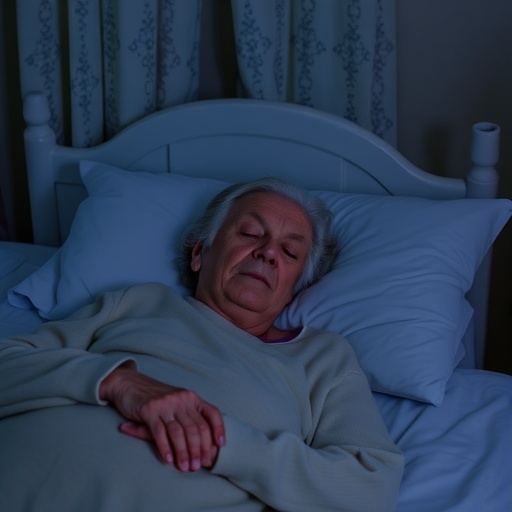
Amid the burgeoning challenges posed by an aging global population, understanding the dynamics of sleep quality in older adults has become a scientific imperative with profound public health implications. Recent research spearheaded by Tao, Wang, Zhao, and colleagues offers a cutting-edge exploration of sleep disturbances in community-dwelling seniors, dissecting the multifaceted factors that influence their nightly rest. Through an advanced statistical approach known as latent class analysis, the study unearths nuanced patterns and associations that have the potential to revolutionize geriatric care and inform targeted interventions.
Sleep quality is a cornerstone of health and well-being, yet it becomes increasingly vulnerable as individuals advance in age. The elderly population frequently experiences fragmented sleep, insomnia, and a host of related disorders, which collectively exacerbate risks for cognitive decline, metabolic diseases, and diminished life quality. Despite the high prevalence of sleep issues in older adults, pinpointing contributory factors remains notoriously complex due to heterogeneity within this group and interlinked psychosocial and physiological variables. Traditional research has often fallen short in capturing this complexity, which underscores the importance of the methodological innovations employed by Tao and colleagues.
Latent class analysis (LCA), a robust form of unsupervised machine learning, enables researchers to categorize individuals into subgroups based on observed variables that are not directly measurable but inferred from patterns in data. This technique surpasses conventional linear modeling by revealing latent clusters within heterogeneous populations, thereby elucidating hidden correlations and stratifying risk profiles. Applying LCA to the domain of sleep quality in older adults allows for a multidimensional assessment that encompasses behavioral, psychological, and environmental variables simultaneously, providing a holistic understanding unattainable through isolated factor analysis.
The dataset investigated in this seminal study comprises a demographically diverse sample of community-residing seniors, reflecting a realistic spectrum of aging experiences beyond institutionalized cohorts. The breadth of collected variables spans self-reported sleep metrics, comorbid health conditions, lifestyle behaviors, and sociodemographic indicators. This multidomain approach acknowledges the multifactorial etiology of sleep disturbances, embracing biopsychosocial complexity rather than reductionist paradigms. Notably, the inclusion of community-dwelling older adults enhances the ecological validity of the findings and aligns with contemporary public health priorities emphasizing aging in place.
Among the revelatory findings, the study identifies distinct latent classes characterized by unique constellations of sleep-related symptoms and associated risk elements. One subgroup exhibits predominantly mild sleep disruptions with minimal comorbidities, while another displays severe sleep fragmentation intertwined with depressive symptoms and chronic pain syndromes. A third cluster reveals poor sleep quality linked to social isolation and diminished physical activity. These differentiated profiles underscore the inadequacy of a one-size-fits-all approach to sleep interventions and advocate for precision medicine frameworks tailored to the specific latent class of an individual.
Crucially, the study elucidates how multifaceted psychosocial stressors intersect with biological changes inherent in aging to impair sleep architecture. For instance, chronic stressors such as bereavement or financial insecurity appear to catalyze neuroendocrine dysregulation, which destabilizes circadian rhythms and homeostatic sleep drives. Coupled with age-related declines in melatonin secretion and diminished slow-wave sleep, these factors engender a vicious cycle aggravating sleep disturbances. Recognition of these intertwined pathways invites innovative combinatory therapies addressing both emotional well-being and neurophysiological mechanisms.
The role of physical activity emerges as a pivotal modifiable determinant within this intricate framework. The analysis reveals that higher engagement in aerobic and strength-based exercises correlates with superior sleep quality across various latent classes, illuminating physical movement not only as a mechanism for improved sleep but also as a buffer against comorbidities like obesity and cardiovascular disease. This finding reinforces the potential of designing targeted lifestyle interventions incorporating tailored exercise regimens to ameliorate sleep dysfunctions in aging populations.
Integrating pharmacological and non-pharmacological strategies tailored to latent class characteristics presents a novel clinical frontier. For example, cognitive-behavioral therapy for insomnia (CBT-I) may be particularly efficacious for individuals in classes marked by psychological distress, while light therapy or melatonin supplementation could better serve those in physiologically dominated profiles. Such stratification disrupts the prevalent empiric approach toward sleep medication in older adults, which often neglects underlying etiologies and fosters dependency and adverse events.
From a public health perspective, these insights afford a compelling argument for embedding sleep health evaluations within routine geriatric assessments and community care frameworks. Early identification of at-risk latent classes enables proactive deployment of targeted resources, potentially forestalling the progression of chronic disease and cognitive impairment linked with poor sleep. Moreover, social policies advocating neighborhood connectivity and access to recreational infrastructure may indirectly influence sleep quality by mitigating isolation and promoting active lifestyles among seniors.
Methodologically, this investigation sets a benchmark by coupling rigorous data collection with sophisticated analytical techniques. The latent class analysis was meticulously validated through cross-validation and robustness checks, ensuring that the identified classes are reproducible and clinically meaningful. Furthermore, the authors acknowledge limitations inherent to observational designs and self-reported measures but mitigate these through triangulation with objective sleep data and comprehensive covariate adjustment. This methodological transparency and rigor amplify the translational impact of the findings.
Future research trajectories highlighted by this work include longitudinal studies to elucidate causal relationships and temporal dynamics of latent class membership, as well as intervention trials stratified by latent class to evaluate differential treatment efficacies. The integration of wearable sleep technology and biomarker profiling could profoundly enhance the granularity and precision of latent class delineation. As such, this research delineates a roadmap toward personalized geriatric sleep medicine that leverages data science and behavioral medicine symbiotically.
Importantly, the implications of this research transcend individual health outcomes by intersecting with societal domains such as caregiver burden, healthcare costs, and aging workforce productivity. Effective management of sleep disorders in older adults could attenuate hospital admissions and long-term care needs, yielding substantial economic dividends. Additionally, improved sleep translates into better cognitive function and mood, thereby promoting autonomy and social engagement among seniors, which are foundational to successful aging.
In conclusion, Tao, Wang, Zhao, and their team’s application of latent class analysis to unravel the complex constellation of factors influencing sleep quality in community-dwelling older adults represents a paradigm shift with transformative potential. By harnessing advanced analytical methodologies and a multidomain lens, this study delivers actionable insights bridging neurobiology, psychology, and social determinants. It galvanizes a precision health ethos that could catalyze innovative, effective, and compassionate management of sleep disorders, ultimately enhancing longevity and life quality for aging populations worldwide.
Subject of Research: Factors influencing sleep quality in community-dwelling older adults examined through latent class analysis.
Article Title: Factors associated with sleep quality in community-dwelling older adults: a latent class analysis.
Article References:
Tao, Y., Wang, L., Zhao, Y. et al. Factors associated with sleep quality in community-dwelling older adults: a latent class analysis. BMC Geriatr (2026). https://doi.org/10.1186/s12877-026-07427-5
Image Credits: AI Generated
Tags: cognitive decline and sleepcommunity-dwelling seniors sleep patternsfactors affecting senior sleepinsomnia and aginglatent class analysis in geriatric researchmachine learning in sleep studiesmetabolic diseases linked to sleepphysiological variables influencing sleeppsychosocial factors in elderly sleepsleep disturbances in elderlysleep quality in older adultstargeted interventions for elderly sleep