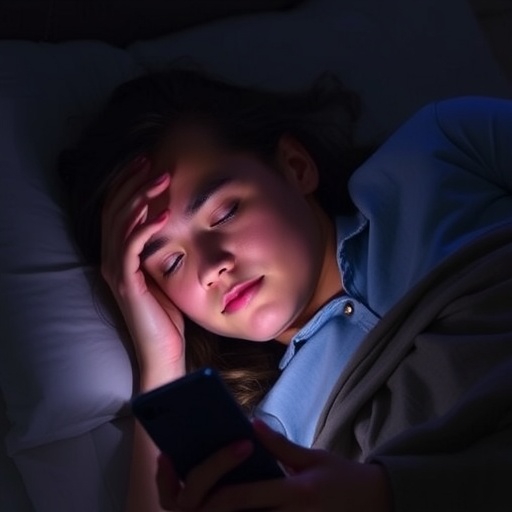
In an era dominated by digital innovation and personal health tracking, sleep apps have surged in popularity, promising users detailed insights into their nightly rest patterns. These applications, which aim to quantify the elusive quality and duration of sleep, have captivated millions eager to unlock the secrets of their slumber. However, emerging research from the University of Bergen in Norway calls attention to the complex and sometimes paradoxical relationship users have with these technologies, especially those battling insomnia symptoms.
Sleep tracking applications typically offer metrics such as sleep onset latency—the time it takes to fall asleep—total sleep duration, and an assessment of sleep efficiency or restoration. These insights, powered by various sensors and algorithms, suggest that technology can demystify one of the most vital biological processes. Yet, the scientific community remains cautious, emphasizing that these apps are in their infancy and lack robust validation against clinical standards like polysomnography. This uncertainty raises questions about the accuracy of the feedback these apps provide and whether it truly benefits users or inadvertently harms them.
The study commissioned by researchers Håkon Lundekvam Berge and Karl Erik Lundekvam, and published in Frontiers in Psychology, surveyed over a thousand Norwegian adults to examine the interaction between sleep app usage and sleep-related outcomes. The surveyed group was a diverse representation of adults, capturing a broad age range and both genders. Nearly half of the respondents had experience using sleep tracking apps, with younger participants and women being more inclined to adopt these technologies. Such demographics reveal a cultural trend where younger generations are more willing to intertwine wearable technology with health monitoring.
Intriguingly, the research unveiled nuanced effects that differ markedly by user characteristics. Younger adults reported a dual response to their sleep app feedback: while they perceived more tangible benefits—such as becoming more knowledgeable about their sleep behaviors—they also experienced heightened anxiety and stress related to their sleep habits. This twofold impact suggests that while technological self-monitoring can empower, it may simultaneously foster an obsessive focus detrimental to mental well-being.
This phenomenon is particularly pronounced among individuals exhibiting insomnia symptoms. These users reported an amplified negative response to sleep app data, often experiencing increased sleep-related anxiety and worry. The researchers hypothesize that for this group, detailed monitoring and feedback can precipitate a cycle where pre-existing worries about sleep are exacerbated rather than alleviated. Essentially, the technology designed to provide reassurance may instead contribute to what is termed ‘orthosomnia’—a paradoxical disorder characterized by excessive preoccupation with sleep quality, which ironically impairs the very sleep one intends to improve.
The feedback loop created by sleep app use among insomnia sufferers elucidates the psychological complexities embedded in biofeedback and health tracking apps more broadly. Despite the promise of these devices, their utility may be constrained by intrinsic human factors such as anxiety sensitivity, cognitive rumination, and attentional focus. The implications of these findings are substantial: as the technology advances rapidly, so too must the understanding of its psychological impact on various user segments.
Beyond individual effects, the research sheds light on population-level patterns associated with sleep app usage. Women and those under 50 years old were disproportionately represented among users, indicating potential social or cultural factors influencing the adoption of sleep technology. The similar response patterns observed between men and women suggest that gender may not be as critical a moderator of the sleep app experience as age and underlying sleep health status.
The positive outcomes reported by users—such as improved sleep practices and increased awareness—mirror the potential public health benefits of technology-assisted self-monitoring. This underlines the promise of digital health tools to aid in the development of healthier sleep hygiene habits, like minimizing exposure to screens before bedtime and cognitive-behavioral strategies to optimize sleep schedules. However, the delicate balance between useful self-education and detrimental over-monitoring underscores the challenge developers face in crafting user interfaces and feedback systems that maximize benefit and minimize harm.
Limitations identified by the researchers warrant critical consideration. The reliance on self-reported survey data introduces potential biases, including recall bias and social desirability bias. Furthermore, participants were voluntary research subjects, possibly skewing toward individuals with an inherent interest in sleep issues, which may not fully represent the general population. These factors temper the generalizability of the findings but do not diminish their novelty and importance in guiding future research and app development.
Reflecting on the study’s implications, the researchers recommend a cautious and informed approach to sleep app usage, especially for individuals vulnerable to sleep disturbances. They advocate for users to educate themselves about the methodologies these apps employ and the limitations inherent in their measurements. For those experiencing heightened stress due to app feedback, strategies such as disabling notifications during sleep times or temporarily discontinuing the use of sleep trackers are advised to mitigate anxiety.
Moreover, the research highlights the importance of subjective sleep cues—listening to one’s body and responding to actual physiological sleepiness rather than relying solely on technological feedback. Associating one’s bed with sleep and adopting flexible bedtime routines aligned with true sleep needs are cornerstone behavioral recommendations that complement technology use without letting it dominate one’s sleep perception.
The study underscores that while sleep apps are valuable tools in the digital health arsenal, they are not panaceas. The integration of sleep technology into clinical and personal contexts must be nuanced, tailored, and mindful of the potential psychological repercussions that can arise from constant monitoring. As the landscape of wearable technology and health applications continues to evolve, continuous interdisciplinary research will be paramount to harness these tools’ full potential while safeguarding mental health and well-being.
In summary, sleep apps offer intriguing opportunities and challenges in understanding and improving sleep health. Their role in enhancing public awareness is undeniable; however, their impact is modulated by user characteristics, particularly age and pre-existing sleep conditions. The study from Norway serves as a pivotal reminder that technological advancements must be accompanied by vigilant scientific inquiry and thoughtful, user-centered design to truly enhance human health without unintended consequences.
Subject of Research: People
Article Title: Sleep in the age of technology: The use of sleep apps and perceived impact on sleep and sleep habits
News Publication Date: 20-Mar-2026
Web References: 10.3389/fpsyg.2026.1726473
References: Frontiers in Psychology, University of Bergen research survey
Keywords
Sleep apps, insomnia, sleep tracking, orthosomnia, sleep monitoring technology, sleep health, wearable technology, biofeedback, anxiety, digital health, user experience, sleep disorders
Tags: accuracy of sleep tracking devicesdigital health tracking for sleepimpact of sleep technology on stressinsomnia and technology usepsychological effects of sleep appssleep app validation studiessleep apps for insomniasleep duration monitoring appssleep efficiency analysis toolssleep onset latency measurementsleep tracking and mental healthUniversity of Bergen sleep research