• HOME
  • NEWS
  • EXPLORE
    • CAREER
      • Companies
      • Jobs
    • EVENTS
    • iGEM
      • News
      • Team
    • PHOTOS
    • VIDEO
    • WIKI
  • BLOG
  • COMMUNITY
    • FACEBOOK
    • INSTAGRAM
    • TWITTER
Thursday, April 2, 2026
BIOENGINEER.ORG
No Result
View All Result
  • Login
  • HOME
  • NEWS
  • EXPLORE
    • CAREER
      • Companies
      • Jobs
        • Lecturer
        • PhD Studentship
        • Postdoc
        • Research Assistant
    • EVENTS
    • iGEM
      • News
      • Team
    • PHOTOS
    • VIDEO
    • WIKI
  • BLOG
  • COMMUNITY
    • FACEBOOK
    • INSTAGRAM
    • TWITTER
  • HOME
  • NEWS
  • EXPLORE
    • CAREER
      • Companies
      • Jobs
        • Lecturer
        • PhD Studentship
        • Postdoc
        • Research Assistant
    • EVENTS
    • iGEM
      • News
      • Team
    • PHOTOS
    • VIDEO
    • WIKI
  • BLOG
  • COMMUNITY
    • FACEBOOK
    • INSTAGRAM
    • TWITTER
No Result
View All Result
Bioengineer.org
No Result
View All Result
Home NEWS Science News Health

Skin bacteria could protect against disease

Bioengineer by Bioengineer
February 13, 2018
in Health
Reading Time: 2 mins read
0
Share on FacebookShare on TwitterShare on LinkedinShare on RedditShare on Telegram
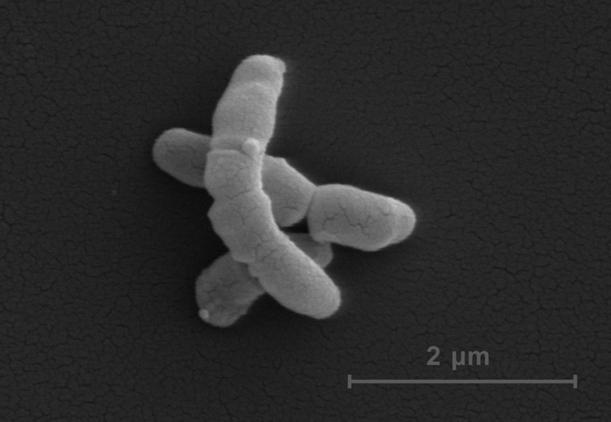
IMAGE

Credit: Matthias Mörgelin, Lund University

There are more and more examples of the ways in which we can benefit from our bacteria. According to researcher Rolf Lood from Lund University in Sweden, this is true for the skin as well. He has shown that the most common bacteria on human skin secrete a protein which protects us from the reactive oxygen species thought to contribute to several skin diseases. The protein has an equally strong effect on dangerous oxygen species as known antioxidants such as vitamin C and vitamin E.

The skin bacterium is called Propionibacterium acnes.

"The name originates from the fact that the bacterium was first discovered on a patient with severe acne. But whether it causes acne is uncertain – it may have been present merely because it is so common", says Rolf Lood at the Department of Clinical Sciences in Lund.

He has discovered that the "acne bacterium" secretes a protein called RoxP. This protein protects against what is known as oxidative stress, a condition in which reactive oxygen species damage cells. A common cause of oxidative stress on the skin is UV radiation from the sun.

"This protein is important for the bacterium's very survival on our skin. The bacterium improves its living environment by secreting RoxP, but in doing so it also benefits us", explains Rolf Lood.

Oxidative stress is considered to be a contributing factor in several skin diseases, including atopic dermatitis, psoriasis and skin cancer.

Since Propionibacterium acnes is so common, it is present in both healthy individuals and people with skin diseases. According to Rolf Lood, however, people have different amounts of the bacterium on their skin, and it can also produce more or less of the protective protein RoxP.

This will now be further investigated in both patients and laboratory animals by Lood and his team. The human study will compare patients with basal cell carcinoma, a pre-cancerous condition called actinic keratosis and a healthy control group. The study will be able to show whether there is any connection between the degree of illness and the amount of RoxP on the patient's skin.

The study on laboratory animals will also examine whether RoxP also functions as protection. Here, mice who have been given RoxP and others who have not will be exposed to UV radiation. The researchers will then observe whether the RoxP mice have a better outcome than those who were not given the protective protein.

"If the study results are positive, they could lead to the inclusion of RoxP in sunscreens and its use in the treatment of psoriasis and atopic dermatitis", hopes Rolf Lood. His research findings have recently been published in an article in the Nature journal Scientific Reports.

###

Media Contact

Rolf Lood
[email protected]
46-706-600-353
@lunduniversity

http://www.lu.se
Share12Tweet8Share2ShareShareShare2

Related Posts

Cysteine Sulfenylation of p-GSK-3β Drives Liver Insulin Resistance

April 2, 2026

First Human Trial of Implant for Brain Pressure Monitoring

April 2, 2026

Occasional Heavy Drinking Could Triple Risk of Liver Damage, Study Finds

April 2, 2026

Rethinking Obesity Diagnosis Beyond BMI Could Postpone Critical Treatment, Study Finds

April 2, 2026
Please login to join discussion

POPULAR NEWS

  • blank

    Revolutionary AI Model Enhances Precision in Detecting Food Contamination

    96 shares
    Share 38 Tweet 24
  • Imagine a Social Media Feed That Challenges Your Views Instead of Reinforcing Them

    1007 shares
    Share 398 Tweet 249
  • Promising Outcomes from First Clinical Trials of Gene Regulation in Epilepsy

    51 shares
    Share 20 Tweet 13
  • Popular Anti-Aging Compound Linked to Damage in Corpus Callosum, Study Finds

    44 shares
    Share 18 Tweet 11

About

We bring you the latest biotechnology news from best research centers and universities around the world. Check our website.

Follow us

Recent News

Cysteine Sulfenylation of p-GSK-3β Drives Liver Insulin Resistance

Transonic Safe Mode Empowers Next-Gen Wind Turbines

First Human Trial of Implant for Brain Pressure Monitoring

Subscribe to Blog via Email

Enter your email address to subscribe to this blog and receive notifications of new posts by email.

Join 78 other subscribers
  • Contact Us

Bioengineer.org © Copyright 2023 All Rights Reserved.

Welcome Back!

Login to your account below

Forgotten Password?

Retrieve your password

Please enter your username or email address to reset your password.

Log In
No Result
View All Result
  • Homepages
    • Home Page 1
    • Home Page 2
  • News
  • National
  • Business
  • Health
  • Lifestyle
  • Science

Bioengineer.org © Copyright 2023 All Rights Reserved.